


 Abbas Reaffirms November 28 Palestinian Elections
  OpenAI Agent Breaches Australia Medicare Data Portal
  Russian Envoy Dmitriev Heads to US for Ukraine Talks
  US Invites Putin to Miami G20, Opening Door to Trump Summit
  Pezeshkian Says US Must Choose When Iran War Ends
  US, China Extend Trade Truce to Jan. 10 Ahead of Trump-Xi Summit
  France Defends Netanyahu Airspace Clearance Despite ICC Warrant
  South Korea, US Discuss Warship Building Cooperation
  Netanyahu’s Brief US Trip Highlights Strains With Trump
  Mexico-US Trade Talks Delayed to October as Tariff Negotiations Continue
  Netanyahu Takes Aim at Mamdani as Israel Election Nears
  Trump Asks Supreme Court to Restore Third-Country Deportations
  Trump, Xi Focus on Trade and AI at White House Summit
  North Korea Rejects Nuclear Test Warning, Calls Nuclear Status Irreversible
  Judge Orders Trump to Restore White House Access for CNN, MS NOW and Politico
  EU Defence Build-Up Too Slow for 2030 Russia Readiness Goal
  Taiwan Thanks US for Support Ahead of Trump-Xi Summit


 Add as a preferred source on Google
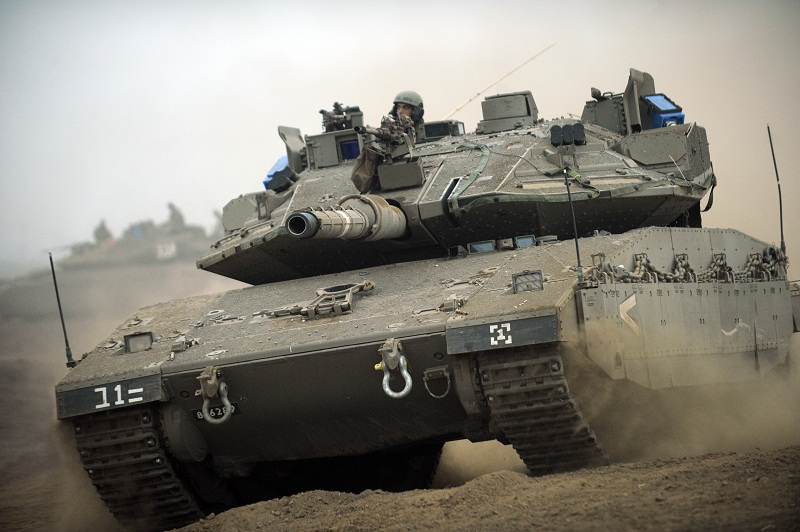
Israel has significantly expanded its military presence along the Lebanese border, more than doubling its troop numbers since March 1. A senior Israeli commander confirmed that soldiers are now actively searching homes in southern Lebanese villages that residents abandoned following Israeli evacuation orders.
Israeli warplanes continue striking Beirut in operations targeting Hezbollah, while heavy artillery fire and thick smoke mark the landscape across southern Lebanon. The escalation represents the deadliest spillover of the broader U.S.-Israeli conflict involving Iran, prompting hundreds of thousands of Lebanese civilians to flee areas south of the Litani River — a zone Israel considers a Hezbollah stronghold.
The Iranian-backed militant group began launching rockets into Israel on March 2, entering the conflict in solidarity with Iran. Although Hezbollah's missile capabilities have been substantially weakened, Israeli officials acknowledge the group still holds enough firepower to strike deep inside Israeli territory.
Speaking near the northern Israeli town of Eilon, just four kilometers from the border, an unnamed Israeli commander described the military's positions inside Lebanon as defensive in nature. He stated that troops were conducting searches to locate hidden weapons caches and communications infrastructure within abandoned civilian homes.
Hezbollah denies storing weapons in civilian structures and accuses Israel of demolishing homes to prevent residents from ever returning. Israel rejects these claims. The town of Khiyam, located five kilometers inside the Lebanese border, has emerged as an early focal point of the ground advance, with Israeli forces working to fully clear it before pushing toward the Litani River.
Lebanese authorities report at least 968 deaths since the Israeli campaign began, while Hezbollah has acknowledged losing at least 46 fighters. Two Israeli soldiers have been killed during the southern Lebanon operations.
Residents living near the border describe near-constant explosions as part of their daily reality, with artillery fire erupting every few minutes throughout the day.







