


 Asian Currencies Stay Under Pressure as Dollar Holds Near 13-Month High Ahead of U.S. Jobs Report
  India Manufacturing PMI Slows in June as Demand Weakens Despite Lower Cost Pressures
  FxWirePro: Daily Commodity Tracker - 21st March, 2022
  Oil Prices Rise as U.S.-Iran Talks Keep Geopolitical Risks in Focus
  U.S. Stocks End Q2 Higher as Strong Jobs Data and AI Rally Lift Wall Street
  Gold Prices Fall Amid Rate Jitters; Copper Steady as China Stimulus Eyed
  UN Chief Urges Nations to Close $100 Million UNRWA Funding Gap
  Central Banks Eye Gold, Reduce Dollar Exposure as AI Adoption Accelerates: OMFIF Survey
  RBA Minutes Signal Australia Central Bank Remains Ready to Raise Interest Rates if Inflation Persists
  Asian Stocks End Strong Quarter as Dollar Surges, Yen Hits 40-Year Low Ahead of US Jobs Data
  US Dollar Rises as Fed Rate Outlook Stays Hawkish, Euro Slips and Yen Near 40-Year Low


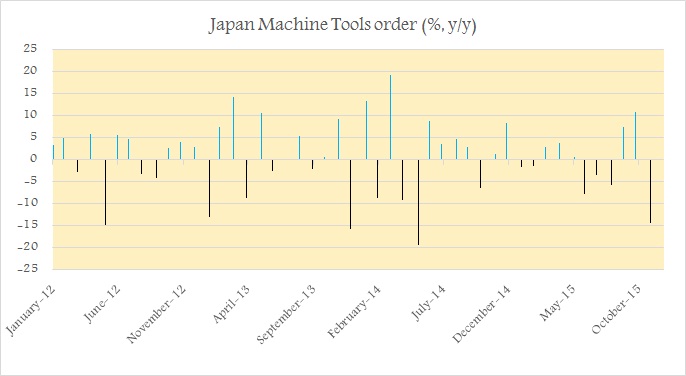
Abenomics, which is set of policies introduced in Japan, which includes ambitions such as bringing inflation back in Japan, increase sales tax to balance budget might be losing its charm, at least November's Machine tools orders, which is synonymous to capital expenditure in Japan, would say so.
In November, Japanese Machinery orders recorded, sixth decline for the year. Though the data is usually volatile and moves on both side of zero, regularly, a double digit decline is relatively rare. November's 14.4% decline is biggest since May, 2014 and third double digit decline in last five years or more.
Machinery orders till November has declined in six of the 11 months and drop has been much more frequent and large since 2014, posing considerable doubts on Abenomics' ability to boost back growth.
On the other hand, despite Bank of Japan's (BOJ) sincerest efforts and purchase of ¥80 trillion assets per annum falling far short of boosting inflation. Consumers have cut back on purchases in response to higher price.
According to last night's data, corporate goods price dropped -0.3% in December, down -3.4% from a year ago.
Nikkei dropped sharply in response to bad data, at once point was down as much as 4%, while Yen is relatively strong, trading at 117.8 per Dollar.







