


 FDA Pilot Program Eases Rules for Nicotine Pouch Makers
  Lost in space: MethaneSat failed just as NZ was to take over mission control – here’s what we need to know now
  Neuren Pharmaceuticals Surges on U.S. Patent Win for Rare Disorder Drug
  Trump Administration to Launch Autism Initiatives Targeting Acetaminophen Use and New Treatment Options
  Trump Signs Executive Order to Boost AI Research in Childhood Cancer
  NASA Resumes Cygnus XL Cargo Docking with Space Station After Software Fix
  Tabletop particle accelerator could transform medicine and materials science
  Neuralink Plans High-Volume Brain Implant Production and Fully Automated Surgery by 2026
  SpaceX Starship Explodes in Texas During Test, Citing Nitrogen Tank Failure
  Trump and Merck KGaA Partner to Slash IVF Drug Costs and Expand Fertility Coverage
  Blue Origin’s New Glenn Achieves Breakthrough Success With First NASA Mission
  Astronomers have discovered another puzzling interstellar object − this third one is big, bright and fast


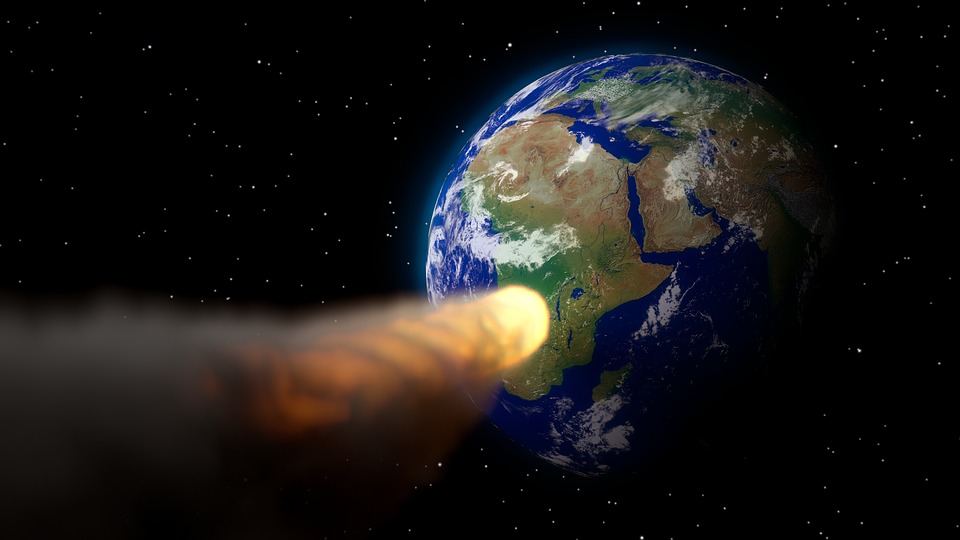
In the midst of news of asteroids approaching our orbit, it seems that there is another sighting of something approaching the Earth. NASA reports that an interstellar object is coming towards Earth at a very rapid speed.
This interstellar object is referred to as 21/Borisov, and it is also the second interstellar object seen in our solar system. It was first sighted in August by scientists from Hawaii’s Keck University. Borisov is predicted to approach Earth sometime during the month at a distance of 190 million miles from our orbit. This is twice the distance between the Earth and the sun.
The tail of this object is made up of ice and debris that stretch 100,000 miles behind it. This means that Borisov is astoundingly longer than 12 Earths. Yale scientist Dr. Pieter van Dokkum says that the fact that Borisov is drastically bigger than Earth makes him realize how small our planet is compared to other cosmic bodies. Spotting Borisov gives scientists a chance to study it before it goes off into deep space once again.
Dr. Paul Kalas of the University of California said that the comet would eventually leave our Solar System. “Until then, we should all enjoy the marvelous beauty of our comet friend.”
Scientists have yet to determine what kind of object Borisov actually is. But it has been assumed to be a comet. At the same time, they hope that this will be able to give answers as to how comets are formed within deep space.
Previously, it was reported that NASA was experiencing problems regarding their plans or measures in being able to protect Earth from an oncoming asteroid that can potentially destroy the planet.
According to Dr. Natalie Starkey, one of the options for the planet’s defense was that “we will require an approach that can work in weeks or months… So a more drastic method to protect Earth, one that could work on any object regardless of its composition, might be called for.”
She goes on to say that nuclear weapons may pose as an option. “It may sound like total madness, but believe it or not, scientists are looking into the possibility of firing such a device at a space object to blow it into tiny pieces…”













