


 U.S. Treasury Yields Surge as 30-Year Hits 22-Year High
  North Korea Rejects Nuclear Test Warning, Calls Nuclear Status Irreversible
  US Senate Rejects Iran War Powers Resolution in 50-49 Vote
  Ghana Says Western Support Growing for Slave Trade Reparations
  EU Defence Build-Up Too Slow for 2030 Russia Readiness Goal
  France Defends Netanyahu Airspace Clearance Despite ICC Warrant
  Trump Asks Supreme Court to Restore Third-Country Deportations
  OpenAI Agent Breaches Australia Medicare Data Portal
  China’s ‘Lipstick King’ Says AI Won’t Replace Livestream Hosts
  Asian Stocks Fall as Surging Bond Yields Rattle Markets
  Saudi Arabia, Turkey and Pakistan Plan Urgent Defence Talks Over Houthi Attacks
  Dollar Holds Near Two-Month High as Yen Approaches 160
  Fed Unveils Stablecoin Rules Under GENIUS Act
  European Stocks Fall as Bond Yields and Geopolitical Risks Weigh
  Kremlin Says No Decision Yet on Putin-Trump December Summit
  Netanyahu’s Brief US Trip Highlights Strains With Trump
  US Stock Futures Fall as Treasury Yields Surge Ahead of Trump-Xi Summit


 Add as a preferred source on Google
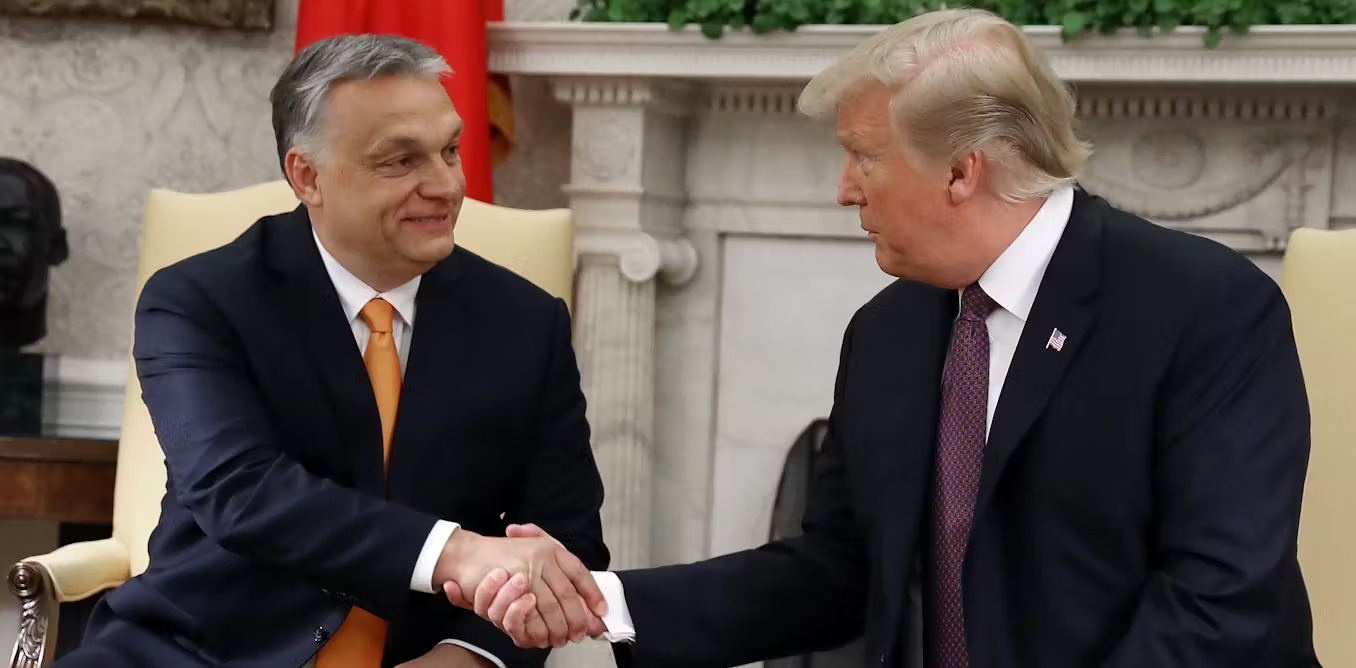
Hungary has reached a significant agreement with Washington to establish a “financial shield” designed to safeguard its economy and public finances, Prime Minister Viktor Orban announced following talks with U.S. President Donald Trump. The meeting, held at the White House on Friday, also resulted in a one-year exemption from U.S. sanctions on Russian oil and gas, a move expected to ease pressure on Hungary’s energy sector.
In addition to the sanctions reprieve, Hungary committed to purchasing U.S. liquefied natural gas (LNG) under contracts valued at approximately $600 million, according to a White House official. Speaking to reporters during his return flight, Orban stated that the U.S. had pledged to defend Hungary’s financial stability in the event of external threats to its economy or financial system. “Should there be any external attacks against Hungary or its financial system, the Americans gave their word they would protect our financial stability,” Orban said in a video shared by the news outlet index.hu.
Although Orban did not provide specific details about the financial shield, he emphasized that the agreement would ensure Hungary’s financial security, eliminating concerns about potential attacks on its currency or budget. “That Hungary or its currency could be attacked, or that the Hungarian economy could be suffocated from the financing side, this should be forgotten,” he added.
The deal comes at a time when Hungary’s economy has been struggling with stagnation and inflationary pressure following Russia’s 2022 invasion of Ukraine. Despite economic challenges and frozen EU funds due to rule-of-law disputes, Hungary’s forint has recently strengthened, outperforming other Central European currencies thanks to the country’s high benchmark interest rates.







