


 SpaceX Nasdaq 100 Weight to More Than Double in Rebalance
  Trump Plans Federal AI Force and AI Czar
  Trump Bans CNN, MS NOW and Politico From White House
  Nvidia CEO Jensen Huang Expected at Trump-Xi State Dinner
  Europe can’t achieve space sovereignty alone. Here’s why
  Telix to Acquire Germany’s ITM in $1.65 Billion Radiopharma Deal
  Supertanker Orders Surge as US-Iran War Reshapes Oil Trade
  Meta Partners With Shopify to Bring Shop Pay Checkout to Muse AI
  Westinghouse Targets $50 Billion Valuation in U.S. IPO
  Hyundai CEO Warns Chinese Automakers Could Disrupt US Market
  Allegro Raises 2026 Outlook as International GMV Surges
  Volkswagen Shares Slide After 2026 Profit Outlook Cut
  NASA, Boeing Discuss Expanding Starliner Missions
  US Federal Register Drops Alibaba Qwen AI Search Tool
  Petrobras Joins Brazil’s New Diesel Subsidy Program
  Apple Pay Set for India Launch With Axis Bank
  CNN, MS NOW and Politico Sue Trump Over White House Media Ban


 Add as a preferred source on Google
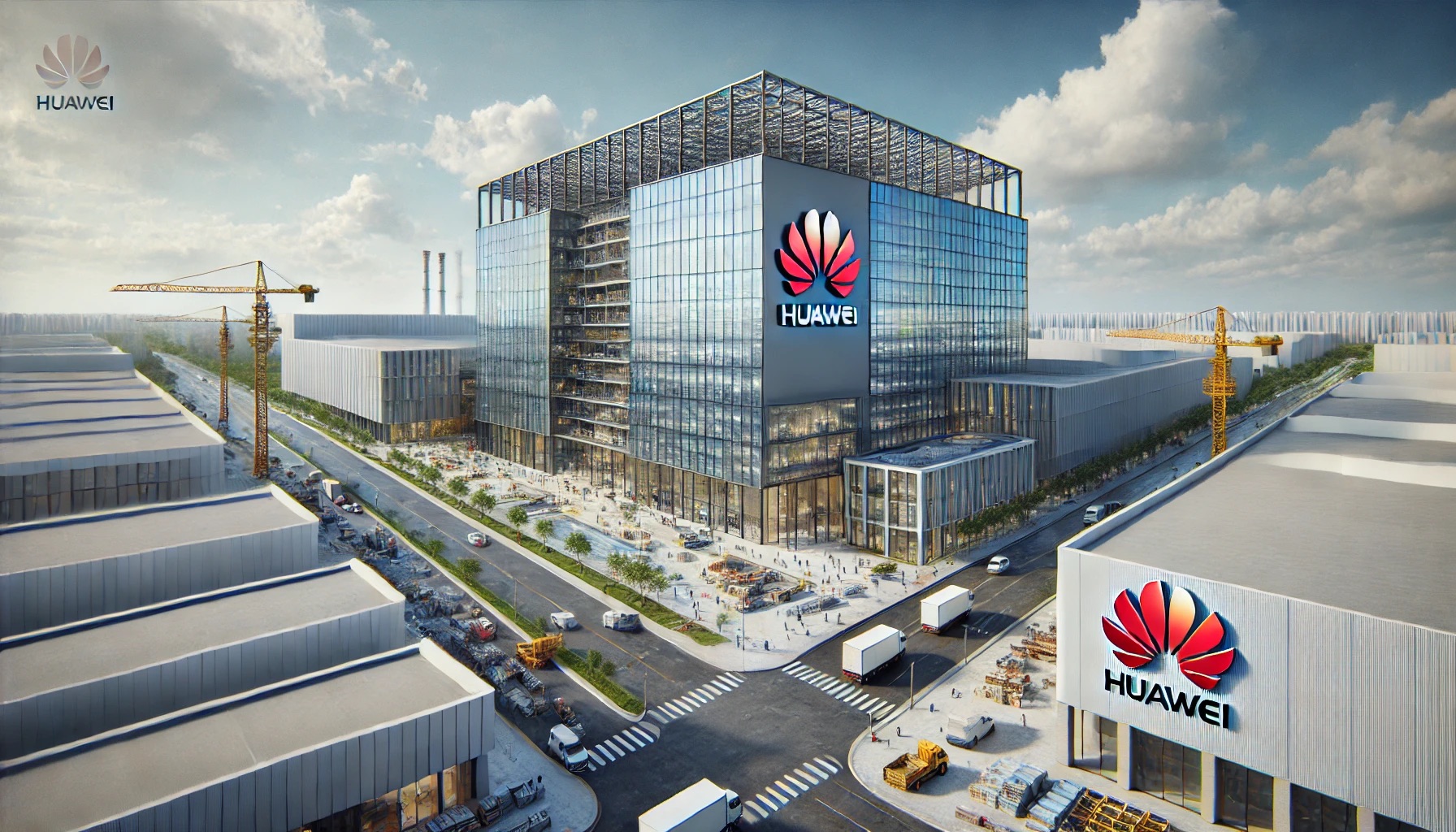
Huawei is set to complete its new research and development facility in Guangzhou by September, which will house 5,000 employees.
As a result of the trade penalties imposed by the United States, Huawei and other Chinese businesses are unable to purchase cutting-edge chipmaking equipment from ASML, which is situated in the Netherlands. Furthermore, there is no possibility that they will be able to acquire cutting-edge wafers from TSMC.
While it appears that Huawei's relationship with SMIC, the largest semiconductor manufacturer in China, is proceeding without a hitch, it is quite likely that Huawei wants chip development to be accelerated to an extreme degree.
Huge Sums Invested in New R&D Center
This is the reason why it was earlier claimed that huge sums of money had been invested in a brand new research and development center that would be situated in Guangzhou and would serve this purpose.
Currently, the first photographs that are considered to be "official" have been released, which depict what the facility would look like both inside and outside. It is possible that this initiative may become the foundation upon which Huawei will build its ability to manufacture wafers of the next generation, but only time will tell at this point.
According to a report by CnBeta, which discovered photographs of Huawei's research and development facility through a WeChat account titled China Guangzhou Release, the Phase I center that is situated in the New Coast region of the Bay Area is anticipated to be finished in September of this year.
The fact that the term "Phase I" is included gives the impression that this is not the only facility that Huawei is aiming to construct. However, it also gives the impression that the erstwhile Chinese behemoth is planning something of enormous dimensions.
Per WCCFTECH, the study indicates that the project encompasses around 119,300 square meters of land, with a total construction area of roughly 305,000 square meters. This information pertains to the region.
Facility to House 5,000 Employees
A total of eight research and development buildings, one hotel, one cooling tower, a guard room, and two basements are included in Phase I. The entire building is expected to be able to house 5,000 workers for research and development as well as office use once it is finished in September.
The research and development facility of Huawei, on the other hand, is believed to occupy an area equivalent to 224 football fields and is anticipated to house 35,000 personnel, according to an earlier report.
It would appear that additional work is required, the completion of which might result in a period of several years.
Phase I to Focus on Cloud Computing and IoT
According to a number of publications, Phase I will be responsible for doing research and development in the areas of cloud computing, Internet of Things, and smart cars; however, it does not include the production of chips under any circumstances. In light of the fact that Huawei was reported to have spent approximately ¥12 billion, which is equivalent to $1.66 billion, on the facility, we anticipate that other surprises will be forthcoming in the future.
For the time being, Huawei may have little choice but to rely on SMIC. Considering that SMIC was previously believed to have successfully developed its 5nm process, it is likely that it will take some time for the Chinese company to have its own sophisticated chipmaking plant up and running.







