


 OpenAI Urges US-Led Global Standards for Frontier AI
  Trump Plans Federal AI Force and AI Czar
  Who should own the knowledge that underpins AI technology?
  Apple Pay Set for India Launch With Axis Bank
  Guterres Urges Stronger Global AI Safeguards Ahead of UN Assembly
  Big AI wants to slow down AI research. Is it a safety pause or a strategic retreat?
  FAA Allows Boeing to Sell 35 More 777F Freighters Beyond 2028
  White House Bars CNN, MS NOW and Politico Reporters
  Meta Partners With Shopify to Bring Shop Pay Checkout to Muse AI
  US Northeast Airports Resume Operations After Telecom Outage Disrupts Thousands of Flights
  MediaTek Unveils 2nm Dimensity 9600 Pro AI Chip
  Supertanker Orders Surge as US-Iran War Reshapes Oil Trade
  Westinghouse Targets $50 Billion Valuation in U.S. IPO
  France Urges Faster AI Push Despite Safety Risks
  Trump Bans CNN, MS NOW and Politico From White House
  Japan, U.S. Discuss $19 Billion GlobalFoundries Chip Plant
  Petrobras Joins Brazil Diesel Subsidy Program


 Add as a preferred source on Google
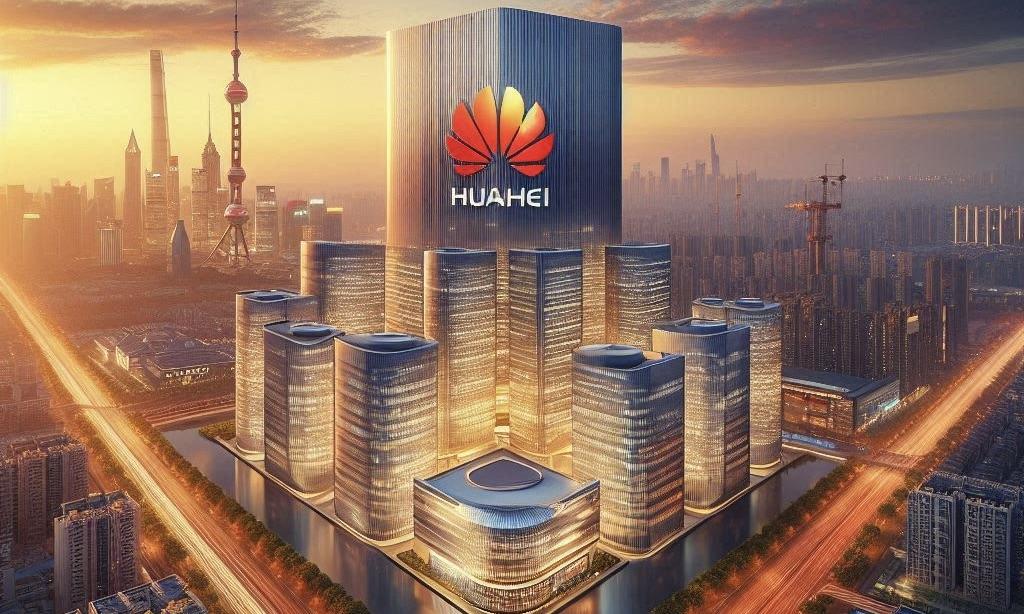
Huawei Technologies Co. is nearing completion of a $1.4 billion semiconductor research and development center in Shanghai. The state-of-the-art facility, expected to house 30,000 personnel, will advance China's tech ambitions despite ongoing US efforts to hinder its progress.
Huawei Finalizes $1.4 Billion Shanghai R&D Hub to Propel Semiconductor Innovation
Huawei Technologies Co. is on the brink of completing the construction of a semiconductor research and development center in Shanghai. This development is expected to further China's technological aims despite the United States' efforts to impede its growth.
As detailed on the Shanghai government's website, the new Huawei research and development center in Shanghai is a state-of-the-art facility. It will be Huawei's most significant research center globally, accommodating approximately 30,000 personnel. The site in Qingpu district spans 1.6 million square meters. It is equipped with its road network, a minor railway system, and elevated bridges, demonstrating the center's advanced infrastructure and capabilities.
State media reported in January, citing a Shanghai government briefing, that the new facility would pursue semiconductor advancements for devices, wireless networks, and the Internet of Things. According to a statement published on the Qingpu government website, the total investment cost is 10 billion yuan ($1.4 billion).
Despite US Sanctions, Huawei Advances with New 5G Phone and Semiconductor Developments
Huawei has been subject to US sanctions and export regulations for years as Washington and Beijing compete for dominance in the semiconductor industry. Last year, the company effectively circumvented US restrictions to introduce a new 5G phone with a cutting-edge 7-nanometer chip manufactured in China.
Since then, the Biden administration has implemented additional measures to restrict Huawei's semiconductor development, such as requesting that its allies impose further constraints on China's semiconductor industry. It also revoked licenses that permitted Huawei to purchase specific processors from Qualcomm Inc. and Intel Corp to address any loopholes in the current conditions.
The industry should examine Hualikely Wei's Mate 70, the company's forthcoming flagship smartphone, to see if there is any indication that Beijing has made additional progress in processor development. The Mate 70 is anticipated to be released later this year. The Mate 60, its predecessor, was in high demand among local consumers and assisted Huawei in gaining a portion of the market share at the expense of its competitors, such as Apple Inc.







