


 Neuralink Expands Brain Implant Trials with 12 Global Patients
  Tabletop particle accelerator could transform medicine and materials science
  SpaceX Starship Explodes in Texas During Test, Citing Nitrogen Tank Failure
  SpaceX’s Starship Completes 11th Test Flight, Paving Way for Moon and Mars Missions
  NASA Partners with Katalyst to Save Swift Observatory with Innovative Docking Mission
  SpaceX Prioritizes Moon Mission Before Mars as Starship Development Accelerates
  Cogent Biosciences Soars 120% on Breakthrough Phase 3 Results for Bezuclastinib in GIST Treatment
  Trump Administration to Launch Autism Initiatives Targeting Acetaminophen Use and New Treatment Options
  Astronomers have discovered another puzzling interstellar object − this third one is big, bright and fast
  Eli Lilly’s Inluriyo Gains FDA Approval for Advanced Breast Cancer Treatment
  Trump and Merck KGaA Partner to Slash IVF Drug Costs and Expand Fertility Coverage
  Trump Signs Executive Order to Boost AI Research in Childhood Cancer
  CDC Vaccine Review Sparks Controversy Over Thimerosal Study Citation
  Lost in space: MethaneSat failed just as NZ was to take over mission control – here’s what we need to know now
  FDA Adds Fatal Risk Warning to J&J and Legend Biotech’s Carvykti Cancer Therapy


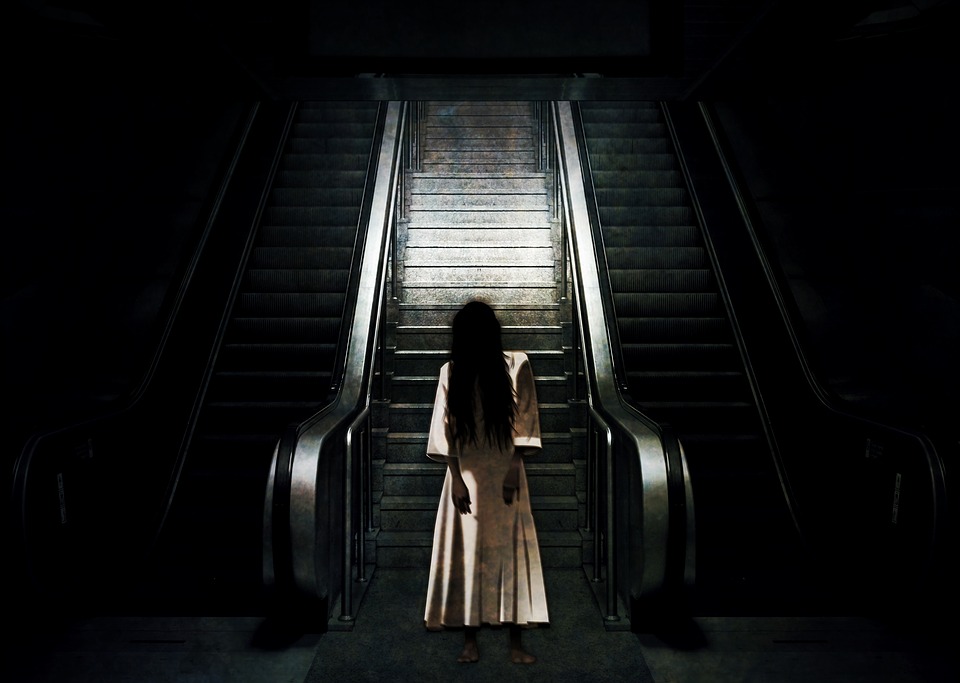
Ghost sightings are all too common around the world, with many passionately exclaiming that they could see spirits just at the edge of their vision. As it turns out, they may actually be seeing something. It’s just not what they claim. In a new study, it would seem that the brain generations illusions thanks to peripheral vision.
The findings of a study published in Association for Psychological Science’s journal of Psychological Science suggests that what people see out of the corner of their eyes mighty actually be there, MedicalXpress reports. The brain basically fills in the gap of areas that aren’t covered by the eyes’ field of vision with things that it believes should be there.
According to psychology researcher Marte Otten, the lead author of the study from the University of Amsterdam, this is a feature that seems to be deeply embedded in the brain’s visual and perception system.
"Our findings show that, under the right circumstances, a large part of the periphery may become a visual illusion," Otten said. "This effect seems to hold for many basic visual features, indicating that this 'filling in' is a general, and fundamental, perceptual mechanism."
The study involved testing participants with a series of visual tests, UPI reports. The participants were made to watch as images unfolded on a screen while images on the side were also appearing. The subjects were asked to click on the mouse once all of the images coalesced, and most of them failed.
Based on the results, it was also found that when the participants were asked about what they saw, most of them believed with confidence that the illusion they saw were as real as the actual images that they were fed. This offers some interesting ideas, largely having to do with the breadth of the illusory effects.













