


 Judge Orders Trump to Restore White House Access for CNN, MS NOW and Politico
  NATO Boosts Intelligence Sharing Amid Russia Hybrid Threats
  What ‘Taiwan Independence’ Means as Xi Presses Trump on US Policy
  Kremlin Says No Decision Yet on Putin-Trump December Summit
  Sudan Rejects US Legitimacy Remarks, Defends Sovereignty
  France Defends Netanyahu Airspace Clearance Despite ICC Warrant
  Najib Razak Seeks Stay of 15-Year 1MDB Prison Sentence
  North Korea Rejects Nuclear Test Warning, Calls Nuclear Status Irreversible
  Netanyahu Defends Israel at UN as Delegates Stage Walkout
  Mexico-US Trade Talks Delayed to October as Tariff Negotiations Continue
  South Korea, US Discuss Warship Building Cooperation
  Taiwan Thanks US for Support Ahead of Trump-Xi Summit
  Netanyahu Takes Aim at Mamdani as Israel Election Nears
  Trump, Xi Visit US National Archives After White House Summit
  EU Defence Build-Up Too Slow for 2030 Russia Readiness Goal
  Netanyahu’s Brief US Trip Highlights Strains With Trump
  US Senate Rejects Iran War Powers Resolution in 50-49 Vote


 Add as a preferred source on Google
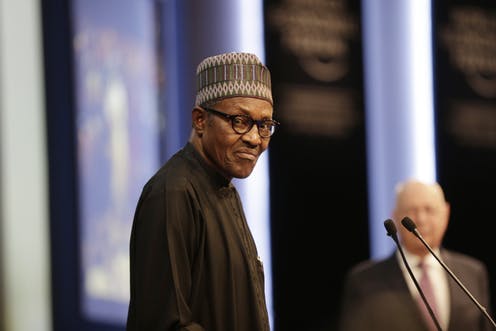
Muhammadu Buhari, Nigeria’s former president who served from 2015 to 2023 and was the first to defeat an incumbent through democratic elections, died in London on Sunday at age 82 after a prolonged illness, according to a presidential spokesperson. President Bola Tinubu has directed Vice President Kashim Shettima and the chief of staff to travel to London to escort Buhari’s body back to Nigeria. The former leader will be buried in his home state of Katsina in accordance with Islamic rites.
Buhari initially ruled Nigeria as a military leader following a 1983 coup before transitioning into a democratically elected president. Known for his anti-corruption stance and austere leadership, Buhari built a devoted following, especially in northern Nigeria. His 2015 victory over Goodluck Jonathan was hailed as the fairest election in Nigerian history.
However, hopes for security and economic reform dimmed as violence expanded beyond the northeast, and his administration struggled to contain armed groups and separatist movements. Dubbed “Baba Go Slow” for his sluggish decision-making, Buhari took six months to name a cabinet and resisted devaluing the naira, ignoring IMF advice.
His economic policies mirrored those of his 1980s military rule—keeping the currency overvalued and failing to curb rising inflation and recession. Despite anti-corruption promises, his campaign yielded few high-profile convictions, drawing criticism for selective enforcement and autocratic tendencies.
Notably, Buhari's tenure was marked by protests against police brutality in 2020, where unarmed demonstrators were killed, triggering nationwide unrest. Born in 1942 in Daura, Buhari once attempted to kidnap a critic in London during his military reign—a plan that failed and tarnished his international image.
Though controversial, Buhari left a legacy of infrastructure development and political transformation in Africa’s most populous nation.







