


 New Zealand Labour Backs Social Media Ban for Under-16s
  29 US states are suing Meta. What might it mean for the rest of the world?
  Woodside Drops $5 Billion Clean Energy Plan as Profit Rises 7%
  Neuralink Expands Brain Implant Trials with 12 Global Patients
  HP Stock Drops 9% Despite Q3 Earnings Beat and Raised 2026 Outlook
  SpaceX’s Starship Completes 11th Test Flight, Paving Way for Moon and Mars Missions
  SEC Probes Banks Over Situational Awareness Hedge Fund Collapse
  Xiaomi Unveils Xring O3 Chip for Flagship Foldable Phone
  Trump Administration Releases New UFO Files and Apollo Mission Records
  BofA Names ASML Top Semiconductor Equipment Pick on Growth, Valuation
  Senate Sets December 8 Vote on Trump’s NASA Nominee Jared Isaacman
  OpenAI AI Agent Swarm Behind Hugging Face Hack
  Salesforce Shares Surge as AI Demand Powers Q2 Earnings Beat
  SK Hynix Shares Fall as Workers Reject Wage Deal
  U.S. Probes Apex Logistics Over Nvidia AI Chip Shipments to China


 Add as a preferred source on Google
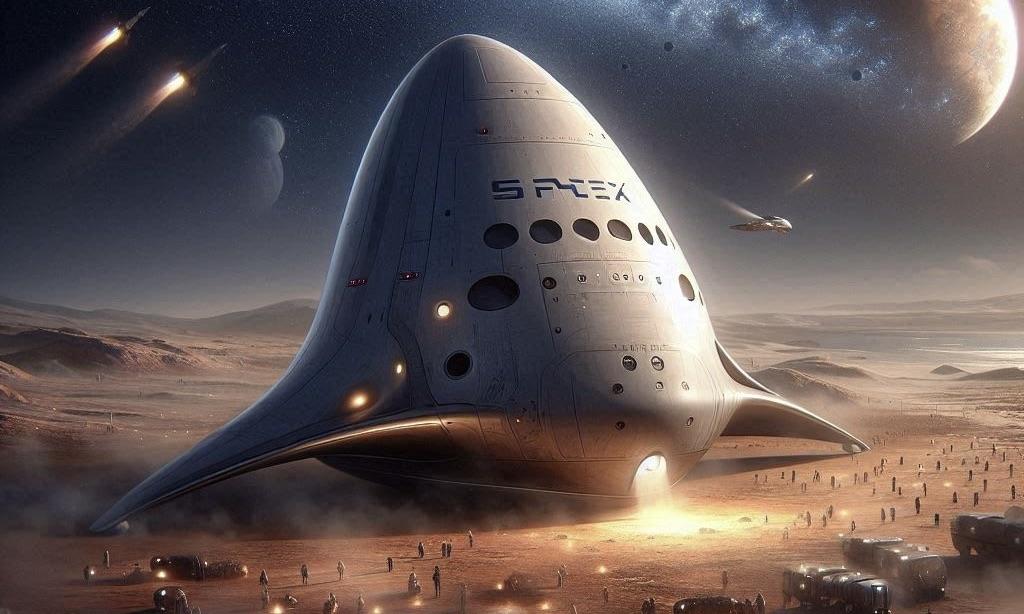
Elon Musk has revealed that SpaceX’s Starship will launch its first uncrewed mission to Mars in 2026. This historic flight will test the rocket's ability to land on the red planet, and crewed missions are planned for 2028. This marks a significant step toward making life interplanetary.
SpaceX Starship’s First Mars Mission Set for 2026, Crewed Flights Expected by 2028
In a significant revelation, Elon Musk recently disclosed the date of SpaceX's inaugural Starship mission to Mars.
After a year of rigorous flight tests, SpaceX is on the brink of a breakthrough with its mega-rocket, Starship. If successful, this engineering marvel will transport humans to Mars and revolutionize interplanetary life.
Musk has ambitious intentions for Starship, as evidenced by his announcement of the rocket's ambitious timeline for Mars missions. Initially, the missions will be unplanned:
“The first Starships to Mars will launch in 2 years when the next Earth-Mars transfer window opens. These will be uncrewed to test the reliability of landing intact on Mars. If those landings go well, then the first crewed flights to Mars will be in 4 years.”
The Starship's maiden voyage to Mars is slated for 2026, with crewed missions following in 2028. Whether these brave astronauts will set foot on Martian soil remains unanswered, adding a layer of suspense and anticipation to this epic journey. The audience is left eagerly awaiting further updates on this historic mission.
Musk Envisions Frequent Mars Voyages, Paving the Way for a Multi-Planetary Future with Starship
Musk subsequently stated that the frequency of these voyages from Earth to Mars using Starship will “grow exponentially from there.” According to Teslarati, this optimistic projection suggests a bright future for space exploration and the potential for Mars to become an autonomous city approximately 20 years later. It leaves the audience feeling hopeful and excited about the possibilities of a multi-planetary future.
Musk continued, stating:
In his continued vision, Elon Musk emphasized the profound impact of being multi-planetary. He stated, “Being multi-planetary will vastly increase the probable lifespan of consciousness, as we will no longer have all our eggs, literally and metabolically, on one planet.” This thought-provoking statement invites us to contemplate the potential evolution of human consciousness in a multi-planetary future.
Despite SpaceX's significant progress, the Federal Aviation Administration (FAA) has yet to grant clearance for the Starship launch. This is a crucial step, as the FAA is the ultimate authority to grant permission, even though the Federal Communications Commission (FCC) has certified the flight.







