


 Big AI wants to slow down AI research. Is it a safety pause or a strategic retreat?
  Burnham Eyes UK Leadership Role in AI Ahead of Trump Meeting
  Telix to Acquire Germany’s ITM in $1.65 Billion Radiopharma Deal
  LVMH-Hermès Dispute Deepens Over Secret 2002 Share Deal
  Prysmian, Rio Tinto Supply Low-Carbon Cables for Amazon Ohio Data Center
  Trump Bans CNN, MS NOW and Politico From White House
  fnny Beta Launches With a Simple Idea: Find an Event, Show Up, Get Rewarded
  NASA, Boeing Discuss Expanding Starliner Missions
  Meta CEO Zuckerberg Backs Independent AI Safety Reviews Over Development Slowdown
  Who should own the knowledge that underpins AI technology?
  Paramount Skydance Faces $30 Million Film Penalty in Warner Bros. Deal
  Supertanker Orders Surge as US-Iran War Reshapes Oil Trade
  SoftBank Launches $11 Billion Bond Sale to Fund OpenAI Investment
  MediaTek Unveils 2nm Dimensity 9600 Pro AI Chip
  SpaceX Nasdaq 100 Weight to More Than Double in Rebalance
  Apple Pay Set for India Launch With Axis Bank
  Westinghouse Targets $50 Billion Valuation in U.S. IPO


 Add as a preferred source on Google
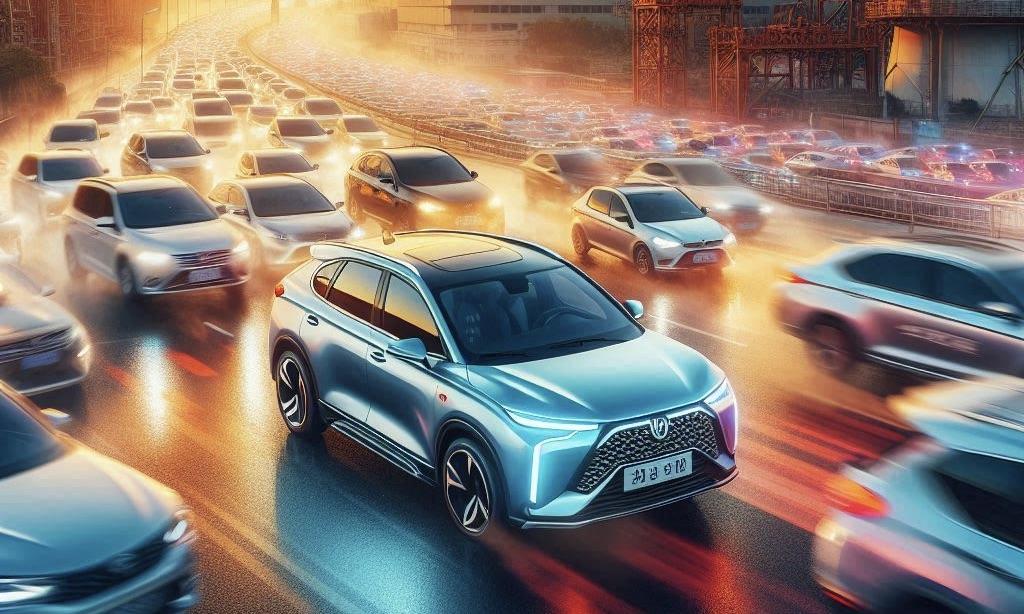
BYD and Geely reported significant profit growth in the first half of 2023, driven by strong sales of electric vehicles and strategic price cuts. Meanwhile, state-owned carmakers like SAIC Motor and Guangzhou Automobile saw declining profits as the market became increasingly competitive.
BYD and Geely Drive Profit Growth in China's Auto Market, Outpacing Struggling State-Owned Rivals
BYD and Geely Automobile Holdings were among the leading private automakers in China, and they reported profit growth in the January-June half. At the same time, SAIC Motor and other state-owned operators encountered challenges in an overcrowded market.
BYD's net profit increased by 24% year over year to 13.6 billion yuan ($1.9 billion), the highest among the 10 prominent Chinese carmakers that had reported results as of the end of August. According to Nikkei Asia, this achievement was a record for the first half of the year. The number of vehicles sold increased by 28%, reaching 1.61 million units.
BYD introduced new models, which experienced robust sales of electric vehicles and a plug-in hybrid that enhanced fuel efficiency. The February introduction of new offerings resulted in price reductions for over ten models, which increased sales.
Soochow Securities reported that BYD's net profit per vehicle was 7,800 yuan, even though the price reduction reduced its per-vehicle revenue by 15% to 156,000 yuan.
The automaker maintains minimal production costs by manufacturing the on-board batteries and significant components. Despite the price reductions, this is perceived as allowing for greater profitability than competitors.
Geely Automobile, a Hong Kong-listed subsidiary of Zhejiang Geely Holding Group, announced a sevenfold increase in net profit to 10.5 billion yuan. Because of its prestige, Zeekr EV brand vehicle sales increased by 41% to 950,000 units. The gross margins were enhanced due to the 5% increase in per-vehicle revenue for the Zeekr and Geely brands combined, which amounted to 129,000 yuan.
The net profit of Great Wall Motor increased by fivefold, reaching 7 billion yuan. The company's high-end Tank brand of off-road vehicles was famous, and a 21% increase in per-vehicle revenue contributed to the company's profitability.
State-Owned Automakers in China See Profit Declines Amid Struggles with Foreign Joint Ventures
In contrast, the earnings of state-owned car manufacturers could have been better due to the decline of their joint ventures with foreign partners.
SAIC Motor's net profit decreased by 6% to 6.6 billion yuan. Vehicle sales experienced a 12% decline to 1.82 million units, while per-vehicle revenue experienced a 1% decrease. It encountered difficulties in its partnership with General Motors.
The net profit of Guangzhou Automobile Group decreased by 49% to 1.5 billion yuan. The number of vehicles sold decreased by 26%, reaching 860,000 units. The automaker maintains distinct joint ventures with Honda Motor and Toyota Motor.
Dongfeng Motor experienced a 46% decrease in profit from joint ventures, which included one with Honda and another with Nissan Motor. The net profit of the automobile manufacturer decreased by 48% to 684 million yuan.
"The current situation cannot continue," Guangzhou Automobile Chairman Zeng Qinghong said at a June event in Chongqing. "Generating profit is what allows a company to pay taxes and hire."
China's Shift to Electric Vehicles Creates New Winners, Leaving State-Owned Automakers Behind
The industry's trend toward electrification has also resulted in victors and losers. The China Association of Automobile Manufacturers reported that 35% of new vehicles sold in the January-June half were classified as "new-energy vehicles," which include electric vehicles (EVs) and plug-in hybrids. The figures encompass cars that have been exported.
BYD, which discontinued petroleum vehicle sales in 2022, has focused on producing new energy vehicles and has experienced increased sales. In contrast, SAIC Motor's unit sales of new-energy vehicles account for only 25% of the total, and other significant state-owned automobile manufacturers are similarly underperforming.
It is also anticipated that the auto market in China will experience heightened competition in terms of features, such as the integration of artificial intelligence and autonomous driving. Carmakers that fail to secure the price war will be forced into a downward spiral of insufficient investment funds, as next-generation technology necessitates substantial expenditures.







