


 US, Japan and South Korea Back Taiwan Ahead of Trump-Xi Summit
  South Korea to Brief Lawmakers on $350 Billion US Investment Package
  Gold Prices Slip as Strong Dollar and Hawkish Fed Pressure Bullion
  Asia Stocks Rise on AI Demand as Oil Eases
  US-China Talks Target AI, Tariffs Ahead of Trump-Xi Summit
  Mexico Pushes for US Trade Deal Before Midterms
  Canada Eyes India Trade Deal by Year-End
  Yen in Focus as BOJ, Fed Rate Hikes Reshape Currency Markets
  Yen Weakens as Dollar Gains on Widening US-Japan Rate Gap
  Bessent, He Lifeng to Discuss AI Security and Trade in New York
  Oil Prices Rise as Houthi Strikes on Riyadh Fuel Middle East Tensions
  S&P 500 Historically Rallies After Midterm Elections, UBS Says
  Wall Street Surges as Meta Leads AI Rally, Oil Prices Fall
  France Debt-to-GDP Ratio Seen Hitting Record 119.3% in 2026
  Gold Prices Rise as Oil Slump Eases Fed Rate Hike Fears
  Strait of Hormuz Oil Shipments Hit Six-Month High as U.S. Clears Mines


 Add as a preferred source on Google
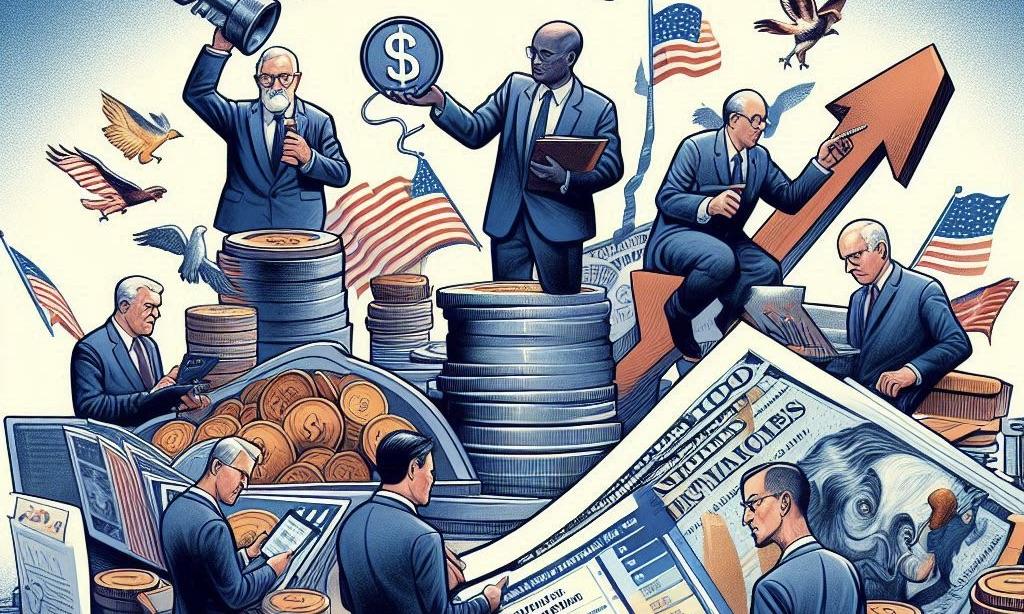
A recent Wall Street Journal survey reveals that most economists anticipate higher inflation, deficits, and interest rates under a second Trump administration compared to a Biden presidency. The survey, conducted among 68 professional forecasters, highlights concerns over Trump's policy preferences on immigration and trade.
WSJ Survey: Economists Expect Higher Inflation, Deficits Under a Second Trump Administration
According to a report published by The Wall Street Journal this week, most economists anticipate that inflation, deficits, and interest rates would be higher under a second Trump administration than if Biden remains in the White House.
The Wall Street Journal reported that 68 professional forecasters from academia, Wall Street, and business responded to its quarterly survey of forecasters, which was conducted between July 5 and 9.
"Of the 50 who answered questions about Trump and Biden, 56% said inflation would be higher under another Trump term than a Biden term," said the WSJ. This is said to be compared to 16% who said the opposite, with the remainder seeing no material difference.
The publication elucidates that Trump's policy preferences, particularly immigration and trade, primarily contribute to economists' perspectives on inflation and interest rates.
However, they note that it is "unlikely those assessments would change substantially with a different Democratic candidate."
Analysts at the Economic Outlook Group informed the Wall Street Journal that there is a genuine possibility that inflation will reaccelerate during a Trump presidency.
The WSJ further states that economists anticipate a 1.7% increase in the U.S. gross domestic product this year following the most recent inflation data, a decrease from the 3.1% growth achieved in 2023 (based on the fourth quarter compared to the previous year).
Furthermore, they predict that unemployment will continue to hover slightly above 4% until 2026 and that payrolls will increase by approximately 131,000 monthly jobs over the next year.
Economists generally estimate a recession likelihood within the next year is 28%. According to the Wall Street Journal, the forecasts have undergone minimal modification since their most recent survey in April.
Investors Hesitant in 2024 Amid High Valuations, ProPicks' AI Identifies High-Potential Stocks
Many investors are hesitant to allocate additional funds to equities in 2024 due to the significant increase in valuations. Are you uncertain? Do you need more certainty about the next investment to make? Gain access to our portfolios that have been demonstrated successful and identify high-potential opportunities
According to Investing.com, ProPicks' AI identified two stocks that experienced a 150% increase in 2024, four additional stocks that experienced a 30% increase, and three additional stocks that experienced a 25% increase. That is an extraordinary record.
With portfolios that are customized for Dow stocks, S&P stocks, Tech stocks, and Mid Cap stocks, you have the opportunity to investigate a variety of wealth-building strategies.







