


 Yen Weakens as Dollar Gains on Widening US-Japan Rate Gap
  Wall Street Mixed as Treasury Yields Rise After Fed Hike
  Wall Street Surges as Meta Leads AI Rally, Oil Prices Fall
  UK Home Asking Prices Rise for First Time Since May
  Gold Prices Rise as Oil Slump Eases Fed Rate Hike Fears
  Canada Eyes India Trade Deal by Year-End
  Oil Prices Tumble on U.S.-Iran Diplomacy Hopes, Supply Relief
  South Korea to Brief Lawmakers on $350 Billion US Investment Package
  France Debt-to-GDP Ratio Seen Hitting Record 119.3% in 2026
  Mexico Pushes for US Trade Deal Before Midterms
  Vietnam Stocks Join FTSE Emerging Market Indexes, Unlocking Billions in Foreign Investment
  Vietnam, US Trade Deal Could Be Signed Soon, To Lam Says
  S&P 500 Historically Rallies After Midterm Elections, UBS Says
  Oil Prices Rise as U.S.-Iran Talks Fuel Diplomacy Hopes
  Asia Stocks Rise on AI Demand as Oil Eases
  Bolivia Approves $1.9 Billion IMF Financing Deal
  Gold Prices Slip as Strong Dollar and Hawkish Fed Pressure Bullion


 Add as a preferred source on Google
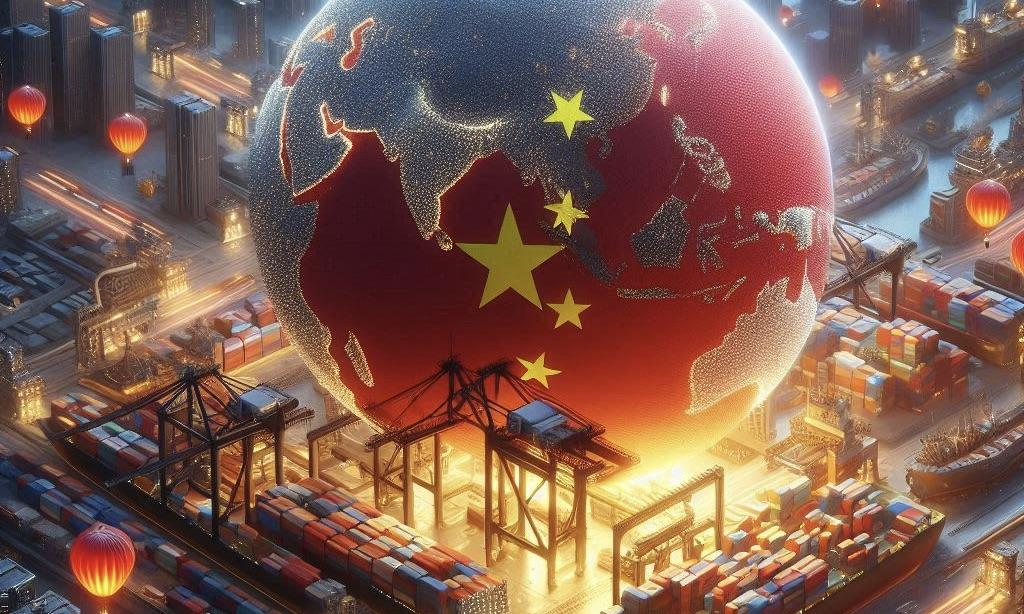
China’s relentless export growth, reaching $308 billion in June, contrasts sharply with declining imports, widening the trade surplus to a record $99 billion. This imbalance intensifies global economic tensions as countries implement new tariffs to protect local industries.
China's Export Boom Worsens Global Trade Imbalance, Prompting New Tariffs and Economic Tensions
China's unrelenting economic expansion is a growing concern for governments worldwide. Chinese conquest on a global scale is characterized by a significant export of products, which has resulted in a concerning trade imbalance. This text investigates the origins of this phenomenon, its implications for the global economy, and the measures implemented by various countries to mitigate it.
Was the economic crisis in China resolved so rapidly even though the figures were atrocious a considerable amount of time ago? The substantial Chinese trade surplus has precipitated numerous international responses.
Chinese exports increased for the third consecutive month in June, reaching $308 billion. Conversely, imports decreased to $209 billion, according to Cointribune.
This circumstance exacerbated the economic imbalance with China's trading partners, resulting in a record trade surplus of $99 billion.
This surplus is primarily the result of poor domestic demand, which compels China to sell its products in foreign markets.
Nevertheless, this dynamic has its drawbacks. In response to this influx of Chinese products, several countries, such as the United States, the European Union, and Brazil, have implemented new taxes on Chinese imports, particularly domestic appliances and electric vehicles.
These trade tensions manifest a more profound malaise: China employs its trade surplus to mitigate the effects of a crisis-ridden real estate market and feeble domestic demand.
Reduced domestic consumption has necessitated China's increasing its exports to sustain its economy. Falling condominium prices, which account for a significant portion of household savings, have contributed to this trend.
China Shifts Focus from Real Estate to Manufacturing to Combat Economic Woes, Sparking Global Trade Concerns
China's strategy to sustain its economic development is heavily influenced by finance. In response to the real estate crisis, the Chinese government has redirected bank loans from the real estate sector to the manufacturing industry, prompting millions of individuals to save.
In the twelve months leading up to March, new bank loans to industrial borrowers totaled $614 billion, six times the annual amount of loans to these borrowers before the pandemic.
This substantial reallocation of financial resources aims to boost industrial production and counteract the decline in the real estate market.
Nevertheless, this policy is not without its dangers. Reducing the prices of exported products could exacerbate the current trade tensions with foreign partners due to manufacturing overcapacity.
Additionally, the long-term, protracted nature of China's economic challenges may be exacerbated by the emphasis on industrial expansion rather than domestic demand stimulation.
The Chinese government anticipates expanding exports to maintain factory operations and generate employment opportunities. However, if trade relations deteriorate, this strategy may prove counterproductive.
A quote from economic expert Bruce Pang succinctly encapsulates this situation:
“The record surplus could also fuel those quick to judge China’s manufacturing overcapacity and perceived dumping practices to bolster trade.”
This statement demonstrates the obstacles China, which has recently expressed interest in bitcoin mining (BTC), encounters as it navigates an increasingly antagonistic global economy.
Global Trade Tensions Rise as Countries Implement Tariffs to Counter China's Growing Surplus
China's trade surplus significantly affects the global economy. The weak domestic demand and substantial Chinese exports require other countries to absorb increasing Chinese products, threatening their local industries.
Numerous governments have responded by implementing protectionist policies, including tariff increases and trade barriers, to safeguard their country's industries. These actions could escalate into a full-scale trade war, which could have catastrophic repercussions for the global economy.
The United States and the European Union are not the only countries affected by the trade imbalance with China. The influx of Chinese products into their markets also affects countries such as India, Turkey, and Brazil, which are members of the BRICS.
The increasing tensions within BRICS are particularly revealing: despite their shared objective of reducing economic dependence on Western powers, China's ascent generates friction.
For instance, Brazil's recent imposition of a substantial tax on Chinese imports is a clear indication of the apprehension regarding Chinese economic hegemony, even among its purported allies.







