


 U.S. 10-Year Treasury Yield Hits 2007 High as Fed Rate Hike Bets Rise
  Pezeshkian Says US Must Choose When Iran War Ends
  Trump Asks Supreme Court to Restore Third-Country Deportations
  Fed Unveils Stablecoin Rules Under GENIUS Act
  Fed Unveils Stablecoin Rules Under GENIUS Act
  Kremlin Says No Decision Yet on Putin-Trump December Summit
  Wall Street Ends Flat as Oil, Treasury Yields and Fed Jitters Rattle Markets
  Japan Private-Sector Growth Slows as Domestic Demand Weakens
  South Korea, US Discuss Warship Building Cooperation
  European Stocks Fall as Bond Yields and Geopolitical Risks Weigh
  Asian Stocks Fall as Surging Bond Yields Rattle Markets
  Xi Calls for Deeper U.S.-China AI Cooperation in Trump Talks
  Sudan Rejects US Legitimacy Remarks, Defends Sovereignty
  US Backs Musk in Fight Against EU’s €120 Million X Fine
  Asian Stocks Fall as Bond Yields Surge Ahead of Trump-Xi Summit
  Trump, Xi Focus on Trade and AI at White House Summit
  Gold Prices Fall as Treasury Yields Rise on Fed Rate Hike Bets


 Add as a preferred source on Google
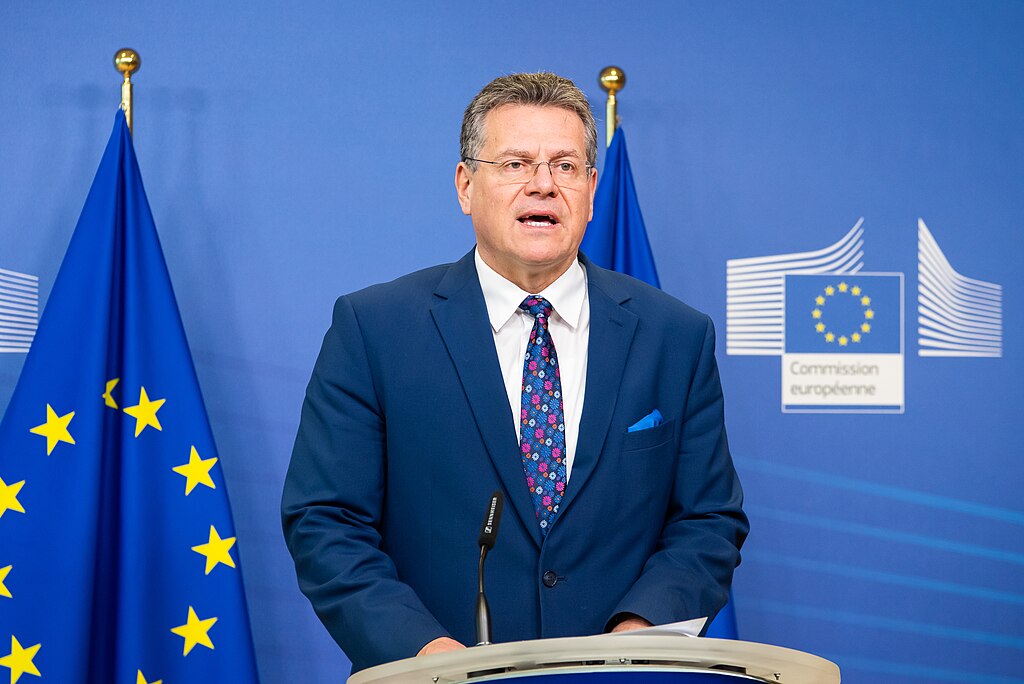
The European Union is intensifying efforts to secure long-term access to critical minerals, with EU Trade Commissioner Maros Sefcovic revealing that he recently discussed new investment pathways with Australia’s Resources Minister Madeleine King. According to Sefcovic, the conversation focused on how the EU and Australia could collaborate more effectively through equity stakes in mining projects, long-term off-take agreements, and potential joint investments. These discussions come as both sides work to revive negotiations for an EU-Australia free trade agreement that stalled in 2023.
Sefcovic noted that the EU has already identified a first set of Australian resource projects of interest, with an official list expected to be released shortly. He emphasized that Europe aims to strengthen its supply chain resilience for critical minerals, taking cues from Japan’s strategic approach of directly investing in mines and processing facilities. As global competition for resources intensifies—particularly for minerals essential to clean energy technologies and semiconductor production—the EU is determined to avoid repeating past mistakes tied to over-dependency on single suppliers.
Reflecting on Europe’s reliance on Russian oil and gas, Sefcovic stressed that the region learned difficult lessons about vulnerability and the high cost of rapid diversification. Today, similar pressures are emerging around chips and other raw materials, making secure and diversified supply chains a top priority for the bloc.
As for the broader trade agreement, Sefcovic highlighted renewed “momentum” in negotiations during his visit to Melbourne. Another round of talks is expected early next year. The previous attempt collapsed largely due to disagreements over agricultural market access, with Australia seeking more opportunities for its farm exports, while the EU pushed for reduced tariffs on manufactured goods and greater access to Australian critical minerals.
With geopolitical tensions and global demand for strategic minerals rising, both sides appear more motivated to reach a deal that supports economic stability, energy transition goals, and long-term security for essential supply chains.







