


 Australia Trade Balance Swings to Surprise Deficit as Imports Outpace Exports in May
  Alcohol is one of the most dangerous drugs, yet its presence is ubiquitous in social settings and celebrations
  JPMorgan Cuts Gold Price Forecast, Sees Bullion Reaching $4,500 by End of 2026
  Gold Price Today: Bullion Heads for First Weekly Gain as Weak U.S. Jobs Data Eases Rate Hike Fears
  Denmark Central Bank Intervenes to Support Krone Peg Against Euro
  US Stock Futures Hold Steady Ahead of June Jobs Report as Fed Rate Outlook Remains in Focus
  Brazil to Phase Out Gasoline Subsidy First as Diesel Support Stays Longer
  U.S. Dollar Drops as Weak Jobs Data Boosts Fed Pause Bets, Yen Jumps on Intervention Talk
  Michael Burry Shorts Tesla at $416 as AI and Semiconductor Bearish Bets Expand
  China Services PMI Beats Forecasts as Strong Demand Supports June Growth
  Goldman Sachs Says China Competition Weighs More on EU Growth Than Trade Deficit
  Gold Price Surges Above $4,120 as Weak US Jobs Data Lowers Fed Rate Hike Expectations
  Oil Prices Steady as U.S.-Iran Peace Talks Ease Strait of Hormuz Supply Fears
  Smartphones are helping filmmakers tell the stories the movie industry overlooks


The Reserve Bank of New Zealand's (RBNZ) expansionary monetary has helped New Zealand's economy develop well over the past year. The nation's real Gross Domestic Product (GDP) rose by 0.8-0.9 percent q/q over the past four quarters. The domestic economy and rising exports which were supported by a recovery of commodity prices have proved to be the main drivers.
That said, downside risks to New Zealand's growth remain high. Poor growth outlook for China and still low commodity prices continue to weigh on New Zealand's growth outlook. Despite some pickup, the RBNZ remains severely concerned about the low milk prices and has lowered its medium-term forecast for the price of milk powder by almost 10 percent. Domestic dairy sector accounts for over one quarter of New Zealand’s exports and weakness in milk price will hurt terms of trade and thus dampen the growth outlook.
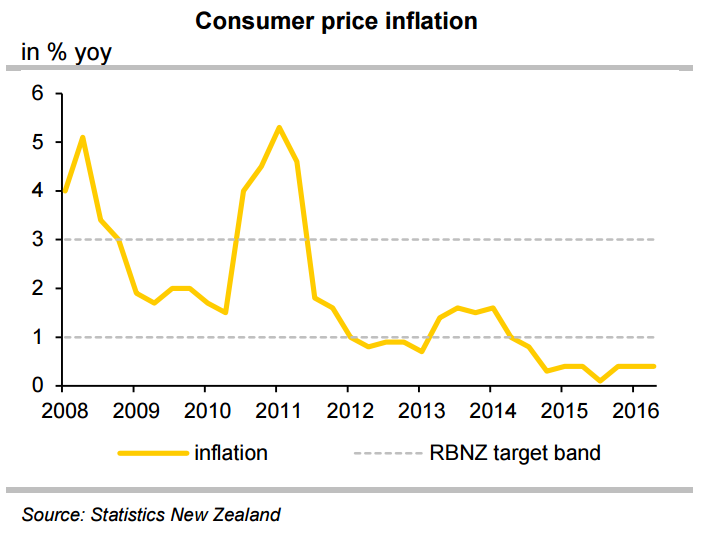
Inflation in New Zealand also remains low despite decent growth. Inflation has been below the RBNZ’s 1-3 percent target range since late 2014. RBNZ efforts to prop up inflation with rate cuts have been countered by strong exchange rate which keeps tradable goods inflation in negative territory. NZD trades above the levels anticipated by the RBNZ on a trade-weighted basis.
At its last meeting in November, the central bank signalled that its rate cut cycle was over, but vice governor John McDermott warned that the central bank would not hesitate to cut key rates further should the currency continue to appreciate. RBNZ does not only see the depreciation of the NZD to be desirable, but as necessary.
Donald Trump’s election victory has raised inflation and consequently interest rate expectations in the U.S., which would exert downside pressure on the NZ dollar. Against the euro, moderate NZD appreciation is seen as the improving growth outlook compared to the euro zone supports the NZD slightly.
NZD/USD was trading at 0.7093, while EUR/NZD was at 1.5141 at around 12:30 GMT. At the said time FxWirePro's Hourly USD Spot Index was at 19.5385 (Neutral bias), EUR Spot Index was at -11.0629 (Neutral bias) and NZD Spot Index was at -44.6194 (Neutral bias).
For more details on FxWirePro's Currency Strength Index, visit http://www.fxwirepro.com/currencyindex







