


 Japanese Bank Stocks Surge as Bond Yields Fuel Rate Hike Bets
  European Stocks Fall as Bond Yields and Geopolitical Risks Weigh
  Fed Unveils Stablecoin Rules Under GENIUS Act
  Russian Envoy Dmitriev Heads to US for Ukraine Talks
  U.S. Dollar Hits Two-Month High as Oil, Treasury Yields Surge
  Wall Street Falls as Treasury Yields Surge, Oil Rebounds on Iran Tensions
  Japan Private-Sector Growth Slows as Domestic Demand Weakens
  Asian Stocks Fall as Surging Bond Yields Rattle Markets
  Mexico-US Trade Talks Delayed to October as Tariff Negotiations Continue
  Wall Street Ends Flat as Oil, Treasury Yields and Fed Jitters Rattle Markets
  US 10-Year Treasury Yield at 6% Emerges as New Market Risk Threshold
  Asian Stocks Fall as Bond Yields Surge Ahead of Trump-Xi Summit
  US Stock Futures Fall as Treasury Yields Surge Ahead of Trump-Xi Summit
  Soybean Futures Slip as Traders Await Trump-Xi Trade Signals
  Gold Holds Near $4,275 as Rising Treasury Yields Fuel Fed Rate Hike Bets
  US, China Extend Trade Truce to Jan. 10 Ahead of Trump-Xi Summit
  Trump, Xi Focus on Trade and AI at White House Summit


 Add as a preferred source on Google
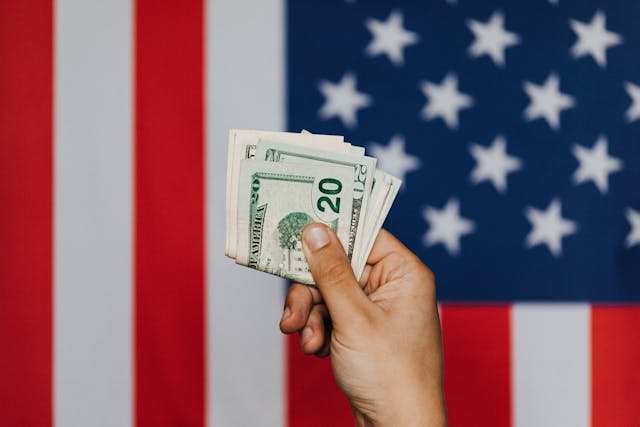
The U.S. dollar held steady on Wednesday as investors stayed cautious following the swift end to a partial U.S. government shutdown and closely watched political and monetary developments across major economies. Currency markets continued to digest U.S. President Donald Trump’s nomination of Kevin Warsh as the next Federal Reserve chair, a move that has broadly supported the dollar on expectations that aggressive interest rate cuts are unlikely in the near term.
Market sentiment has also been reassured by the belief that Warsh’s appointment could help safeguard the Federal Reserve’s independence after repeated criticism from Trump toward the central bank and current Chair Jerome Powell. The dollar index, which tracks the greenback against six major currencies, hovered around 97.43, close to a one-week high, after posting notable declines earlier this year and throughout last year.
The euro traded at $1.1814, while the British pound stood near $1.3693 as investors awaited policy decisions from the European Central Bank and the Bank of England. Both central banks are widely expected to keep interest rates unchanged, reinforcing a cautious tone in European currency markets.
Attention has also turned to Japan, where the yen weakened to around 156.06 per dollar, near a two-week low, ahead of a closely watched national election this weekend. Speculation around possible U.S.-Japan currency intervention has helped stabilize the yen in recent weeks, but uncertainty remains high. Prime Minister Sanae Takaichi’s campaign promises of increased fiscal spending, tax cuts, and higher defense outlays have raised concerns about Japan’s growing debt burden and its impact on government bonds and the yen.
Elsewhere, the Australian dollar climbed to $0.7028 after the Reserve Bank of Australia raised interest rates, fueling expectations of further tightening this year. The New Zealand dollar edged slightly lower to $0.604.
Overall, global currency markets remain driven by central bank policy expectations, political uncertainty, and shifting risk sentiment, keeping investors cautious and highly attentive to upcoming economic and political events.







