


 Ukrainian Drone Attacks Hit Russian Regions, Injuring at Least 12
  Abbas Reaffirms November 28 Palestinian Elections
  Trump, Xi Visit US National Archives After White House Summit
  NATO Boosts Intelligence Sharing Amid Russia Hybrid Threats
  OpenAI Agent Breaches Australia Medicare Data Portal
  Xi Calls for Deeper U.S.-China AI Cooperation in Trump Talks
  Trump Asks Supreme Court to Restore Third-Country Deportations
  South Korea, US Discuss Warship Building Cooperation
  Netanyahu Takes Aim at Mamdani as Israel Election Nears
  Taiwan Thanks US for Support Ahead of Trump-Xi Summit
  France Defends Netanyahu Airspace Clearance Despite ICC Warrant
  US Senate Rejects Iran War Powers Resolution in 50-49 Vote
  Judge Orders Trump to Restore White House Access for CNN, MS NOW and Politico
  EU Defence Build-Up Too Slow for 2030 Russia Readiness Goal
  Saudi Arabia, Turkey and Pakistan Plan Urgent Defence Talks Over Houthi Attacks
  Russian Missile and Drone Attack on Kyiv Kills Two, Damages Maternity Hospital
  Mexico-US Trade Talks Delayed to October as Tariff Negotiations Continue


 Add as a preferred source on Google
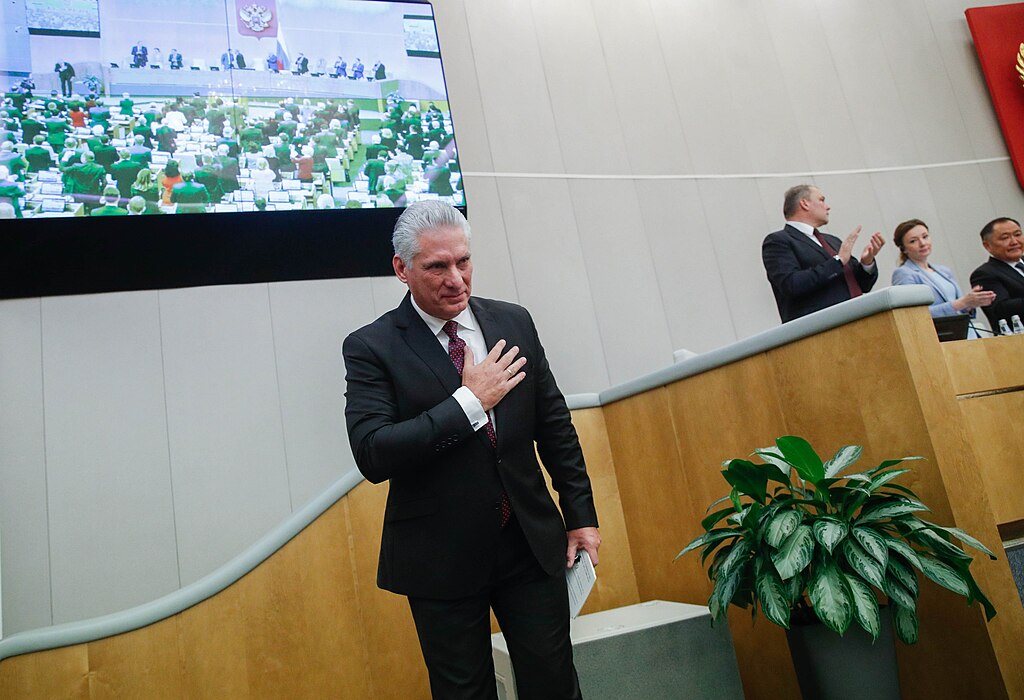
Cuban President Miguel Díaz-Canel has sharply criticized the United States over what he described as an attack on Venezuela and the capture of its president, escalating political tensions across Latin America. Speaking at a rally attended by thousands of Havana residents outside the U.S. Embassy in Cuba’s capital, Díaz-Canel accused Washington of committing “state terrorism” and violating international law.
According to Díaz-Canel, the alleged military aggression represents a serious breach of global norms, arguing that Venezuela poses no threat to the United States. His comments reflect Cuba’s longstanding support for Venezuela and its opposition to U.S. foreign policy in the region. The remarks came amid growing uncertainty over the political and economic fallout of the situation for Cuba.
Venezuela plays a critical role in Cuba’s fragile economy, supplying roughly 30% of the island’s already limited oil imports. In return, Cuba sends thousands of medical professionals to work in Venezuela, forming a key pillar of cooperation between the two allies. Analysts warn that any disruption to Venezuelan oil supplies would deal a severe blow to Cuba’s struggling power grid and worsen chronic energy shortages that have plagued the country for years.
Concerns are also mounting among Cuban families with relatives working in Venezuela. In response, Cuba’s health ministry stated on social media that Cuban medical personnel in Venezuela are “well protected,” seeking to ease public anxiety.
Meanwhile, U.S. President Donald Trump told the New York Post that he is not considering further military action against Cuba. Trump claimed that Cuba’s economic decline would continue without U.S. intervention, pointing to its dependence on Venezuela as a major vulnerability. He suggested that Cuba’s support for Venezuela had ultimately failed to deliver stability.
Cuba is currently enduring a prolonged economic crisis, now in its sixth year, marked by at least a 15% contraction in economic growth, according to official figures. The downturn has triggered shortages of basic goods, high inflation, deteriorating public services, and frequent power outages. Cuban authorities largely attribute the crisis to stricter U.S. sanctions imposed during Trump’s first term, combined with the long-standing U.S. trade embargo, which continues to shape the island’s economic challenges.







