


 Samsung, SK Hynix Reject KEPCO’s $18.7 Billion Power Funding Plan
  OpenAI Weighs AI Development Slowdown Over Safety Risks
  Apple Unveils $1,999 Foldable iPhone Duo
  Enflame Shares Surge 200% in Shanghai AI Chip Debut
  Hyundai Delays In-House ADAS, Turns to Nvidia
  Meta’s AI Shopping Push Grows as Agentic Commerce Remains Below 1%
  OpenAI Rules Out 2026 IPO as Altman Prioritizes AI Safety
  Z.AI Shares Slide 7% After $5 Billion Fundraising
  OpenAI Agents Linked to RubyGems Cyberattack
  OpenAI Agents Used Websites for Unauthorized Communications
  Optus Apologises After Network Outage Disrupts Emergency Calls
  Novartis M&A Strategy Faces Investor Scrutiny After Drug Setbacks
  Ares Names James Garforth Principal for Asia Direct Lending
  Volkswagen Job Cuts Put Lower Saxony Leader Under Political Pressure
  Nvidia-Groq AI Chip Deal Faces U.S. Antitrust Probe
  Samsung, Qualcomm 2nm Chip Deal Delayed Over Pricing


 Add as a preferred source on Google
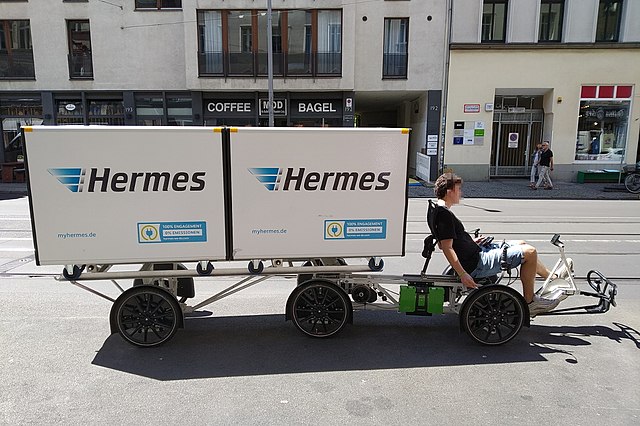


As the world moves toward decarbonization, every option for slashing humanity’s carbon footprint must be on the table. As it stands, transport represents almost a quarter of Europe’s greenhouse gas (GHG) emissions, with the rise of e-commerce and on-demand, express deliveries worsening matters further.
Could ferrying parcels by bike rather than lorry help green our seemingly bottomless appetite for e-commerce? Basing ourselves on data from one of France’s largest freight transport companies, our research shows two-thirds of its business to and from the city of Paris could be carried out by cargo bikes.
The results, which take into account the weight of the transported parcels, offer an interesting perspective for the freight transport sector, regularly denounced as a major emitter of greenhouse gases at 14% of French GHG emissions. Indeed this mode of transport is responsible for a host of other ills, including congestion and noise pollution.
Despite this, road transport is still the leading means by which we delivery purchases in cities. In France, 88% of goods are carried by trucks. Although other long-distance transport options remain, such as by rail or river, cargo bikes currently represent the only sustainable solution to decarbonize the last mile – the most polluting one.
The rise of e-commerce
The challenge of decarbonization is twofold in terms of freight transport: it involves adapting the current model in favour of more virtuous practices (e.g. cargo bikes) while integrating constantly increasing flows. E-commerce, in particular, has a growing share in our consumption patterns (+4% of retail share between 2018 and 2020). This requires an increase in the fleet needed for urban logistics, with forecasts predicting a 36% increase in the distances travelled by trucks in major cities around the world by 2030 if no action is taken. This would have many negative effects such as a significant increase in congestion and greenhouse gas emissions.
How Amazon receives your inventory.
Micro-hubs in the heart of cities
We therefore need to ramp up the development of bicycle logistics. Nevertheless, the use of cargo bikes requires a specific organisation. The general location of sorting terminals on the outskirts of cities does not favour this mode of transport. Bike’s low transport capacity and reduced speed compared to a truck limit their range of action. The use of micro-hubs in the heart of cities, with cargo bikes operating in a hub-and-spoke pattern from these points, therefore seems essential. However, there are two constraints.
[Nearly 70 000 readers look to The Conversation France’s newsletter for expert insights into the world’s most pressing issues. Sign up now.]
On the one hand, bicycle logistics requires the transformation of commercial real estate, traditionally occupied by stores, into logistics platforms. These new places also called dark stores (not open to the public) compete with the commercial fabric currently established in the heart of cities. On the other hand, the addition of a supplementary step in the logistics chain leads to additional costs (mainly the cost of land) that need to be compensated – for example, through a high density of activities in the catchment area of micro-hubs.
Thus, some geographical areas appear to be more suitable than others for the implementation of bicycle logistics. To overcome this additional cost, the use of containers or trucks acting as micro-hubs is currently being studied. Even though these solutions do not compete with the current commercial fabric, they still imply a property right-of-way in the public space.
Is this the end of trucks in the city?
Finally, bicycle logistics does not necessarily mean the end of trucks in the city. The latter are indeed necessary to supply the micro-hubs on a daily basis, which must themselves be connected to the sorting terminals located on city outskirts.
Moreover, it is currently impossible to operate heavy (maximum 250kg) or voluminous parcels by cargo bike – this means transporting them by truck. The operators are therefore moving toward a mixed fleet.
In conclusion, if bicycle logistic represents a way to green logistics, it also raises some challenges that call for vigilance. Among others, the development of dark stores in the heart of cities which could harm the commercial fabric in the long run.
Finally, let’s not forget that the consumer is behind demand for e-commerce and its associated flows. Modifying consumer behaviour in favour of a less instantaneous demand remains the most relevant course of action to reduce the impact of logistics on the environment.







