


 Jensen Huang Strengthens Nvidia’s South Korea Ties Amid AI Expansion
  OpenAI May Slash AI Service Prices Amid Growing Rivalry With Anthropic
  Alaska Air Group Eyes Return of Financial Guidance as Fuel Market Volatility Eases
  US Officials Explore AI Company Equity Stakes Ahead of OpenAI and Anthropic IPO Plans
  Quantinuum Raises $1.68 Billion in Upsized Nasdaq IPO Amid Growing Quantum Computing Demand
  GM and Peak Energy Partner to Advance Sodium-Ion Battery Technology for Grid Storage
  Sigma Healthcare Shares Slide Amid Preliminary Boots Acquisition Talks
  Netflix Names Jay Hoag as Board Chairman Following Reed Hastings’ Departure
  Meta Partners With Reliance to Launch First AI-Powered Data Center in India
  Apollo Ends Pursuit of Bodycote, Withdraws £1.52 Billion Takeover Proposal
  SpaceX IPO Demand Surges Past $250 Billion Ahead of Historic Market Debut
  Naver Stock Jumps on NVIDIA Partnership to Build South Korea’s AI Infrastructure
  Changchun Targets EV Growth as China’s Auto Industry Consolidation Accelerates
  Hyundai, Nvidia, and South Korea Near Deal for Major AI Technology Center


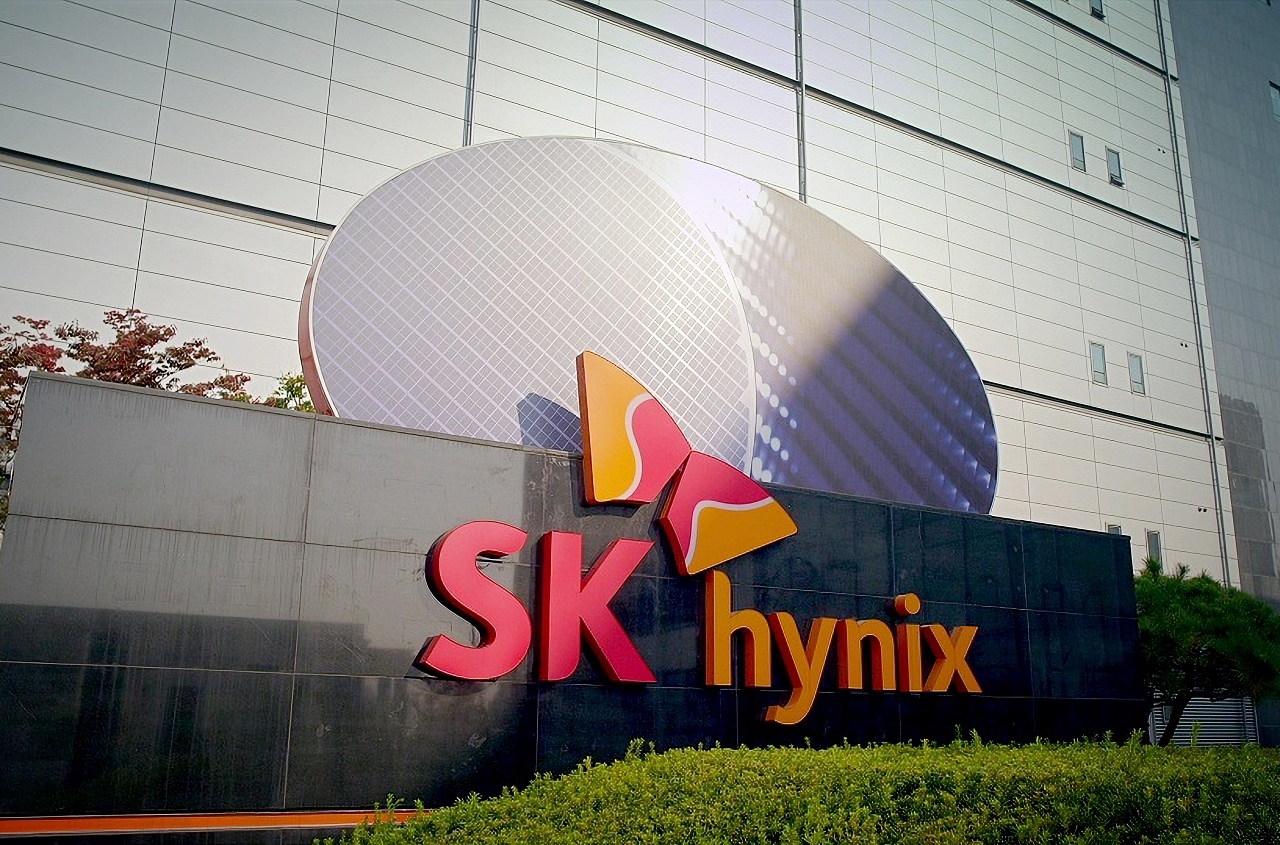
SK Hynix shares recovered from early losses on Thursday after reports revealed the company’s ambitious plan to significantly expand its wafer production capacity over the next decade. The South Korean memory chip manufacturer ended higher despite a weak start, highlighting renewed investor confidence in the company’s long-term growth prospects driven by artificial intelligence (AI) demand.
Shares of SK Hynix climbed 2.6% to 210,000 won after initially falling as much as 3.5% during the trading session. The stock’s rebound also helped the benchmark KOSPI index reduce some of its earlier declines, although the broader market remained in negative territory. Meanwhile, rival Samsung Electronics saw its shares drop more than 1%.
The positive sentiment followed comments from SK Group Chairman Chey Tae-won, who told Nikkei Asia that SK Hynix intends to triple its wafer production capacity by 2034. The expansion aims to meet growing demand for advanced memory chips used in AI applications, including data centers, machine learning systems, and next-generation computing technologies.
As one of the world’s leading memory chip manufacturers, SK Hynix has been a major beneficiary of the global AI boom. Strong demand for high-bandwidth memory (HBM) and other advanced semiconductor products has tightened supply across the memory market, driving chip prices higher and boosting the company’s financial performance.
The AI-driven rally helped propel SK Hynix’s market valuation beyond $1 trillion last month, reflecting strong investor enthusiasm for companies positioned to benefit from the rapid adoption of artificial intelligence technologies.
However, the stock has recently faced increased volatility. SK Hynix declined roughly 11% last week as investors locked in profits after a strong run-up. Concerns about the sustainability of the AI investment trend, combined with fears of higher global interest rates, have also pressured technology stocks worldwide.
Despite these near-term challenges, SK Hynix’s aggressive expansion strategy underscores its confidence in the long-term growth of the AI semiconductor market, positioning the company to capitalize on rising demand for advanced memory solutions in the years ahead.







