


 Japan Signals Surprise Yen Intervention Strategy as BOJ Hawkish Stance Puts FX Traders on Alert
  Oil Prices Slip as Oversupply Concerns and U.S.-Iran Talks Shape Market Outlook
  U.S. Dollar Drops as Weak Jobs Data Boosts Fed Pause Bets, Yen Jumps on Intervention Talk
  Asian Stocks Rebound as Tech Shares Rally on Fed Rate Cut Hopes and Easing Iran Tensions
  US Stock Futures Hold Steady Ahead of June Jobs Report as Fed Rate Outlook Remains in Focus
  JPMorgan Cuts Gold Price Forecast, Sees Bullion Reaching $4,500 by End of 2026
  Gold Surges Past $4150 on Dovish Fed Signals and Weak Jobs Data; Bullish Outlook Prevails
  Gold Price Today: Bullion Heads for First Weekly Gain as Weak U.S. Jobs Data Eases Rate Hike Fears
  Goldman Sachs Raises USD/JPY Forecast, Sees Yen Weakness Persist Through 2027
  Trump has made more than $1 billion from crypto in a year. How?
  Asian Currencies Stay Under Pressure as Dollar Holds Near 13-Month High Ahead of U.S. Jobs Report
  Moody’s Says Peru’s President-Elect Keiko Fujimori Could Boost Investor Confidence
  Goldman Sachs Flags 3 Key Risks Ahead of Europe’s Earnings Season
  South Korea Warns Won Is Undervalued, Boosts FX Coordination With Japan


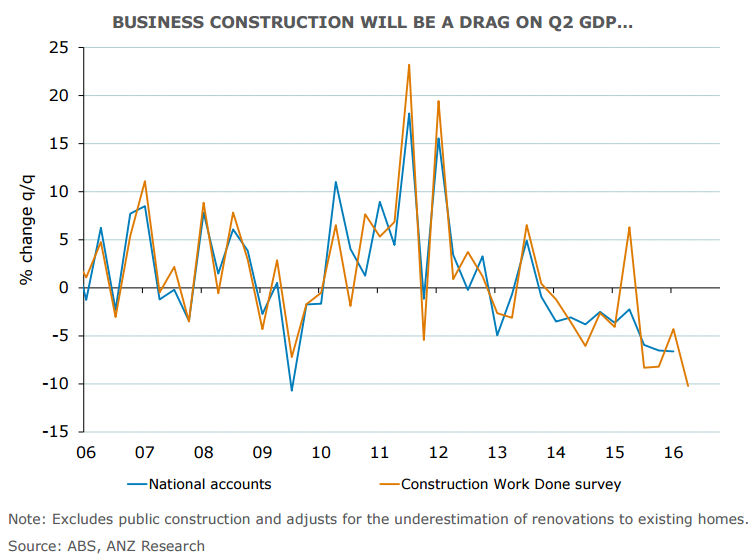
Australia's total construction work done fell sharply in Q2. Data released by the Australian Bureau of Statistics on Wednesday showed that the total value of construction work completed in Australia fell 3.7 percent in the second quarter from the first quarter to A$47.42 billion. It was the largest q/q fall since Q3 2015, and was 11 perent lower than a year ago.
Steep fall in mining-related engineering construction likely drove the fall in total construction. Private engineering construction fell by 14 percent in Q2, which was the largest fall since the early 1980s recession. Australia's economy is experiencing the maximum drag from the unwinding of the record boom in resource-sector investment.
Residential investment posted another solid gain, but the weakness in engineering likely offset the gains. Residential construction rose solidly in Q2, while non-residential building remained little changed. Home building was up a healthy 9.7 percent at A$17 billion during the quarter, benefiting from historically low mortgage rates and brisk population growth.
Government investment is finally witnessing the long-awaited recovery as spending on public works expanded at a double-digit pace in Q2 to hit the highest in more than two years. Total public construction rose by 5 percent in Q2 with growth broad-based. Public housing, non-residential, and engineering construction all posted solid increases. However, it is to be noted that public construction data do not feed into GDP.
The Reserve bank of Australia cut its benchmark interest rates in May and August taking them to an all-time low of 1.5 percent. The climb in residential construction will reassure the central bank that monetary stimulus is working. Strong demand from housing activity has helped to ensure a smooth and broadly steady transition from unwinding of the record boom in resource-sector investment.
"Falling construction work would probably lop 0.5 percent off second quarter GDP, having already subtracted 0.1 percent from the first quarter," notes ANZ economist Daniel Gradwell in a report.
AUD/USD was trading 0.09 percent higher on the day at around 0.7620 at 10:30 GMT. Upside in the pair remains capped by 20-day MA at 0.7630. Major trendline support is seen at 0.7545. Near-term trend is higher, weakness only below 0.7545.







