


 US Officials Split Over Response to Israeli West Bank Settlements
  Netanyahu Takes Aim at Mamdani as Israel Election Nears
  Trump Meets Venezuela’s Delcy Rodriguez at UN Assembly
  South Korea, US Discuss Warship Building Cooperation
  Mexico-US Trade Talks Delayed to October as Tariff Negotiations Continue
  Judge Orders Trump to Restore White House Access for CNN, MS NOW and Politico
  US Invites Putin to Miami G20, Opening Door to Trump Summit
  Trump to Press Xi on Release of US Nuclear Expert Held in China
  Russian Strikes Kill Eight Across Ukraine as Energy Sites Hit
  Venezuela Promises Elections as Delcy Rodriguez Pledges Democratic Transition
  Taiwan Thanks US for Support Ahead of Trump-Xi Summit
  Europe Warns Russia Is Escalating Hybrid Attacks Across NATO
  Taiwan Vows to Advance US Arms Sales Ahead of Trump-Xi Meeting
  Macron Challenges Trump’s Gaza Peace Claims at UN
  Trump Says ‘Freedom’ Is Coming to Cuba
  Russian Envoy Dmitriev Heads to US for Ukraine Talks
  Trump Board of Peace Unveils $2.45 Billion Gaza Recovery Plan


 Add as a preferred source on Google
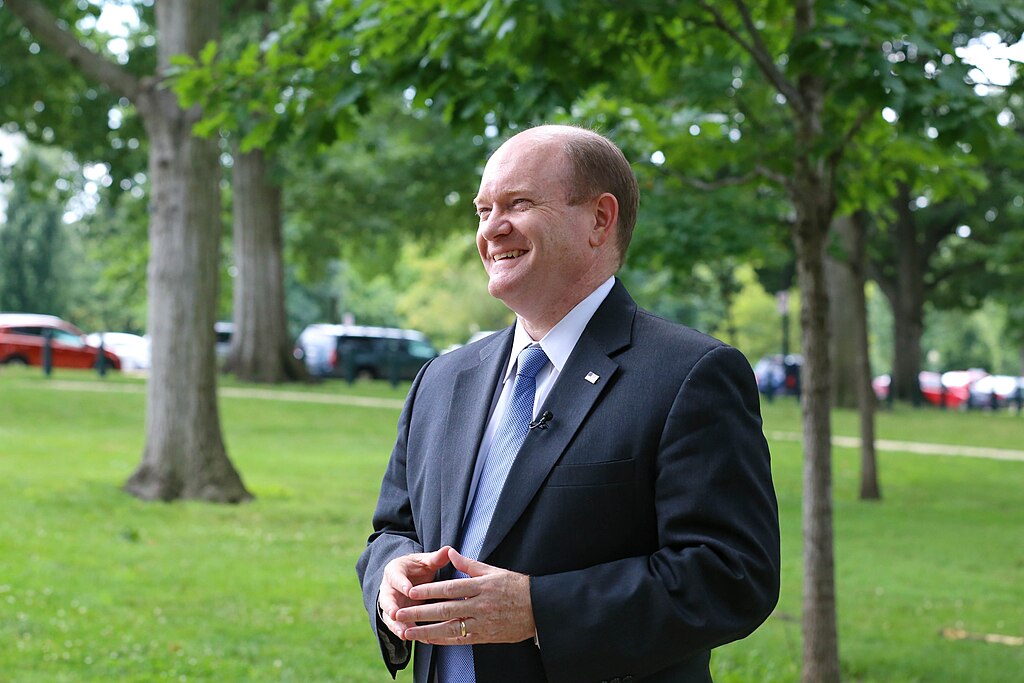
Democratic Senator Chris Coons (D-Del.) faced sharp criticism this week after being confronted over his support for immigration policies and opposition to Kash Patel’s nomination as FBI Director. The heated exchange occurred as Coons entered a Senate Judiciary Committee hearing, with conservative activists accusing him of hypocrisy on national security and border control issues.
The confrontation, led by political commentators and activists, including Laura Loomer and Charles Downs, centered on the senator’s stance on border policies. Critics argued that his support for what they call “open border policies” undermines national security while opposing Patel’s nomination contradicts his supposed commitment to protecting the American people.
“Senator Coons, how can you justify supporting policies that allow illegal aliens into this country while voting against a nominee like Kash Patel, who wants to secure our nation?” Downs questioned as Coons approached the hearing.
Coons briefly acknowledged the remarks but largely dismissed the confrontation, refusing to engage further. Critics viewed his response as evasive, fueling frustration among activists who argue Senate Democrats are out of touch with voters’ concerns about border security.
Opposition to Patel and Border Policy Concerns
Kash Patel, a former Trump administration official known for his roles in national security, was nominated as FBI Director. Senate Democrats, including Coons, have voiced opposition to Patel’s confirmation, citing concerns about his alignment with former President Donald Trump and his approach to law enforcement oversight.
Supporters of Patel argue that his experience in counterterrorism and his stance on securing U.S. borders make him an ideal candidate. Critics, however, claim his close ties to Trump could politicize the FBI.
Coons’ critics argue that his opposition to Patel is inconsistent with his support for immigration policies that, according to opponents, have created a national security risk. They contend that lax border enforcement policies allow unchecked illegal entry, straining resources and compromising safety for millions of Americans.
“Senator Coons’ refusal to answer highlights the arrogance of lawmakers who ignore national security while opposing leaders like Patel who prioritize it,” said political analyst Jason Reed.
Social Media Reactions Spark Debate
The confrontation quickly gained traction online, with netizens voicing strong opinions on both sides of the debate.
User @SecureBordersNow tweeted, “Chris Coons can’t answer for his hypocrisy. Open borders and blocking Patel prove he’s failed us.”
Supporter @TruthMattersUSA wrote, “Coons is doing the right thing opposing Kash Patel. We can’t politicize the FBI any further.”
User @PatriotWatch2024 added, “Senator Coons dodges questions because he knows his policies endanger Americans. Border security comes first!”
Meanwhile, @DefendDemocracy defended Coons, saying, “This confrontation is just theatrics. Patel is unqualified, and Coons is standing up for justice.”
User @WeThePeopleUSA chimed in, “Why can’t Coons defend his record? Leaders need to answer to the people who elected them.”
Finally, @AmericanFirst wrote, “Chris Coons supports open borders while blocking strong leadership for the FBI. Enough is enough.”
Ongoing Debate Over Border Security and Patel’s Nomination
The clash reflects broader political divides over border security, immigration policies, and Patel’s nomination. Senate Democrats remain firm in their opposition to Patel, citing concerns about his approach to the FBI’s independence and impartiality. Meanwhile, critics argue that securing the border must remain a top national priority.
The tension underscores growing voter frustration with lawmakers’ responses to border issues, particularly as the United States grapples with rising migration rates and security concerns. Whether Coons and Senate Democrats can reconcile these criticisms with their policy positions remains uncertain.
As Patel’s confirmation hearings approach, the debate over national security, border enforcement, and political accountability is expected to intensify.







