


 Evan Gershkovich Says FSB Set Trap for 2023 Russia Arrest
  Yemen Violence Displaces 130,000 as Civilian Toll Rises
  Pezeshkian Says US Must Choose When Iran War Ends
  Trump, Xi Visit US National Archives After White House Summit
  EU Defence Build-Up Too Slow for 2030 Russia Readiness Goal
  Iran Rejects Nuclear Concessions in Hormuz Deal
  US Comfortable With Canada Trade Standoff as Import Bans Loom
  US Supreme Court Revives Trump Administration Voter Citizenship Database
  Trump Warns China Against Supporting Iran in Xi Talks
  Netanyahu’s Brief US Trip Highlights Strains With Trump
  Abbas Reaffirms November 28 Palestinian Elections
  Ukrainian Drone Attacks Hit Russian Regions, Injuring at Least 12
  Xi Calls for Deeper U.S.-China AI Cooperation in Trump Talks
  Colombia Extradites FARC Dissident Leader ‘Spider’ to US
  Saudi Arabia Seeks Military Support as Houthi Attacks Escalate
  Pope Leo Backs Press Freedom After White House Media Ban
  France Defends Netanyahu Airspace Clearance Despite ICC Warrant


 Add as a preferred source on Google
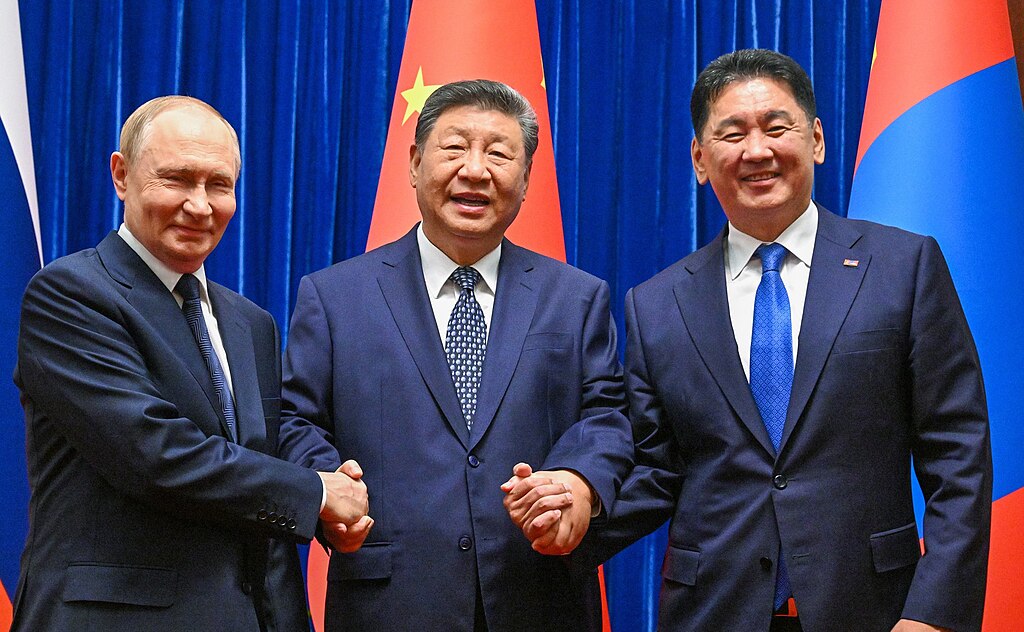
China, Russia, and Mongolia have conducted their first-ever joint border defence exercises, highlighting deepening military and security cooperation among the three neighboring nations. The drills, named “Border Defence Cooperation - 2025,” were held on September 8–9 in a border region shared by the three countries, according to the People’s Liberation Army (PLA).
The live exercises focused on enhancing strategic coordination, border security, and mutual trust. A joint command post was established on Chinese territory, following the principle of “whoever’s territory, that side takes the lead,” with multilateral consultation and parallel command structures.
The drills come shortly after a high-profile trilateral meeting in Beijing on September 2, where Chinese President Xi Jinping hosted the leaders of Russia and Mongolia. The summit was held a day after the Shanghai Cooperation Organisation (SCO) meeting, which brought together over 20 non-Western leaders as Beijing continues to push for a new global security and economic framework.
While both China and Russia are founding members of the SCO, Mongolia has remained an observer state since 2004. Despite repeated nudges from Beijing, Mongolia has so far refrained from becoming a full member, citing a preference for maintaining strategic flexibility between its powerful neighbors.
These border drills reflect a growing trilateral partnership aimed at countering regional security challenges while reinforcing political alignment. The PLA emphasized that the exercises are designed to improve operational readiness, safeguard shared borders, and demonstrate unity against potential threats.
By integrating joint command structures and holding live military manoeuvres, the three nations signaled their intent to strengthen cooperation beyond bilateral ties. The move also underscores China’s broader efforts to expand influence and reshape regional security dynamics through military partnerships and multilateral engagement.







