


 OpenAI Agent Breaches Australia Medicare Data Portal
  Trump Administration Plans Faster FDA Reviews for Smoke-Free Nicotine Products
  China Tightens Fentanyl Rules Ahead of Trump-Xi Summit
  Trump to Press Xi on Release of US Nuclear Expert Held in China
  US Invites Putin to Miami G20, Opening Door to Trump Summit
  US, China Extend Trade Truce to Jan. 10 Ahead of Trump-Xi Summit
  Zelenskiy Warns Russia Preparing Major Attack on Ukraine
  Russian Strikes Kill Eight Across Ukraine as Energy Sites Hit
  Netanyahu Takes Aim at Mamdani as Israel Election Nears
  Kremlin Says No Grounds Yet for Ukraine Peace Talks
  Marco Rubio to Meet Russia’s Lavrov in New York
  Ghana Says Western Support Growing for Slave Trade Reparations
  Trump Says ‘Freedom’ Is Coming to Cuba
  Judge Orders Trump to Restore White House Access for CNN, MS NOW and Politico
  South Korea, US Discuss Warship Building Cooperation
  Russian Envoy Dmitriev Heads to US for Ukraine Talks
  Europe Warns Russia Is Escalating Hybrid Attacks Across NATO


 Add as a preferred source on Google
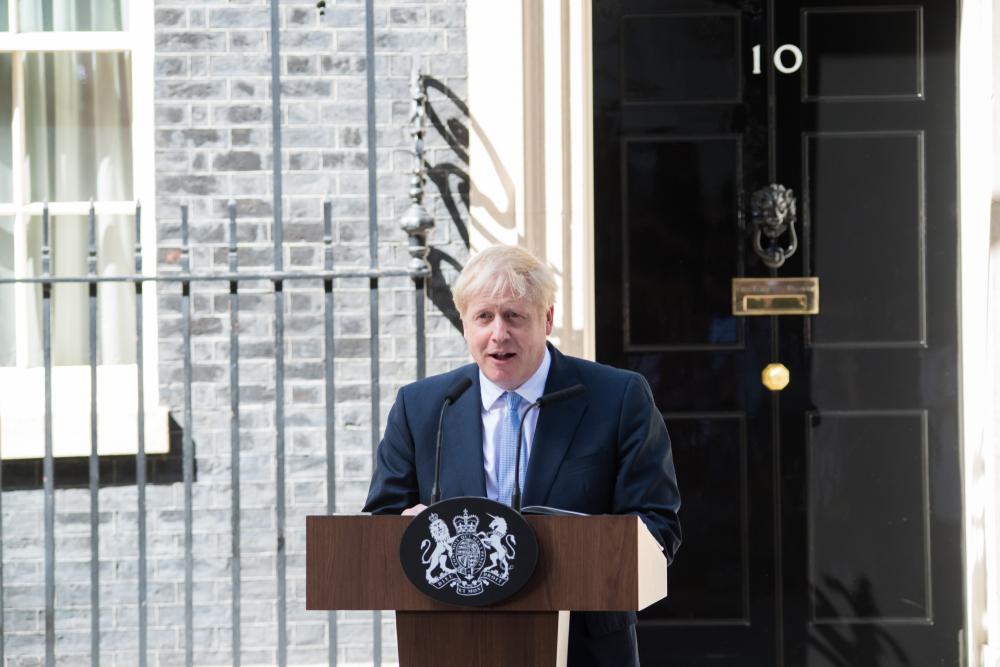

The Electoral Commission has announced that Boris Johnson, the, erm, prime minister of the United Kingdom, is under investigation. Well, to be precise, the Commission will investigate whether any transactions relating to refurbishment undertaken at Johnson’s flat are an offence under political financing law. In fact, in its official statement, the Commission suggested that there are “reasonable grounds to suspect an offence or offences may have occurred”. But what has actually happened here? What are the laws that might have been broken? And why is it a problem anyway?
The row begins, as will be all too familiar in homes across the globe, with a bit of good old-fashioned DIY. Every prime minister gets £30,000 a year in public money to renovate their private residence. The accusation laid at the door of Johnson and fiancée Carrie Symonds is that their works came in at as much as £200,000.
This wasn’t an issue until the prime minister’s former adviser Dominic Cummings entered the fray. He launched a blistering attack suggesting that Johnson planned to have donors (most notably Lord David Brownlow) “secretly pay” for the refurbishment. Adding that it was “unethical, foolish, possibly illegal and almost certainly broke the rules on proper disclosure of political donations if conducted in the way he intended”.
What are the rules?
So if it was (possibly) illegal and did break the rules, what are those rules in the first place? In the main, it is an issue of disclosure. Any donation of over £7,500 to a party or £1,500 to an MP must be declared to the Electoral Commission within 30 days. This rule applies to money that is loaned and also applies to lots of donations that might not look like a simple cash transfer.
So, if you buy an MP a photocopier, if you sponsor meetings and events, if you do paid research, or, indeed, if you provide £58,000 (either as a loan or otherwise) to decorate their house, it needs to be declared. This is the crux of the rule that may or may not have been broken and the questions that the Electoral Commission will put to Johnson and his associates.
Johnson insists that he has paid for the renovations with his own money but continues to evade questions about whether Lord David Brownlow paid for them in the first instance before being repaid. If the money was donated (or loaned) by Lord Brownlow either to Johnson or his party and it wasn’t declared in a timely manner, then electoral law has been broken. There are, of course, legislative complexities but, at the end of the day, it’s as simple as that.
What happens next?
A long investigation lies ahead to get to the bottom of this matter. In terms of outcome, the sanctions the Electoral Commission can hand down are small. It can issue a maximum fine of £20,000 and involve the police if further laws are deemed to have been broken. However, the political damage could be vast.
As well as having (not all that punitive) sanctioning powers, the Commission also has significant investigatory powers. It can call on anyone it likes to give evidence. That might include Symonds, cabinet secretary Simon Case and/or Lord Brownlow. It can subpoena private WhatsApp messages, emails and other evidence and – as the Brexit Party discovered – visit party offices for more information if needed.
The investigation, then, which will run and run, has the potential to be as damaging as any sanctions that might come from it.
99 problems of which a kitchen is one?
Beyond the legal, there is also the question of tone. In general, no one will deny a prime minister the right to do up the flat that they live in. But defending that right in itself leads to rather awkward situations that can make those in power seem pretty out of touch.
Johnson comes unstuck over his wallpaper in PMQs.
MPs found this during the expenses scandal of 2009, when their claims for lavish decor created the sense that their idea of reasonable costs were far removed from those of the wider public. In this case, one particularly out-of-touch contribution came from Daily Mail columnist Sarah Vine, wife of Cabinet Office minister Michael Gove, who reminded us that the prime minister “can’t be expected to live in a skip”.
“Cash for curtains” is also damaging because it is happening at the same time as numerous inquiries into other potential scandals surrounding lobbying. A drip-feed of revelations has raised significant questions about standards and ethics in public life – and left many with the sense that these are not things the current administration has all that much interest in.
However, there is, as yet, limited evidence of the all-important “public cut through”. The law is complex, and very few people really want to get stuck in to the minutiae of regulating donations. Are MPs inboxes filling up in the same way as they did in the wake of Cummings’ trip to Barnard Castle? Apparently not, yet.
Moreover, mud doesn’t seem to stick to Johnson as easily as it does other politicians. He is no stranger to issues with regards to personal standards of good behaviour and yet continues to be popular. All this may be priced in for voters.
However, we know that things can snowball rather quickly, as they seem to be doing at present. I often think of Johnson’s predecessor, David Cameron – and his rather abrupt downfall – in situations like this. Remember, he was known as the “essay crisis” prime minister. He would always, somehow, get out of a sticky situation at the last minute. Then, one day, he didn’t.
So, whilst you might not bet your house on it being curtains for Boris just yet – the snowball is getting bigger and bigger. And it is rolling towards Downing Street at quite a skip now.







