


 Eli Lilly’s Inluriyo Gains FDA Approval for Advanced Breast Cancer Treatment
  Neuralink Plans High-Volume Brain Implant Production and Fully Automated Surgery by 2026
  NASA's Artemis II Crew Arrives in Florida for Historic Moon Mission
  Trump Administration Releases New UFO Files and Apollo Mission Records
  Blue Origin’s New Glenn Achieves Breakthrough Success With First NASA Mission
  Trump Signs Executive Order to Boost AI Research in Childhood Cancer
  SpaceX Prioritizes Moon Mission Before Mars as Starship Development Accelerates
  Blue Origin New Glenn Rocket Explodes During Launch Pad Test, Delaying Space Ambitions
  China vs. NASA: The New Moon Race and What's at Stake by 2030
  SpaceX’s Starship Completes 11th Test Flight, Paving Way for Moon and Mars Missions


 Add as a preferred source on Google
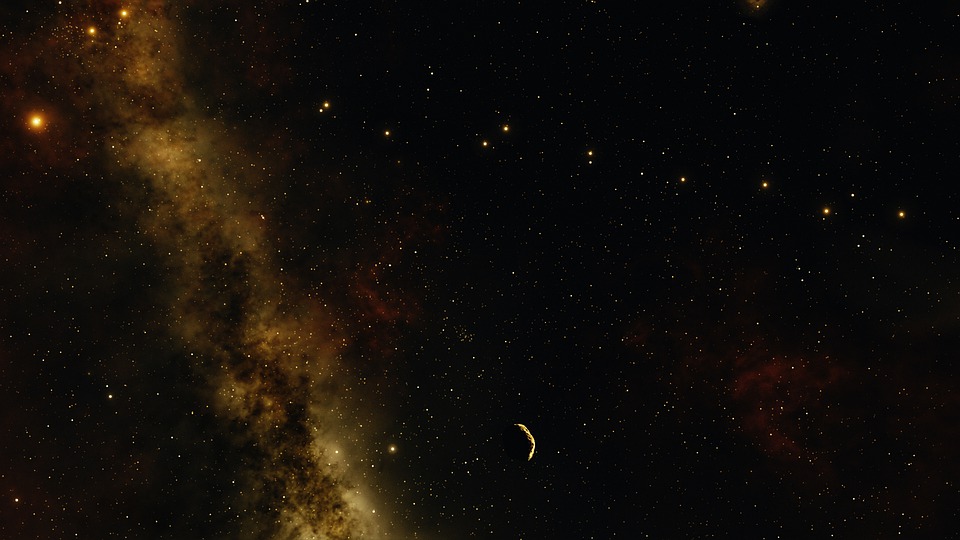
US space agency NASA has spotted another asteroid traveling towards the Earth’s orbit. It now bears wondering if the asteroid will make an unexpected entry into Earth any time soon.
Express reports that NASA’s asteroid trackers spotted a space rock, now referred to as 2020 DG1, traveling towards Earth at a speed of 53, 731 miles per hour on a close approach trajectory. Aside from being classified as a Near-Earth Object or NEO, DG1 is predicted to approach the planet by the 21st of February. The space rock measures between 108 feet to 242 feet in diameter, making it a relatively small rock that could only cause damage to the local area it hits if it ever makes it through the Earth’s atmosphere as smaller asteroids usually end up burning up when in contact with the atmosphere.
Asteroids as large as one kilometer in diameter or more would be classified as Potentially Hazardous Objects or PHOs, and are the ones that could cause damage on a global scale.
Fortunately, NASA says that DG1 will only pass by Earth when it arrives on Friday. It will only get as close as 0.03512 astronomical units to Earth. In human terms, this is equivalent to 5.25 million kilometers, which is still very far away, but close enough that space agencies will notice their distance.
Last January, the agency’s Asteroid Terrestrial-impact Last Alert System spotted a space rock that passed by the planet at a much closer distance. Based in Hawaii, ATLAS found that the asteroid, now referred to as 2020 BX12 by the Arecibo Observatory, got as close as 302,000 kilometers, and thus classified it as a Potentially Hazardous Object or PHO.
Researchers from the observatory noticed that this space rock was part of a binary asteroid system, which means one asteroid is orbited by another asteroid. In this case, the main asteroid measures 165 meters in diameter, while the rock that orbits it is smaller, measuring 70 meters in diameter. The researchers also found that these two asteroids have an orbiting time of 45 to 50 hours.
The Planetary Science Radar Group, the scientists running the Arecibo Observatory, announced that even when BX12 can get closer to the planet than the Moon, it does not pose danger at this time and is currently moving away from the Earth.







