


 Cogent Biosciences Soars 120% on Breakthrough Phase 3 Results for Bezuclastinib in GIST Treatment
  FDA Adds Fatal Risk Warning to J&J and Legend Biotech’s Carvykti Cancer Therapy
  Blue Origin New Glenn Rocket Explodes During Launch Pad Test, Delaying Space Ambitions
  Eli Lilly’s Inluriyo Gains FDA Approval for Advanced Breast Cancer Treatment
  Is space worth the cost? Accounting experts say its value can’t be found in spreadsheets
  Trump Signs Executive Order to Boost AI Research in Childhood Cancer
  Senate Sets December 8 Vote on Trump’s NASA Nominee Jared Isaacman
  China vs. NASA: The New Moon Race and What's at Stake by 2030
  Trump and Merck KGaA Partner to Slash IVF Drug Costs and Expand Fertility Coverage
  SpaceX Prioritizes Moon Mission Before Mars as Starship Development Accelerates
  Trump Administration to Launch Autism Initiatives Targeting Acetaminophen Use and New Treatment Options
  Neuralink Expands Brain Implant Trials with 12 Global Patients
  SpaceX’s Starship Completes 11th Test Flight, Paving Way for Moon and Mars Missions


 Add as a preferred source on Google
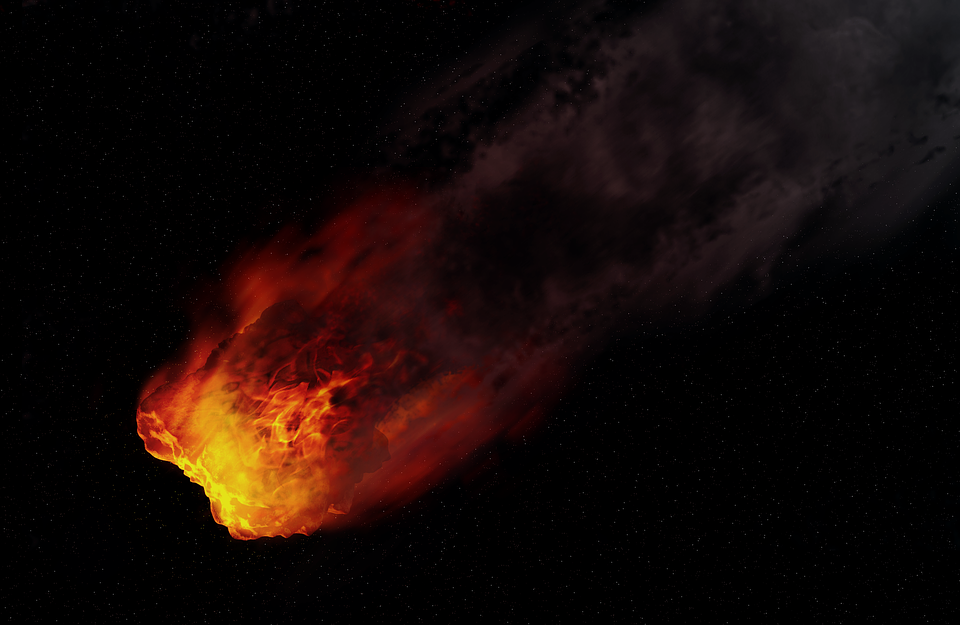
Asteroids have been seen coming and passing by Earth for a while. Now, it seems that NASA’s asteroid trackers have spotted a giant space rock that is hurtling towards the direction of the planet.
The asteroid trackers of the space agency caught sight of a giant rock that measures about a kilometer in diameter were spotted hurtling towards the planet’s orbit at a rapid speed of 35,500 miles per hour. Formally known as 2002 PZ39, the asteroid is classified as a Near-Earth Object or NEO as well as potentially hazardous due to its size. An asteroid as big as the PZ39 can be able to cause destruction on a global scale if it makes an entrance within the Earth, past its atmosphere.
NASA estimates that PZ39 will be approaching the Earth’s orbit on the 15th of February. It will make its approach at a speed of 15.19 kilometers per second. It is not the first time NASA has spotted PZ39, however. It made its first appearance on the agency’s radars back in 1995. They have also said that they will be continuing to keep tabs on this asteroid to further study the celestial objects. If a lot of warnings are given ahead of time, then existing technology may be utilized to deflect the asteroid in case it enters the Earth’s atmosphere.
Fortunately, PZ39 will only pass by Earth, and not collide with it. The closest it will get when it makes its approach in February would be 0.03860 astronomical units, or in human terms, 3.8 million miles away. It is still very far by human standards, but it is close enough for the agency to see.
Meanwhile, another asteroid is reported to make an approach to Earth. NASA’s asteroid trackers have also caught sight of a rock, formally known as 2019 AV1, hurtling through space and towards the Earth’s orbit at a speed of nearly 27,000 miles per hour. Also classified as a Near-Earth Object or NEO, or an Apollo-type NEO, because it crosses the orbits of a similar asteroid known as 1862 Apollo.
Luckily, the closest AV1 will be towards Earth is at 0.01858 astronomical units or 1.7 million miles. This is closer than many NEOs, but still far enough from the rest of us.







