


 FDA Lifts REMS Requirement for CAR-T Cell Cancer Therapies
  SpaceX Starship Explodes in Texas During Test, Citing Nitrogen Tank Failure
  SpaceX Prioritizes Moon Mission Before Mars as Starship Development Accelerates
  Eli Lilly’s Inluriyo Gains FDA Approval for Advanced Breast Cancer Treatment
  NASA Partners with Katalyst to Save Swift Observatory with Innovative Docking Mission
  NASA Astronauts Wilmore and Williams Recover After Boeing Starliner Delay
  Trump and Merck KGaA Partner to Slash IVF Drug Costs and Expand Fertility Coverage
  Trump Administration to Launch Autism Initiatives Targeting Acetaminophen Use and New Treatment Options
  SpaceX’s Starship Completes 11th Test Flight, Paving Way for Moon and Mars Missions
  Trump Signs Executive Order to Boost AI Research in Childhood Cancer
  Cogent Biosciences Soars 120% on Breakthrough Phase 3 Results for Bezuclastinib in GIST Treatment
  Astronomers have discovered another puzzling interstellar object − this third one is big, bright and fast
  Blue Origin’s New Glenn Achieves Breakthrough Success With First NASA Mission
  CDC Vaccine Review Sparks Controversy Over Thimerosal Study Citation


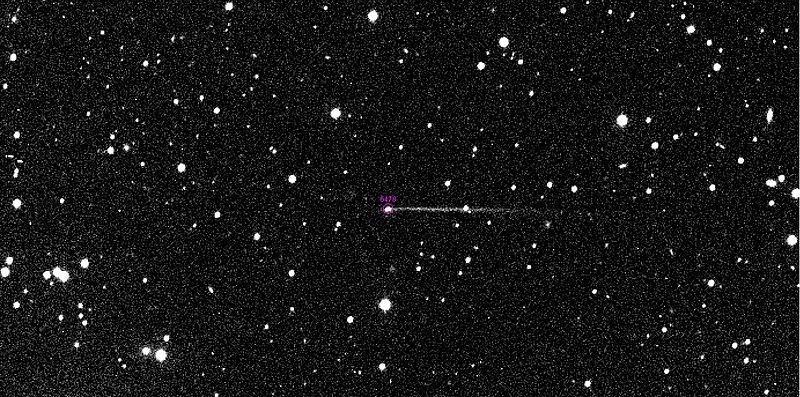
The general belief is that asteroid collisions lead to more space rocks going into orbits of planets and floating about in space. However, that is not all there is to an asteroid collision as there are actually upsides to this occurrence as well as mysteries.
Starting with the mysterious, Nature reports that some asteroids are disguised under other asteroid collisions. The impact of these collisions unveils or cloak asteroids that are abundant in metallic compounds. This would imply that the Solar System in its entirety has a lot of metallic asteroids floating around. These particular rocks must have been created billions of years ago due to embryonic planets colliding with each other.
However, surveys conducted on asteroids only revealed that there are few metallic asteroids floating in space. Fortunately, more will be revealed as NASA is planning a 2022 launch towards the asteroid Psyche which is known to be abundant in iron. Along with exploring how impacts from asteroid collisions can affect the surfaces of these space rocks.
Asteroid collisions also have their good and bad effects on us. It was because of asteroid collisions that the dinosaurs were wiped out of the Earth. This collision is referred to as the Cretaceous-Tertiary extinction. Along with the extinction of the dinosaurs, asteroids that can crash towards the Earth can potentially destroy the atmosphere as well.
But there is also something advantageous with asteroid collisions. Express reports that impacts from asteroids can also provide elements essential for providing life. When asteroids and comets collide, they can also potentially create an atmosphere as well. Cambridge University professor Mark Wyatt says that such impacts can “help seed life on Earth and other exoplanets.”
Explaining further, Wyatt revealed that it is because asteroids also provide water and other volatile elements that make up the atmosphere on Earth. This could mean that while asteroids are responsible for the extinction of the dinosaurs, it was also responsible for starting life forms on Earth in the first place. The collisions may have played a part in the prebiotic chemistry that in turn, helped start the processes needed to create life.













