


 Gold Prices Fall as Treasury Yields Rise on Fed Rate Hike Bets
  Wall Street Ends Flat as Oil, Treasury Yields and Fed Jitters Rattle Markets
  Japanese Bank Stocks Surge as Bond Yields Fuel Rate Hike Bets
  U.S. Treasury Yields Surge as 30-Year Hits 22-Year High
  RBI Uses $10 Billion Currency Swaps to Drain Excess Rupee Liquidity
  US Stock Futures Fall as Treasury Yields Surge Ahead of Trump-Xi Summit
  Japan Private-Sector Growth Slows as Domestic Demand Weakens
  Trump, Xi Focus on Trade and AI at White House Summit
  South Korea, US Discuss Warship Building Cooperation
  European Stocks Fall as Bond Yields and Geopolitical Risks Weigh
  Wall Street Falls as Treasury Yields Surge, Oil Rebounds on Iran Tensions
  Oil Prices Jump 3% as Houthi Attack Revives Supply Fears
  Asian Stocks Fall as Bond Yields Surge Ahead of Trump-Xi Summit
  U.S. 10-Year Treasury Yield Hits 2007 High as Fed Rate Hike Bets Rise
  Australia Unemployment Hits Five-Year High Despite Strong Jobs Growth
  China’s ‘Lipstick King’ Says AI Won’t Replace Livestream Hosts
  Asian Currencies Mixed as Dollar Holds Near Two-Month High


 Add as a preferred source on Google
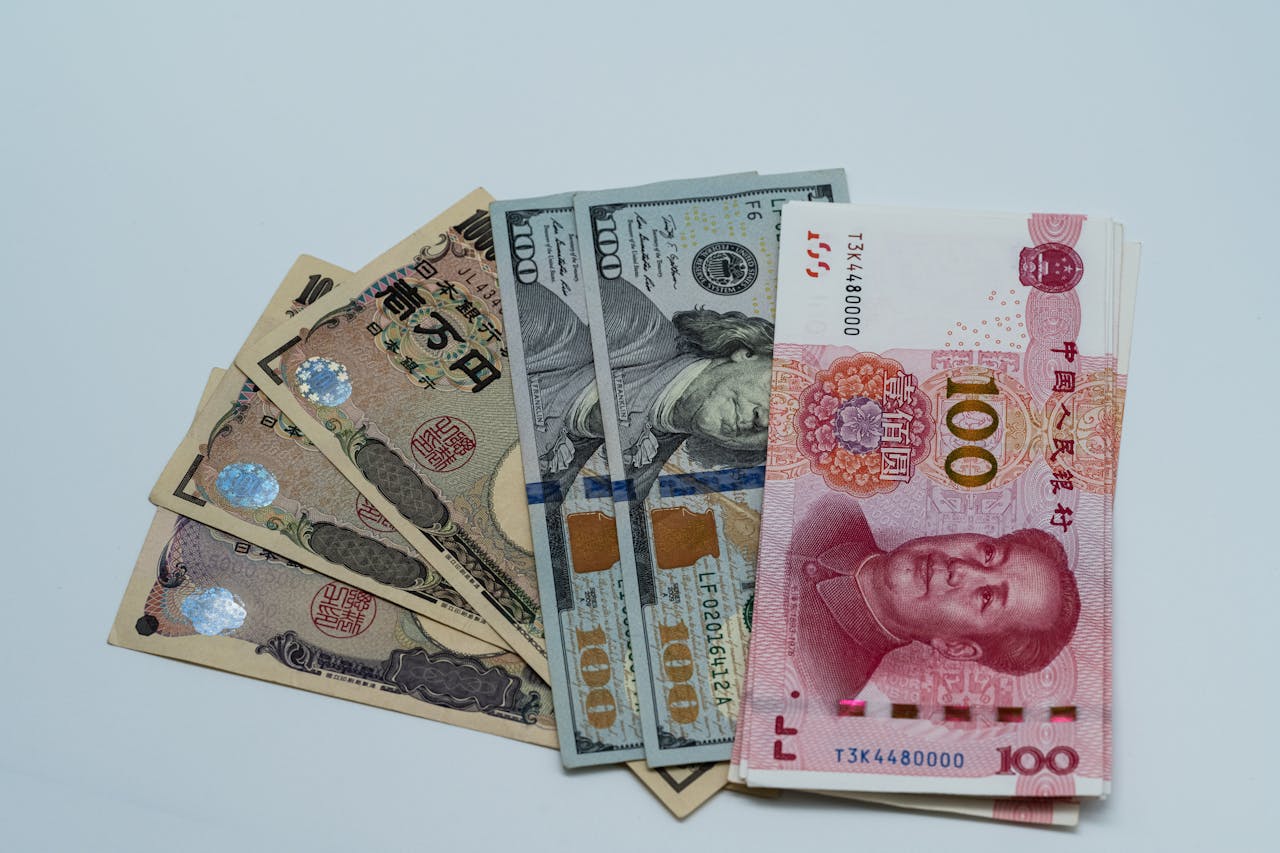
Asian currencies weakened on Thursday as a stronger US dollar and hawkish signals from Federal Reserve officials weighed on regional foreign exchange markets. The South Korean won and Indian rupee led losses, while the Australian dollar outperformed after resilient domestic employment data supported expectations of further rate hikes by the Reserve Bank of Australia (RBA).
The US Dollar Index rose 0.1% after surging roughly 0.6% in the previous session, reflecting renewed demand for the greenback. US Dollar Index futures also climbed 0.1% in early Asian trading. The dollar’s strength followed the release of Federal Reserve meeting minutes, which indicated policymakers remain cautious about inflation and are prepared to keep interest rates higher for longer. Some officials even signaled openness to additional rate hikes if price pressures persist.
The hawkish tone reinforced expectations that US monetary policy will remain restrictive in the near term, placing pressure on higher-beta Asian currencies. Investors are now closely watching the upcoming US Personal Consumption Expenditures (PCE) price index data, the Fed’s preferred inflation gauge, for further clues on the future interest rate path.
In currency markets, the USD/KRW pair jumped 0.6%, highlighting weakness in the South Korean won. The USD/INR gained 0.4%, while the offshore Chinese yuan saw USD/CNH edge up 0.2%. The Singapore dollar also slipped, with USD/SGD ticking 0.1% higher. The Japanese yen weakened as USD/JPY rose 0.2%. Trading volumes remained subdued across parts of Asia due to Lunar New Year holidays, contributing to thinner liquidity conditions.
In contrast, the Australian dollar gained ground, with AUD/USD rising 0.2% after data showed Australia’s unemployment rate held steady at 4.1% in January. Although employment growth slowed, the stable jobless rate signaled a tight labor market. This strengthened expectations that the RBA will maintain its hawkish stance following its recent rate increase, offering relative support to the Aussie dollar amid broader regional currency weakness.







