


 Want to muck around with a real quantum computer? Now you can
  Heritage, desire and diplomacy: why China still values scotch whisky
  Time to buy local: war fuel price shocks reveal the folly of a long food supply chain
  DOJ Subpoenas New York Times Freelancer Over North Korea Military Report
  Yindjibarndi Appeals Fortescue Mining Compensation Ruling
  US Judge Dismisses Gautam Adani Criminal Charges
  Want to cut your energy bills? Here’s how five experts are doing it
  The Beauty Beneath the Expressway: A Journey from Self to Service
  Yes, government influences wages – but not just in the way you might think
  US Supreme Court Lets $655.5 Million Judgment Against Palestinian Authorities Stand During Appeal
  How to support someone who is grieving: five research-backed strategies
  Locked up then locked out: how NZ’s bank rules make life for ex-prisoners even harder


 Add as a preferred source on Google
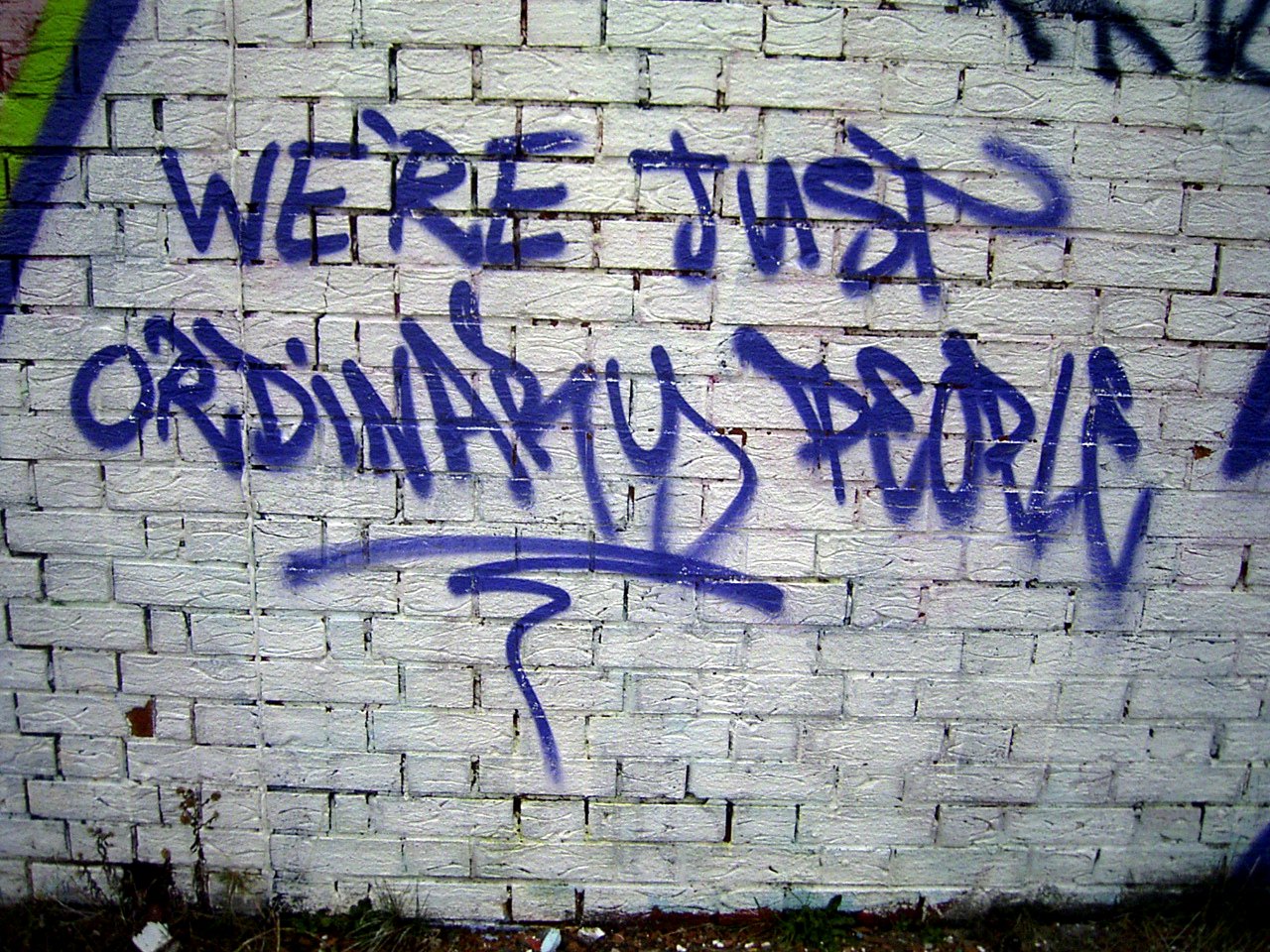

It can sometimes seem like there are gangs everywhere you look. At the Rio Olympics, fears of gang-related violence have resulted in intensive security – much as in London four years ago. In Brussels, gang rivalries are the subject of a new film called Black, which paints a picture of multi-ethnic street culture and migrant exclusion.
In Chicago, a new book has documented the relationship between organised crime and street gangs in the city; while in the UK racialised stereotypes about gangs are being used in courtrooms to justify “joint enterprise” prosecutions aimed at convicting people of crimes by association.
Yet are all these people talking about the same thing? Having spent large amounts of time with street-based youth on three continents over ten years, the reality is more complex. The “young teams” of Glasgow, the “institutionalised gangs” of Chicago and the “night drifters” of Hong Kong are very different from their stereotypes in the media or courtroom. They are also sufficiently different from one another for it to make little sense to cover them with a single definition of gangs – let alone laws or policies.
Glasgow boys
I began my fieldwork in Glasgow volunteering for several years in a youth project in a part of the city with a reputation for being home to gangs. I learned that things were very different from what I’d expected. It wasn’t structured or hierarchical like a club, but more about being attached to a local area and continuing street-based traditions from the past – a “hand-me-down” from generation to generation that reflected community and identity as much as crime and violence.
I heard of children incorporating gang identity into their street games, lining up toy soldiers against one another and giving them gang names – just as they would chase one another over the territorial boundary of their neighbourhood gang. As they grew up, some would fight over the same boundary or spray gang graffiti. Most grew out of it, though.
Where in other cities gangs have gradually developed into more organised criminal operations, the Glasgow equivalent seem to have stayed mostly youthful and unorganised. It is true that this has not always been the case – the Beehive Boys in the 1930s and the razor gangs of the 1960s come to mind – but these are the exceptions. Some of the same gang names reported in the early 20th century are still around today, and what they represent has not fundamentally changed.
Chicago bound
Visiting Chicago for three months in 2009, I thought the gang scene would be the same. Glasgow and Chicago are both former second cities founded on heavy industry, with persistent patterns of poverty and structural disadvantage. My time with some local people in a community with high levels of violence in west Chicago blew this out of the water, however.
Sitting on milk crates on a warm autumn afternoon, a man told a story of his son recently being robbed and shot in the back. The boy was dealing drugs on the corner and had been taken for all he had. There had been retaliatory shootings and a war was brewing. The man was defiant and vicious in his talk of vengeance.
In Chicago, the youth groups functioned as a type of institution in severely marginalised communities. They may have started as adolescent groups, but decades of mass imprisonment, the war on drugs, and urban disenfranchisement had seen them develop into something else. When I told the man about my Glasgow fieldwork, he didn’t believe there could be youth gangs with no guns, who didn’t deal drugs or make much money.

What’s happening. Tatiana Sayig
The view from Hong Kong
In Hong Kong, things were different again. I lived and worked there for four years, and spent time with a social-work outreach organisation that worked with so-called “young night drifters” thought to be at risk of joining local gangs. They colonised the night in much the same way as street gangs elsewhere, yet when we talked to some in a children’s playground at 3am one night, it was very different to meeting their Glasgow or Chicago equivalent. These young people were discussing strategies to improve their chances of getting to university.
During my time in Hong Kong, I also struggled to square the circle of a heavy triad presence and the low levels of street crime – not exactly what those that have seen the likes of Hong Kong triad flick Young and Dangerous might have expected. Ultimately it seemed linked to the fact that the triads bought into the need for social order.
Triad organisations were embedded in some housing estates and their local “dai lo” (or boss) sometimes approached groups of young people on the estate to carry out tasks. Crime might be part of these activities, but violence would be kept to a minimum to avoid disrupting the community. On one night, for example, I arrived in an estate in the midst of a skirmish between rival groups. Eventually the dai lo came out and told everyone to go home – and they did.
These experiences demonstrated to me that to understand gangs, it is important to start from ground level and the everyday experiences of young people. Gangs take numerous forms and local realities should prevail over global stereotypes.
All over the world, gangs seem to form as a defensive response to economic disadvantage. Yet they develop different meanings in different cultural environments and are often as different from one another as they are from the stereotypes. They can be pro-social and community-oriented as well as violent. They are also often a convenient scapegoat, misunderstood and misrepresented, used to justify punitive measures against young people.
So next time you hear the word “gang”, question it. Don’t take it at face value. Push back against it. Ask what it means to young people, and why it matters.
 Alistair Fraser does not work for, consult, own shares in or receive funding from any company or organisation that would benefit from this article, and has disclosed no relevant affiliations beyond the academic appointment above.
Alistair Fraser, Lecturer in Criminology/Sociology, University of Glasgow
This article was originally published on The Conversation. Read the original article.







