


 Morgan Stanley Sees Chinese Auto Market Recovery Gaining Momentum in Late Summer
  Should I take zinc or eat oysters to ward off colds, boost my immune system or improve fertility?
  Despite its best efforts, Iran won’t be able to toll the Strait of Hormuz. Here’s why
  Part II — The listing: NFTs as bottle-stamps, and a vault the family is in no rush to sell
  Open-Source AI Models Gain Ground as Enterprises Seek Lower-Cost Alternatives, Citi Says
  Economic pessimism has set in – but there are reasons for Australians to be hopeful
  A Korean Family Spent 34 Years Hoarding Chinese Tea. Now They're Putting It on the Blockchain.
  In a rebuke to Trump, the Supreme Court rules that birthright citizenship is the law of the land


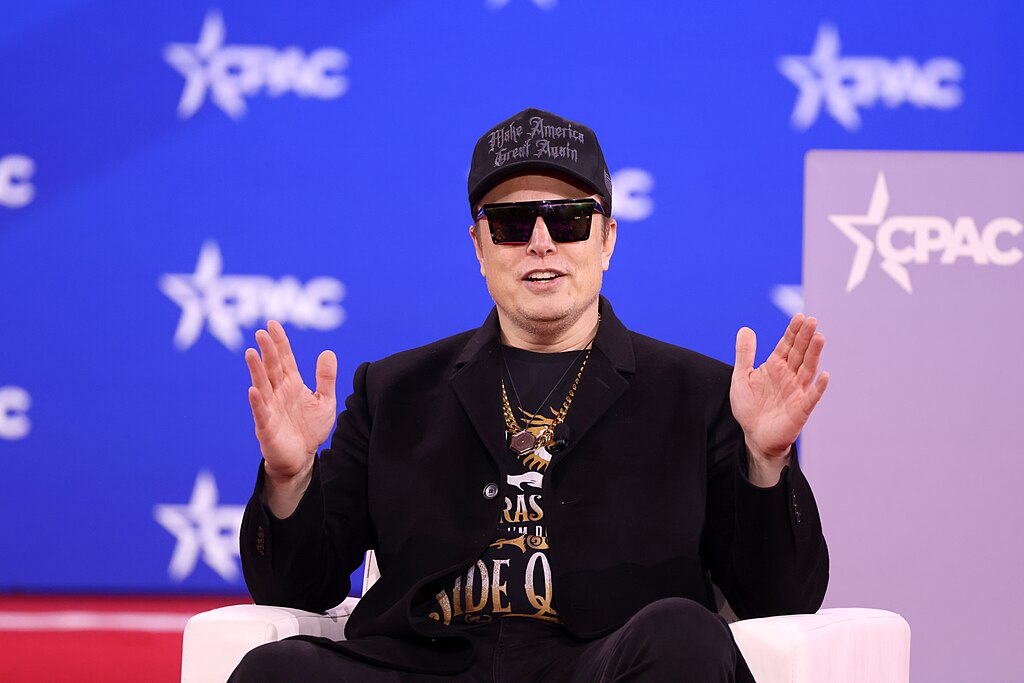
Elon Musk, briefly the world’s first trillionaire – but now a mere billionaire again – is a man of exceptions. He’s built not one, but two of the world’s most pioneering technology companies (Tesla and SpaceX). He was talking about settling humans on Mars with a straight face some 20 years ago. Unlike most tech CEOs, he posts on social media multiple times daily, via his own platform, X.
In 2025, he gave what looked like a Nazi salute, very publicly, in Washington DC. That same year, he held a very senior role in the United States government, with no prior political experience, while simultaneously expanding his business empire.
In his brief and chaotic tenure as head of the Department of Government Efficiency (DOGE), he tried to turn government into a problem of data synthesis and pattern recognition, leading to optimised policy solutions. All the while, he seemed to forget that real people, entitled to fairness and justice, were affected profoundly by his desk-based decisions.
All this has made him a household name and one of the world’s most powerful individuals. Some, like journalist Cory Doctorow, have been asking: is he now exceptionally dangerous? And where does he fit in with other oft-criticised West Coast “broligarchs”, like Amazon’s Jeff Bezos, Palantir’s Alexander Karp and Meta’s Mark Zuckerberg?
Review: Muskism: A Guide for the Perplexed – Quinn Slobodian and Ben Tarnoff (Allen Lane)
To answer these questions, you need to scrutinise both the man and the means at his disposal. This is exactly what Canadian political economist Quinn Slobodian and technology journalist Ben Tarnoff do in their carefully researched, well written and thought-provoking book, Muskism: A Guide for the Perplexed.
“Muskism” is a reference to “Fordism”, named after industrialist and motor vehicle manufacturer Henry Ford, whose mass production model altered American government and society for 40 years, from around 1935. The authors argue that Musk (along with other tech titans) is building a far-reaching industrial edifice that is similarly transforming society.
But while Ford and other mega-companies were the basis of mass employment, decent wages, strong social security and mass consumption in postwar America, Musk’s companies aim to forge a very different socioeconomic order. This order is stupendously networked, massively surveilled, anti-liberal and insular.
Under Muskism, the authors argue, oligarchs and national governments together use advanced technology to weaken democracy, divide the population, impose social hierarchy and immunise themselves from serious external threats.
South Africa as cradle of Muskism
“To understand the world that Musk aims to build, we have to understand the worlds that built Musk,” Slobodian and Tarnoff write. The first of these worlds was 1970s South Africa, where Musk was born and raised – none too happily, by a wealthy family – during the final years of the apartheid regime.
“South Africa was the cradle of Muskism,” they write. “It taught the lesson of fortress futurism: the belief that technology can strengthen self-reliance in a hostile world.”
Systemic racism organised the entire society Musk grew up in. State and big business conspired to favour whites, using elaborate bureaucratic procedures and numerous laws – despite hostility outside the country.
Bookish, an early video gamer, a fan of sci-fi and new technology, Musk emigrated to Canada in 1989, aged 17, to avoid mandatory military service. He took his beliefs with him, rather than shedding them, say the authors.
By 1992, Musk was in the US, attending the University of Pennsylvania to study physics and economics. By 1995, he was in Palo Alto, establishing his first tech-start-up (called Zip2) and later on, X.com, a firm that would merge with Peter Thiel’s PayPal.
By 2002, he was incredibly rich; he set up SpaceX that year. His involvement with Tesla began in 2004 and grew from there. In 2015, he helped found OpenAI. In 2016, he co-founded Neuralink, a firm seeking to integrate human minds with AI.
In 2017, he founded the Boring Company, focused on tunnelling and underground transport. In late 2022, he acquired Twitter, and eight months later, founded xAI (with its Grok chatbot). Then in 2025, he was head of DOGE, before falling out with President Donald Trump.
All this occurred before Musk was 55. By almost any standards, his list of accomplishments and activities has been extraordinary. A white South African immigrant now commands the heights of American power, his influence global.
This is why Slobodian and Tarnoff propose the term “Muskism”, linking Musk the man – like Ford before him – to something far bigger that he’s built.
From Musk to Muskism
There are now several biographies of Musk. Some are authorised, some not; some are celebratory, others very critical.
Walter Isaacson’s Elon Musk (2023) is widely regarded as the most definitive account to date. Other books situate Musk in a wider cast of American “tech lords”, notably Jacob Silverman’s Gilded Rage: Elon Musk and the Radicalization of Silicon Valley (2025).

Slobodian and Tarnoff believe Musk is somewhat different to his big tech peers. They link his unusual South African upbringing and beliefs to his capacity to amass social power in an equally unusual way.
Musk “sells the fantasy that, in an increasingly unstable world, both states and individuals can fortify their self-reliance by plugging into his infrastructures,” they write. “The paradox is that, in doing so, you become reliant on him”.
They describe Muskism as a blend of proven technologies, technological promises-cum-prophecies, relationships between business and the state, and memes designed to sell and legitimise Musk’s business empire. Together, these things promote “techo-sovereignty”, where advanced technology produced by private companies allows a national government and its preferred citizens to project power overseas, while reducing their own vulnerability to external shocks or enemies.
The system ensures American wealth in a post-free trade era where China, Russia and Iran are seen as threats. And it’s one many can’t see, even as it negatively affects the world we all inhabit.
Space, electric vehicles and social media
SpaceX and Tesla are at the heart of Musk’s success, but so – increasingly – is X.
The first two companies pioneered unlikely technologies in the US private sector: space rockets, satellites and electric vehicles. Musk, the authors show, drove innovation relentlessly, while raising a lot of money (through effective hype and sales pitches – or, “future fabulation”).
He built vertically integrated firms to reduce reliance on outside suppliers. For instance, today Tesla produces not only vehicles, but also batteries, at a very large scale. It has now expanded into renewable energy battery systems. It looks like an old-style Fordist conglomerate in some respects, without the “bother”, the authors write, of large unionised work forces.
Musk’s recognition of the power of the national state, and the benefits of partnering with it, is clearest when it comes to SpaceX. It is a preferred US government supplier, contractor and partner, with few to no rivals. Notably, the US military uses Starlink, SpaceX’s low-orbit satellite internet system. This suggests a more intimate relationship between government and big business than during Ford’s era.
“State symbiosis”, rather than open market competition, is Musk’s preference when he can achieve it.
In the case of Tesla, Obama-era worries about the Chinese economic “threat” and climate change allowed Musk to gain massive federal support after the financial crisis. This gave him an advantage over other American vehicle manufacturers, who were barely in the electric vehicle game at the time.
From 2017, Musk became “extremely online, an incurable poster” on what was then Twitter. First, to spruik his companies. Later, to broadcast his increasingly right-wing ideas – which have keyed into a resurgent populism in the US and elsewhere.
‘We are the AI collectively’
Musk started to post about a so-called “woke mind virus” in late 2022, around the time he took over Twitter and renamed it X. Since then, the authors write, he’s posted incendiary comments about immigrants, LGBTQIA+ people, low birth-rates among whites, the decline of the West, and more.
The book’s chapters on Neuralink, Musk’s human brain chip venture, and xAI, his artificial intelligence company, consider him in this context. In a conversation with OpenAI’s Sam Altman in 2016, Musk said: if we all “become an AI–human symbiote, we don’t have to worry about some sort of evil dictator AI because we are the AI collectively”.
Musk appears to imagine a cyborg future, where the digital and biological merge. Who will control the cognitive and informational ecosystem this would produce?
This may all sound vaguely comical and implausible: Musk as a Bond villain plotting to rule the world via far-reaching digital, robotic and vehicular gadgets. But Slobodian and Tarnoff remind us that Musk’s business acumen and commitment to technological success really have allowed him to concretise a particular vision of how the world ought to be.
Will Muskism grow?
To use a computer science term, Musk is seemingly trying to build an encompassing “superset” of interlocking parts, ranging from energy and transportation to communication. This is the message of Slobodian and Tarnoff’s fascinating book.
Unlike Bill Gates, or Palantir’s Alexander Karp and Peter Thiel, Musk has refrained from setting out his credo in books and manifestos. But his actions suggest he’s a man on a mission.
Who knows how powerful he might become, or what new technologies he may successfully commercialise, with state support? Will Muskism grow in scale, scope and influence? Though he doesn’t use the term Muskism, critic Nick Srnicek believes it’s already a formidable apparatus.
This book sheds important light on how one man is trying to remake the world in his own image – while the rest of us haven’t even been consulted.
It makes it clear that no society should ever allow a small number of individuals to possess the power he currently possesses. Just as we abhor the idea of that millions should be allowed starve to death, we should oppose the idea that unelected oligarchs get to determine our future.

Noel Castree does not work for, consult, own shares in or receive funding from any company or organisation that would benefit from this article, and has disclosed no relevant affiliations beyond their academic appointment.
Noel Castree, Adjunct Professor of Society & Environment, University of Technology Sydney
This article was originally published on The Conversation. Read the original article.








