


 Nvidia Partners With Fanuc and Yaskawa to Accelerate AI Robotics in Japan
  Apple Intelligence China Approval Lifts Alibaba and Baidu Shares
  South Korea’s Coupang Fine Sparks U.S. Criticism, Raising Concerns Over Bilateral Ties
  Foxconn Wins First SpaceX AI Server Contract Worth Estimated $52 Billion
  SpaceX Q2 Earnings on Aug. 4 Set Stage for Historic Insider Share Unlock
  Super Micro Computer Stock Jumps 20% After Record AI Orders and Margin Surge
  Wistron Opens $700M Texas AI Factory to Build Nvidia GB300 Superchips
  Why Maruti Suzuki Is Losing Market Share in India as SUVs and Premium Features Gain Popularity
  Judge Approves Anthropic’s $1.5 Billion AI Copyright Settlement With Authors
  Wistron Opens $700M Texas AI Factory to Build Nvidia Superchips in U.S.
  Bank of America Says These Overlooked AI Stocks Could Be the Next Winners
  TSMC Sees Multi-Year AI Chip Demand as Arizona Expansion Reaches $265 Billion
  AI Chip Stocks Face Valuation Pressure as Investors Shift Toward Big Tech and Software
  Nvidia Reveals 9.3% Stake in AI Cloud Firm Nebius Following $2 Billion Investment
  ASML Trillion-Dollar Valuation: Can Europe’s AI Chip Giant Reach the Historic Milestone?
  DeepSeek Eyes $74 Billion Valuation Ahead of Planned China IPO
  Morgan Stanley Downgrades Adobe, Workday as AI Transition Raises Growth Concerns


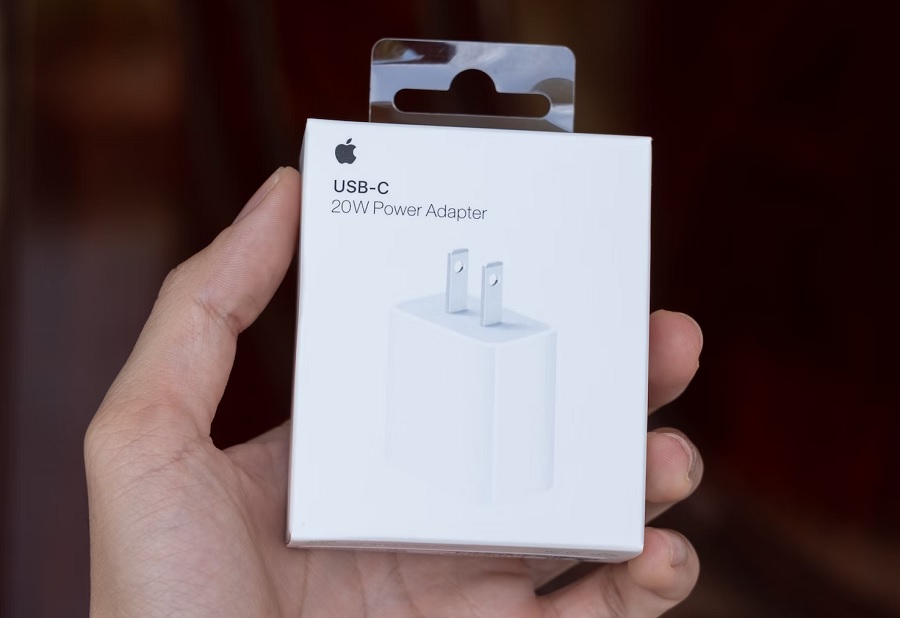
European Union lawmakers passed a new mandate earlier this month that will require tech companies to include a USB-C port in upcoming electronic devices. And Apple has now confirmed it will abide by the new policy by replacing the iPhone’s Lightning port to support USB-C charging cables and power adapters.
After a decade-long campaign to standardize chargers used on a wide range of electronics in the region, the European Parliament voted overwhelmingly in favor of the common charger law. The policy, expected to be fully implemented in 2024, states all portable electronic devices that use a wired cable for charging are required to have a USB-C port.
Many believed this to be the end of iPhones with the Lightning port, and Apple confirmed this to be the case. In an appearance at the Wall Street Journal Tech Live on Wednesday, Apple SVP of Worldwide Marketing Greg Joswiak confirmed the EU law signals the launch of an iPhone with a USB-C port.
Joswiak provided a lengthy response when asked what Apple thinks about the recently passed law. But, ultimately, he said the company will follow the new rules.
“Obviously, we’ll have to comply,” Joswiak said. “We have no choice as we do around the world to comply to local laws.”
He also recognized that Apple has had its contentions with earlier proposals to standardize chargers for electronic devices. Joswiak recalled that the EU previously wanted to make micro USB the common charging port over a decade ago. “If we have standardized a micro USB, that chart doesn’t exist,” Joswiak said and then pointed at a side-by-side illustration of Lightning and USB-C cables.
He clarified that Apple understands the EU's goal of minimizing e-waste in pushing for a common charger in the region. It appears, however, that Apple does not completely agree with how the standardization of USB-C chargers was achieved.
He also seemingly implied that detachable cables would have been enough to solve the issue of consumers accumulating too many charging cables and bricks over time. “We think the approach would’ve been better environmentally and better for our customers to not have a government be that prescriptive,” Joswiak added.
Photo by Thai Nguyen on Unsplash







