


 SpaceX Targets Thursday Launch for Starship's 13th Test Flight After Last-Minute Delay
  Nvidia Reveals 9.3% Stake in AI Cloud Firm Nebius Following $2 Billion Investment
  Samsung Biologics Launches $1.81 Billion Bid to Acquire PolyPeptide
  Alaska Air Q3 Outlook Misses Estimates as Higher Fuel Costs Weigh on Profit Forecast
  Samsung Electronics America to Cut 739 New Jersey Jobs as Texas Headquarters Move Advances
  Belimo H1 Sales Surge as AI Data Center Cooling Drives More Than Half of Growth
  Wistron Opens $700M Texas AI Factory to Build Nvidia Superchips in U.S.
  Why Maruti Suzuki Is Losing Market Share in India as SUVs and Premium Features Gain Popularity
  Nationwide Data Center Protests Highlight Growing Backlash Against AI Expansion
  Australia ASIC Tightens Auditor Oversight After KPMG Leak Scandal
  Morgan Stanley Downgrades Adobe, Workday as AI Transition Raises Growth Concerns
  Ryanair Warns Summer Airfares May Stay Lower as Quarterly Profit Misses Estimates
  Judge Approves Anthropic’s $1.5 Billion AI Copyright Settlement With Authors
  Cathay Pacific Sees H1 Profit Surge on Strong Travel Demand
  Tesla Stock Outlook: Strong EV Sales Boost Earnings, but AI Projects Drive Long-Term Value
  KKR, AEW Seek China Property Sales as Commercial Real Estate Slump Deepens
  Nike Shifts China Online Sales Strategy to Boost Brand and Fight Local Rivals


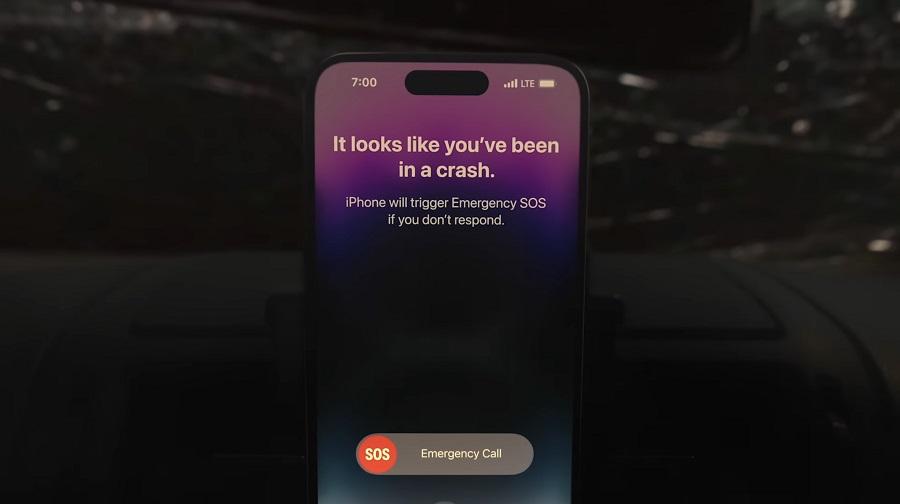
Apple introduced a couple of potentially life-saving features on the iPhone 14 series and new Apple Watches last month, including Crash Detection. The tech giant recently offered more details on how it works, and it might provide some insight into why it has been making some inaccurate emergency calls to 911.
Executives from the iPhone maker said in an interview with TechCrunch that Apple’s latest devices can detect if users were involved in a serious car crash with help from the new gyroscope and accelerometer. VP of Worldwide iPhone Product Marketing Kaiann Drance said the new sensors help “mostly” to measure the g force of up to 256 Gs to determine if the user had been in a vehicular accident.
The new gyroscope is said to improve other features as well, such as camera stability. But Apple says it plays a significant role in Crash Detection, as the new sensor is capable of detecting changes in the user’s movement speed more quickly.
It was also noted that Apple’s algorithm for Crash Detection relies on data from other commonly used components. The GPS helps determine if the user is moving unusually fast. The sound of a car crash is also picked up by the microphone, while the built-in barometric pressure sensor can detect when airbags have been deployed following a crash. Apple clarified, however, that the Crash Detection algorithm does not strictly need to have data from all these sensors before it can perform its function.
“It’s hard to say how many of these things have to trigger, because it’s not a straight equation. Depending how fast the traveling speed was earlier, determines what signals we have to see later on, as well,” VP of Sensing & Connectivity Ron Huang said. “Your speed change, combined with the impact force, combined with the pressure change, combined with the sound level, it’s all a pretty dynamic algorithm.”
In the same interview, Apple reportedly hinted at performing “dozens” of car crash tests to finalize the iPhone and Apple Watch Crash Detection algorithm. The reported mistakes that the feature made recently (via WSJ) were not addressed in the interview. But the data points discussed to make the functionality work provide some insight into why it has mistaken roller coaster rides as “severe car crash” incidents.
WSJ reporter Joanna Stern said in a Twitter post last Oct. 9 that the 911 dispatch center near Kings Island amusement park in Cincinnati, Ohio received at least six 911 calls since the iPhone 14 arrived in stores. But they appear to have been triggered when users went for a roller coaster ride and not by real life-threatening crashes.
Stern also shared an audio clip from one of the calls, where a robotic voice tells the 911 operator: “The owner of this iPhone was in a severe car crash and is not responding to their phone.” The machine-generated call then proceeds to provide the device’s coordinates, and the entire message would be repeated several times during the call.







