


 Uber Stock Falls as Waymo Plans to End Robotaxi Partnership by 2028
  Stellantis Sells Free2move Car-Sharing Business to Mutares to Strengthen Core Auto Strategy
  Tech Stock Positioning Nears Neutral as Investor Rotation Enters Final Phase, Deutsche Bank Says
  Shein Reports $99 Million Loss Ahead of Hong Kong IPO as U.S. Tariffs Hit Sales
  ASML, Applied Materials Slide as China DUV Chip Equipment Breakthrough Sparks Market Jitters
  Zhongji Innolight Raises $6.8 Billion in Hong Kong IPO as AI Demand Fuels Growth
  Unilever Raises 2026 Sales Outlook After Strong Q2 Volume Growth
  Brown-Forman Rejects Sazerac’s $15 Billion Takeover Bid as Family Backs Independence
  Exosens H1 Profit Beats Forecasts as Defense Demand Drives Growth
  Nvidia Invests $1 Billion in Naver as South Korea AI Data Center Expansion Gains Momentum
  Sika Raises 2026 Sales Outlook After Strong First-Half Results Beat Expectations
  SpaceX Stock Slump Wipes Out Nearly $700 Billion From Elon Musk’s Paper Wealth
  Coca-Cola Raises Diet Coke Prices in India as Iran Conflict Disrupts Can Supply
  CATL Shares Jump as $5.6 Billion Buyback Signals Confidence in Long-Term Growth
  Air Liquide Q2 Sales Growth Tops Forecast as Electronics Business Drives Strong Performance
  BHP, Port Hedland Unions Fail to Reach Wage Deal as Negotiations Continue


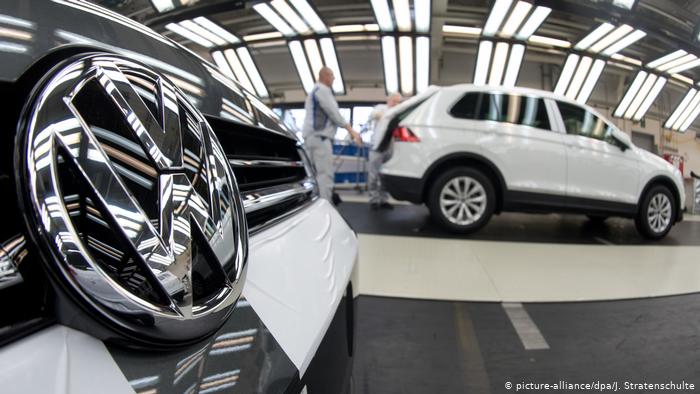
Volkswagen will launch a one-size-fits-all battery cell design in 2023 to be installed in up to 80 percent of its electric vehicles to cut down battery system costs by up to 50 percent in entry-level models.
The strategy will also reduce costs by 30 percent in standard models.
CEO Herbert Diess noted that lower battery prices mean more affordable cars, making electric vehicles more attractive for customers.
Battery costs make up a large proportion of the total cost of an electric car.
The German carmaker also plans to recycle up to 95 percent of the raw materials involved in battery production.
To secure the supply of battery cells, Volkswagen will build six electric vehicle battery "gigafactories" in Europe by 2030 with a total production capacity of 240 gigawatt-hours per year, which is enough to power almost 4 million Volkswagen ID.3 electric vehicles.
The first two battery factories will operate in Skellefteå, Sweden, and Salzgitter, Germany.
The company is also adding a huge number of new electric vehicle charging points to networks across Europe, the US, and China.
Volkswagen is aiming to become the world's biggest producer of battery electric vehicles and is gaining ground on Tesla.
The company sold 231,600 battery electric vehicles in 2020, up 214 percent from 2019.
According to Diess, Volkswagen's strategy is to secure a long-term pole position in the race for the best battery and best customer experience.
In partnership with BP, Spain's Iberdrola, and Italian energy company Enel, Volkswagen intends to boost the number of its public charging points in Europe from 3,600 to about 18,000 by 2025. The said network will cover about one-third of the expected demand in the continent.
Volkswagen is also expanding charging points in the US and China. It plans to put up around 3,500 fast-charging points in North America by the end of the year and 17,000 fast-charging points in China by 2025.
Tesla currently has 20,000 fast-charging points globally.
By next year, Volkswagen's electric vehicles will also be able to connect to private, commercial, and public energy systems.







