


 AWS Bahrain Region Disrupted by Drone Activity Amid Middle East Conflict
  Microsoft Eyes Legal Action as Amazon-OpenAI Deal Threatens Azure Exclusivity
  AMD CEO Lisa Su Heads to Samsung's South Korea Chip Facility Amid AI Expansion Talks
  Cyberattack on Stryker Triggers U.S. Government Warning Over Microsoft Intune Security
  Judge Dismisses Sam Altman Sexual Abuse Lawsuit, But Sister Can Refile
  SK Hynix Eyes Up to $14 Billion U.S. IPO to Fund AI Chip Expansion
  Nvidia Develops Groq AI Chips for Chinese Market Amid Export Shift
  Jeff Bezos Eyes $100 Billion Fund to Transform Manufacturing With AI
  Amazon's "Transformer" Phone: Can It Succeed Where Fire Phone Failed?
  Elon Musk Confirms SpaceX, xAI, and Tesla Will Continue Large-Scale Nvidia Chip Orders
  Meta Ties Executive Pay to Aggressive Stock Price Targets in Major Retention Push
  Alibaba Bets on AI Agents to Unify Its Vast Digital Ecosystem
  Samsung Bets Big on AI-Driven Chip Demand in 2025
  Golden Dome Missile Defense: Anduril and Palantir Join Forces on Trump's $185B Space Shield
  Trump White House Unveils National AI Policy Framework for Congress
  NVIDIA's Feynman AI Chip May Face Redesign Amid TSMC Capacity Crunch


The bidirectional charging feature will enhance Rivian's R1T and R1S models.
At Investor Day, Rivian announced its upcoming bidirectional charger with V2H capabilities, coinciding with Volkswagen's substantial investment of up to $5 billion in the electric vehicle manufacturer.
Rivian Unveils Bidirectional Charging for R1 Vehicles During Investor Day, Following Volkswagen Partnership Announcement
Rivian recently conducted its inaugural Investor Day after announcing its partnership with Volkswagen. According to Teslarati, during its presentation, Rivian disclosed that the first—and second-generation R1T pickup trucks and R1S vehicles can charge bidirectionally at up to 24 kW when installed with a specific wall charger mount.
According to Rivian Updates, the Rivian R2 vehicles will also be capable of bidirectional charging at 11 kW. The company has meticulously considered the designs of its cars and has equipped them with specific features, as evidenced by Rivian's presentation.
In recent months, numerous R1 Rivian owners have speculated that the vehicles can be bidirectionally charged. Nevertheless, Rivian refrained from furnishing any specific information regarding the feature until its 2024 Investor Day.
The company may release a software update that enables bidirectional charging for R1 vehicles, as this feature is accessible to even the first generation. Observing whether Rivian implements the feature and assesses an additional fee for the wall charger mount required for vehicle-to-home bidirectional charging would be intriguing.
Rivian's announcement regarding bidirectional charging capabilities in R1 and R1 vehicles offers a glimpse of the technology that Volkswagen will acquire through its partnership. The German automaker may have substantially assisted Rivian due to its acquisition of a $5 billion stake in the company; however, the partnership will not be unilateral. RJ Scaringe suggested that Volkswagen Group will receive access to Rivian's software and zonal electronics platform.
Volkswagen to Invest Up to $5 Billion in Rivian, Boosting EV Expansion and Joint Tech Development
On June 25, Volkswagen and Rivian disclosed that the German automaker will acquire a stake in the electric vehicle manufacturer of up to $5 billion. This transaction will alleviate cash flow concerns and reduce costs as the company expands its electric automotive business in anticipation of introducing two new models.
Volkswagen and Rivian disclosed the agreement shortly after the markets closed. Rivian's Shareholder Day is scheduled for June 27.
Volkswagen is not the first company to acquire a significant stake in Rivian; Ford did so in 2021 when the company went public.
Nevertheless, Ford divested most of its holdings as the automaker's stock plummeted. In its Q4 2022 Earnings Call, Ford announced that the relinquishment of Rivian shares is "now nearly complete," the sale significantly increased its cash flow.
The partnership was verified by RJ Scaringe, CEO of Rivian, posted on X.
Additionally, the two organizations intend to establish a joint venture to develop the subsequent iteration of software-defined vehicle platforms (SDVs). These platforms will be implemented in both Volkswagen and Rivian electric vehicles.
Oliver Blume, the CEO of Volkswagen Group, stated:
“Our customers benefit from the targeted partnership with Rivian to create a leading technology architecture. Through our cooperation, we will bring the best solutions to our vehicles faster and at a lower cost. We are also acting in the best interest of our strong brands, which will inspire them with their iconic products. The partnership fits seamlessly with our existing software strategy, our products, and our partnerships. We are strengthening our technology profile and our competitiveness.”
Volkswagen's $5 Billion Investment in Rivian Aims to Enhance EV Production and Secure Financial Stability
Volkswagen's initial investment comprised $1 billion in an unsecured convertible note to be converted into Rivian's common stock. Volkswagen is anticipated to invest an additional $4 billion.
Rivian is a prominent player in the electric vehicle industry; however, it has yet to achieve profitability in production capacity. The automaker has disclosed losses in each quarter, with its most recent earnings call indicating a loss of $1.45 billion.
The organization is preparing for its forthcoming product launches. At a recent event, it disclosed its intention to produce the next-generation R2 platform and vehicles at its premier production facility in Normal, Illinois.
To facilitate manufacturing cost savings, the facility was recently retooled:
Volkswagen's investment in Rivian will reinforce these endeavors and guarantee financial stability as the organization advances toward profitability.
With this investment, Volkswagen has demonstrated an immense dedication to Rivian. Ford had already suffered losses due to an initial investment in Rivian; however, the organization was in a significantly different position than it had been several years prior.
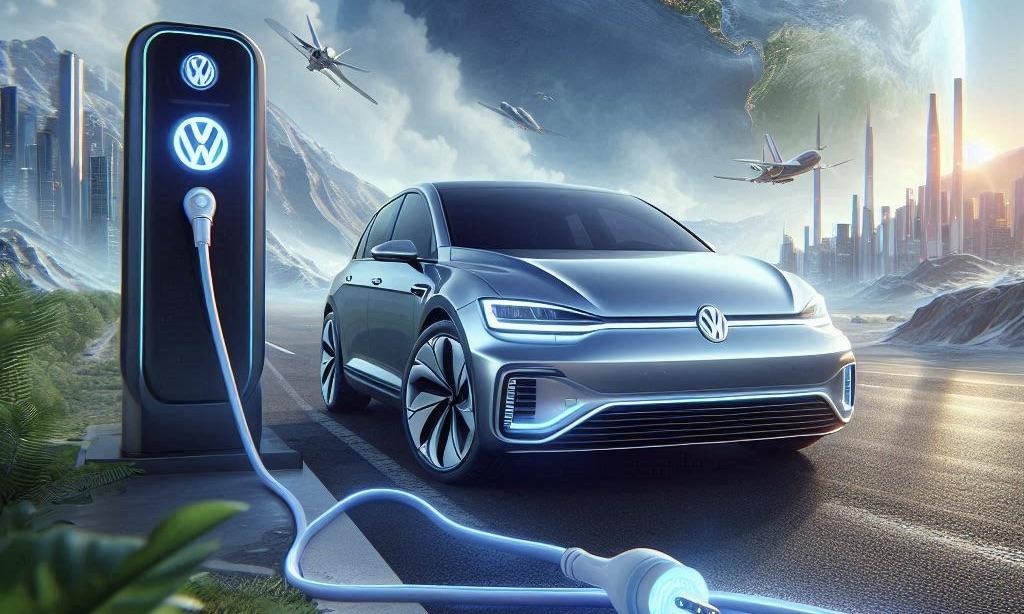
Photo: Microsoft Bing













