


 Autodesk Beats Q1 Estimates, Acquires MaintainX for $3.6 Billion
  PDG Explores $1 Billion Sale of China Data Center Assets
  Samsung Union Dispute Escalates Over Semiconductor Bonus Vote
  Salesforce Q1 FY2027 Earnings Beat Expectations Despite Soft Q2 Revenue Outlook
  Kentucky School District Secures $27 Million in Social Media Addiction Lawsuit Settlements
  US Launches New Trade Investigation Into Vietnam Over Intellectual Property Concerns
  Netanyahu Orders Expansion of Israeli Control in Gaza to 70%
  Synopsys Q2 FY2026 Earnings Beat Driven by AI and Semiconductor Demand
  Snowflake Stock Soars 30% After Q1 Earnings Beat and Major AWS AI Partnership
  Poland Considers Revoking Zelensky’s Top Honor Over Controversial UPA Army Unit Recognition
  Samsung to Invest $1.5 Billion in Vietnam Semiconductor Testing Plant by 2027
  SpaceX Delays Starship V3 Launch Ahead of Potential Record IPO
  Iran-U.S. Nuclear Talks Remain Unresolved as Strait of Hormuz Risks Keep Markets on Edge
  DOJ Opens Criminal Investigation Into E. Jean Carroll Over Alleged Perjury
  SpaceX IPO Could Become Largest in History with $1.8 Trillion Valuation Target
  U.S. Sanctions Iran’s Strait of Hormuz Authority as Global Oil Markets Face Turmoil
  Baltic Drone Incidents Raise NATO Security Concerns


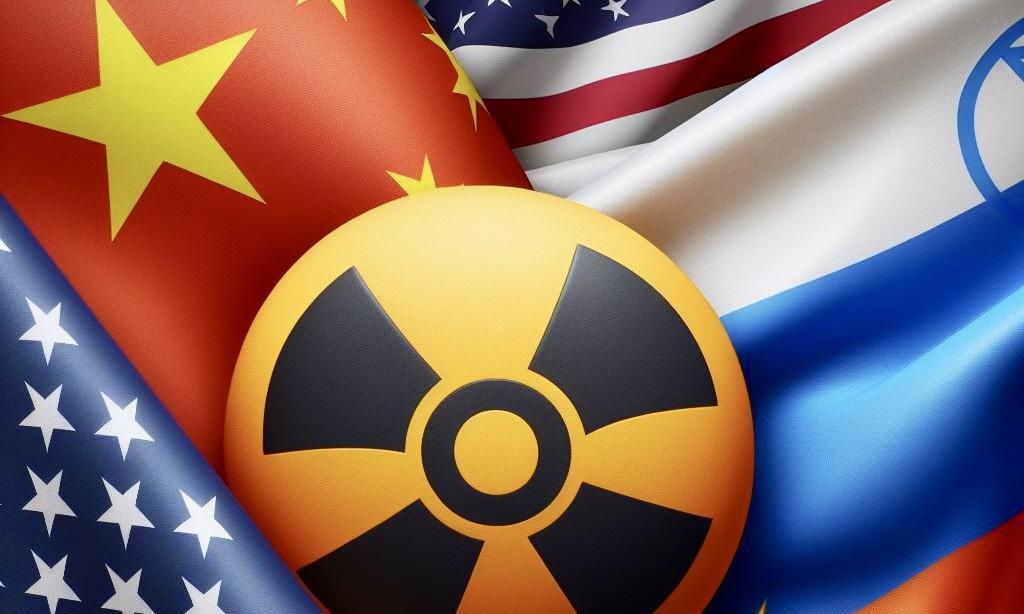
Paul Dean, a senior U.S. arms control official, emphasized the critical need for China and Russia to join the U.S. in declaring that humans will always decide on the deployment of nuclear weapons, not artificial intelligence (AI).
US, France, and Britain Stand United on Nuclear Control
As reported by Reuters on Thursday, China and Russia are implored to follow the lead of the United States and others in stating that decisions regarding the deployment of nuclear weapons would never be made by artificial intelligence but by humans.
During an online briefing, Paul Dean, an arms control official for the State Department, stated that Washington, together with France and Britain, had made a "clear and strong commitment" that humans had complete control over nuclear weapons.
Dean, principal deputy assistant secretary of the Bureau of Arms Control, Deterrence, and Stability, stated, "We would welcome a similar statement by China and the Russian Federation."
"We think it is an extremely important norm of responsible behavior and we think it is something that would be very welcome in a P5 context," he stated, alluding to the five permanent members of the U.N. Security Council.
Dean's comments coincide with efforts by U.S. President Joe Biden's administration to expand bilateral talks with China on the development of artificial intelligence and nuclear weapons policy.
The Chinese Ministry of Defense did not immediately answer a request for comment.
Blinken and Wang Yi's Talks Set Stage for AI Dialogue
During broad talks in Beijing on April 26, U.S. Secretary of State Antony Blinken and China's Foreign Minister Wang Yi talked about the growth of AI technology.
Blinken stated that in the coming weeks, the two parties will conduct their first bilateral discussions on artificial intelligence, during which they will exchange perspectives on managing the technology's associated risks and ensuring its safety.
Although formal arms control negotiations are not anticipated to happen anytime soon, U.S. and Chinese officials began discussing nuclear weapons in January as part of normalizing military relations.
Photo: Microsoft Bing







