


 U.S., New Zealand Fund $60M Cook Islands Port Upgrade
  USS Abraham Lincoln Arrives in Thailand After Record 200 Days at Sea
  Ed Markey Wins Massachusetts Democratic Senate Primary
  Ukraine Sanctions Chief Heads to Washington to Push Russia Bill
  US-Iran Conflict Escalates With New Strikes Near Hormuz
  Augusto Cury Surges in Brazil Presidential Polls
  US Strikes Iran as Tehran Retaliates, Oil Prices Surge
  Canada Backs €100 Billion Global Defence Bank
  US Approves $800 Million Helicopter Sale to Iraq
  Bessent Urges Japan on Fiscal Discipline, BOJ Rate Hikes
  Nepal Seeks More China Glacier Data After Deadly Himalayan Flood
  Brazil, US Resume Tariff Talks as Trade Tensions Persist
  US-Iran Exchange Strikes as Hormuz Tensions Escalate
  Nicaragua Congress Backs Reform Banning Opposition Parties
  US Strikes Iran IRGC Targets as Conflict Escalates
  US, Australia Pledge $580 Million for Pacific Islands
  Flavio Bolsonaro Pledges to Respect Brazil Election Result


 Add as a preferred source on Google
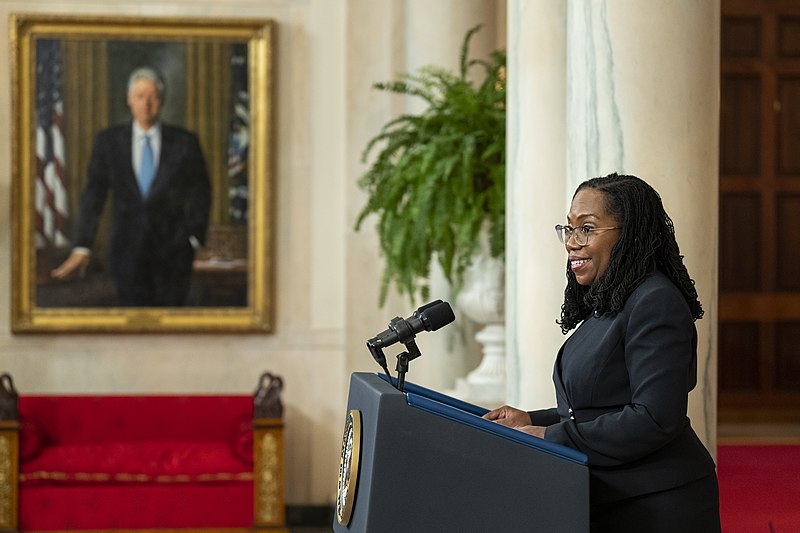
This week, federal judge Ketanji Brown Jackson was sworn in as the newest associate justice of the US Supreme Court. Jackson is succeeding retiring liberal Justice Stephen Breyer, who also officially retired the same day.
Jackson was officially sworn in Thursday as the newest Supreme Court Justice while also making history as the first Black woman to serve on the highest court of the country. Jackson succeeded retiring liberal Justice Stephen Breyer, who also officially retired Thursday.
Jackson’s swearing-in comes months after she was confirmed by the Senate at a 53-47 vote back in April. Jackson was previously appointed by President Joe Biden and confirmed by the same Senate last year to the DC Court of Appeals after serving eight years as a federal judge.
“I am glad for America,” said Breyer in a statement. “Ketanji will interpret the law wisely and fairly, helping that law to work better for the American people, whom it serves.”
Jackson will participate in arguments on cases when the high court starts a new term in October, joining a liberal minority against the court’s currently Conservative majority of 6-3.
Breyer’s retirement and Jackson’s swearing-in also come at a time when the high court, especially its Conservative majority, has been under heavy scrutiny following its recent rulings overturning Roe v. Wade, expanding the rights of firearm owners, limiting the federal government’s authority to regulate carbon emissions, and expanding religious liberties.
Another case that the court is set to take on is whether state legislatures have the authority to ignore courts on election rules if found to be unconstitutional.
The striking down of the landmark abortion ruling suggests that Chief Justice John Roberts has lost control of the Supreme Court and could also see his legacy tarnished because of it, according to two legal scholars.
University of Texas law professor Stephen Vladeck told Politico’s Josh Gerstein that the overturning of Roe v. Wade was the “capstone piece,” showing very little proof that the court is still Roberts’ court, noting that the Chief Justice is essentially powerless due to the internal conflicts between both sides.
American University historian Stephen Wermiel said the court’s overturning of Roe v. Wade is “the most important decision of his tenure as chief justice and he’s not part of it.”







