


 New York Legalizes Medical Aid in Dying for Terminally Ill Patients
  China Overturns Death Sentence of Canadian Robert Schellenberg, Signaling Thaw in Canada-China Relations
  Trump’s Inflation Claims Clash With Voters’ Cost-of-Living Reality
  Trump Slams Super Bowl Halftime Show Featuring Bad Bunny
  U.S. Lawmakers to Review Unredacted Jeffrey Epstein DOJ Files Starting Monday
  US Pushes Ukraine-Russia Peace Talks Before Summer Amid Escalating Attacks
  Japan Election 2026: Sanae Takaichi Poised for Landslide Win Despite Record Snowfall
  Israel Approves West Bank Measures Expanding Settler Land Access
  Anutin’s Bhumjaithai Party Wins Thai Election, Signals Shift Toward Political Stability
  Bangladesh Election 2026: A Turning Point After Years of Political Suppression
  India–U.S. Interim Trade Pact Cuts Auto Tariffs but Leaves Tesla Out
  Trump Lifts 25% Tariff on Indian Goods in Strategic U.S.–India Trade and Energy Deal
  Sydney Braces for Pro-Palestine Protests During Israeli President Isaac Herzog’s Visit
  Nicaragua Ends Visa-Free Entry for Cubans, Disrupting Key Migration Route to the U.S.
  Jack Lang Resigns as Head of Arab World Institute Amid Epstein Controversy
  Trump Administration Appeals Court Order to Release Hudson Tunnel Project Funding
  China Warns US Arms Sales to Taiwan Could Disrupt Trump’s Planned Visit


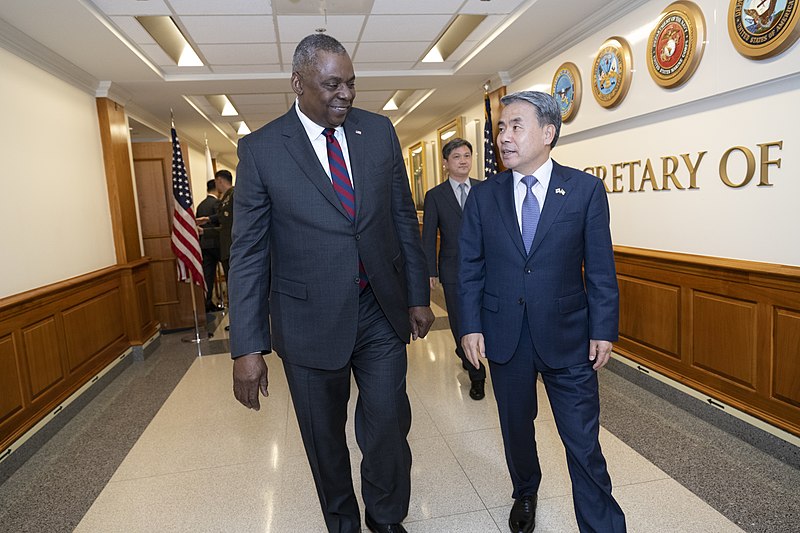
South Korea and the United States agreed to find new ways to be able to show the strength of the alliance. The pledge comes amidst a time when North Korea has been firing multiple missiles and artillery shells in a sign of flared tensions in the peninsula.
South Korean defense minister Lee Jong-sup visited Washington Thursday to meet with US defense secretary Lloyd Austin, and a joint statement shared after the meeting said both agreed to find new measures to show the alliance’s strength amidst Pyongyang’s provocations. Austin said that they agreed on extending their joint military air drills, also known as Vigilant Storm, which has also drawn the ire of North Korea.
“I’ve consulted with Minister Lee and we’ve decided to extend Vigilant Storm, which is our long-scheduled, combined training exercise to further bolster our readiness interoperability. We’ll continue to work closely together to develop options to protect the United States and our allies in the region,” said Austin.
“For nearly seven decades, this alliance has been an anchor of peace and security in the Korean Peninsula and across the broader Indo-Pacific.”
With North Korea on the agenda of their meeting, Austin stressed the “ironclad” commitment of Washington to South Korea. Austin said that the US deterrence included the country’s full range of nuclear and conventional and missile defense capabilities, referring to the fifth-generation fighters and the visit of the USS Ronald Reagan aircraft carrier to the peninsula this year.
Regarding Pyongyang, Lee said that they both condemned Pyongyang’s latest missile launch and that the result of the response of the alliance would be the downfall of North Korean leader Kim Jong-un’s regime.
The South Korean military previously fired missiles in response to Pyongyang’s launch on Wednesday, saying that three surface-to-air missiles were fired toward the north of its maritime border with North Korea. The response came hours after North Korea fired around 10 of its missiles into the sea, one of which landed less than 60 kilometers off the coast of South Korea.
Wednesday’s launch was the first time a North Korean missile landed in South Korean waters.













