


 China Banks Halt New Loans to Sanctioned Refineries Amid U.S.-Iran Oil Crackdown
  FEMA Reinstates Employees After Dissent Letter, Signaling Shift in Workforce Stability
  Trump Administration Files Fraud Charges Against Southern Poverty Law Center Over Informant Payments
  US Revises UN Resolution on Iran Strait of Hormuz Attacks Amid Russia-China Opposition
  Trump Says U.S. Navy Destroyers Passed Strait of Hormuz Under Iranian Fire
  TikTok Nears $400 Million Settlement With Trump Administration Over Child Privacy Lawsuit
  Federal and State Authorities Conduct Widespread Fraud Raids Across Minnesota
  US Launches Retaliatory Strikes on Iran Amid Rising Strait of Hormuz Tensions
  Trump-Xi Beijing Summit to Focus on Trade, Taiwan, and Boeing Deal
  US Adds European Union to Section 301 Watchlist Amid Trade Concerns
  Australia Targets Meta, Google, and TikTok With New News Payment Tax Proposal
  China-Made Fireworks Power U.S. Independence Day Celebrations Amid Trade Truce
  Bolsonaro Discharged After Shoulder Surgery Amid Ongoing Legal Troubles
  Iran Accuses U.S. of Violating Strait of Hormuz Ceasefire with Ship and Coastal Attacks
  Florida Investigates OpenAI and ChatGPT Over Alleged Role in FSU Shooting
  Taiwan Court Fines Tokyo Electron Unit $4.78M in Major TSMC Trade Secrets Case
  Brazil Pension Fund Crackdown After Banco Master Collapse Raises Investment Concerns


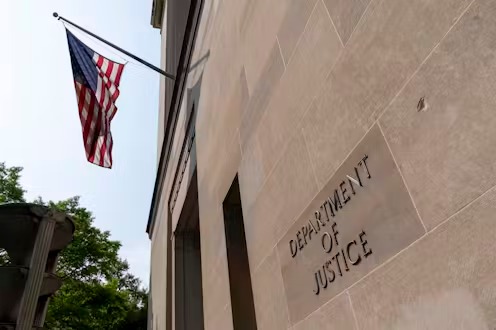
The U.S. Justice Department has filed a lawsuit seeking to block a California law that requires oil and gas drilling operations to maintain significant buffer zones from schools, homes, hospitals, and other community spaces. The lawsuit, announced on Wednesday, targets California Senate Bill 1137, a measure designed to protect public health by limiting where new oil and gas wells can be drilled and by imposing stricter safety rules on existing operations.
According to the Justice Department, the federal government is asking the court to issue an injunction to stop enforcement of the law and plans to seek a preliminary injunction in the coming days. The department argues that federal energy laws should preempt the California legislation, claiming that the buffer zone requirements interfere with federally authorized oil and gas leases. In its statement, the Justice Department said the law “would knock out about one-third of all federally authorized oil and gas leases in California,” potentially limiting domestic energy development.
Senate Bill 1137 went into full effect in 2024 and prohibits the approval of new oil and gas wells within 3,200 feet, or roughly half a mile, of sensitive locations such as residential neighborhoods, schools, and healthcare facilities. The law also introduces enhanced health and safety standards for existing wells that continue to operate near populated areas. California lawmakers and state officials have argued that these measures are necessary to reduce pollution exposure and safeguard vulnerable communities.
The lawsuit highlights ongoing political and policy tensions between the Trump administration, which strongly supports fossil fuel development, and California Governor Gavin Newsom. Newsom has consistently promoted California as a leader in climate change action and environmental regulation, often clashing with federal authorities over energy and environmental policies.
Environmental advocates have strongly defended the California law. Earthjustice, a prominent environmental group, estimates that more than three million Californians, representing about 8% of the state’s population, live within 3,200 feet of active oil wells. The organization warns that proximity to drilling sites is linked to serious health risks, including asthma, reduced lung function, and higher rates of preterm birth.
As the legal battle unfolds, the case is expected to have significant implications for environmental regulation, public health protections, and the balance of power between state and federal authority over energy policy in the United States.







