


 Trump Says “Very Good Talks” Underway on Russia-Ukraine War as Peace Efforts Continue
  Bosnian Serb Presidential Rerun Confirms Victory for Dodik Ally Amid Allegations of Irregularities
  China Warns US Arms Sales to Taiwan Could Disrupt Trump’s Planned Visit
  India–U.S. Interim Trade Pact Cuts Auto Tariffs but Leaves Tesla Out
  New York Legalizes Medical Aid in Dying for Terminally Ill Patients
  Pentagon Ends Military Education Programs With Harvard University
  Ohio Man Indicted for Alleged Threat Against Vice President JD Vance, Faces Additional Federal Charges
  Trump Allows Commercial Fishing in Protected New England Waters
  Trump’s Inflation Claims Clash With Voters’ Cost-of-Living Reality
  Trump Backs Nexstar–Tegna Merger Amid Shifting U.S. Media Landscape
  Jack Lang Resigns as Head of Arab World Institute Amid Epstein Controversy
  Israel Approves West Bank Measures Expanding Settler Land Access
  TrumpRx.gov Highlights GLP-1 Drug Discounts but Offers Limited Savings for Most Americans
  Sydney Braces for Pro-Palestine Protests During Israeli President Isaac Herzog’s Visit
  U.S.-India Trade Framework Signals Major Shift in Tariffs, Energy, and Supply Chains
  U.S. to Begin Paying UN Dues as Financial Crisis Spurs Push for Reforms
  Japan’s Prime Minister Sanae Takaichi Secures Historic Election Win, Shaking Markets and Regional Politics


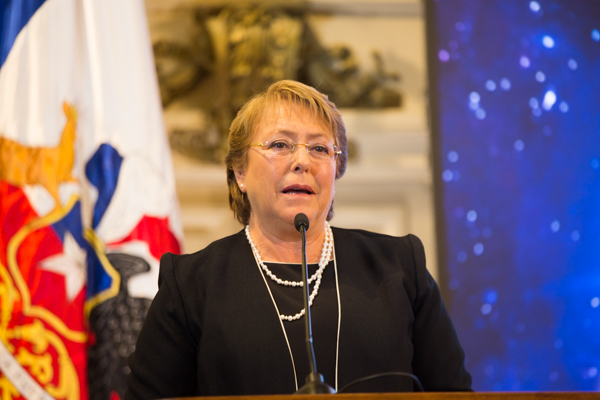
China is facing repeated accusations of human rights abuses against its Uyghur Muslim minority. UN Human Rights Chief Michelle Bachelet recently came under fire for failing to hold Beijing accountable during her trip to China.
Over the weekend, Bachelet defended the purpose of her six-day trip to China as she faces calls from human rights advocates to hold the Chinese government accountable for its treatment of the Uyghur Muslims in Xinjiang. Bachelet said she raised the human rights concerns with Chinese officials, but her visit to China was not for the purposes of an investigation.
This led the US, which has officially accused China of “committing genocide” against Uyghur Muslims, to describe Bachelet’s visit as “a mistake.”
Bachelet said that her visit to China will open the door for more regular interactions with China to help Beijing fulfill its obligations under international law. Bachelet said China should not use legitimate concerns about “terrorism” to justify its human rights abuses against the country’s Muslim minority.
“It provides an opportunity for me to better understand the situation in China, but also for the authorities in China to better understand our concerns and to potentially rethink policies that we believe may impact negatively on human rights,” said Bachelet in a video news conference on the last day of her visit.
Bachelet has since faced criticism from human rights groups. Human Rights Watch’s Sophie Richardson said that Bachelet’s visit to China appeared to be more about “making nice” with Beijing rather than holding them accountable for some of the worst human rights violations it has committed.
Richardson described Bachelet’s efforts to assess the scale of China’s human rights violations as “an ingenious way of ignoring a tidal wave of evidence” that proves how the Chinese government targeted the Uyghur Muslims and other Muslim minorities.
Chinese President Xi Jinping defended his government’s record during his video conference with Bachelet. Xi said that China’s development of human rights is in line with its “national conditions.” Xi also accused other countries of politicizing human rights in his criticism of foreign interference in the country’s internal affairs.
“Countries do not need patronizing lecturers; still less should human rights issues be politicized and used as a tool to apply double standards or as a pretext to interfere in the internal affairs of other countries,” said Xi.













