


 Trump Endorses Japan’s Sanae Takaichi Ahead of Crucial Election Amid Market and China Tensions
  Trump Signs “America First Arms Transfer Strategy” to Prioritize U.S. Weapons Sales
  Japan Election 2026: Sanae Takaichi Poised for Landslide Win Despite Record Snowfall
  South Korea Assures U.S. on Trade Deal Commitments Amid Tariff Concerns
  Netanyahu to Meet Trump in Washington as Iran Nuclear Talks Intensify
  Trump Lifts 25% Tariff on Indian Goods in Strategic U.S.–India Trade and Energy Deal
  U.S. to Begin Paying UN Dues as Financial Crisis Spurs Push for Reforms
  China Warns US Arms Sales to Taiwan Could Disrupt Trump’s Planned Visit
  India–U.S. Interim Trade Pact Cuts Auto Tariffs but Leaves Tesla Out
  Trump Allows Commercial Fishing in Protected New England Waters
  U.S. Lawmakers to Review Unredacted Jeffrey Epstein DOJ Files Starting Monday
  Trump Backs Nexstar–Tegna Merger Amid Shifting U.S. Media Landscape
  Ohio Man Indicted for Alleged Threat Against Vice President JD Vance, Faces Additional Federal Charges
  Norway Opens Corruption Probe Into Former PM and Nobel Committee Chair Thorbjoern Jagland Over Epstein Links
  Pentagon Ends Military Education Programs With Harvard University
  Trump Allegedly Sought Airport, Penn Station Renaming in Exchange for Hudson River Tunnel Funding
  Iran–U.S. Nuclear Talks in Oman Face Major Hurdles Amid Rising Regional Tensions


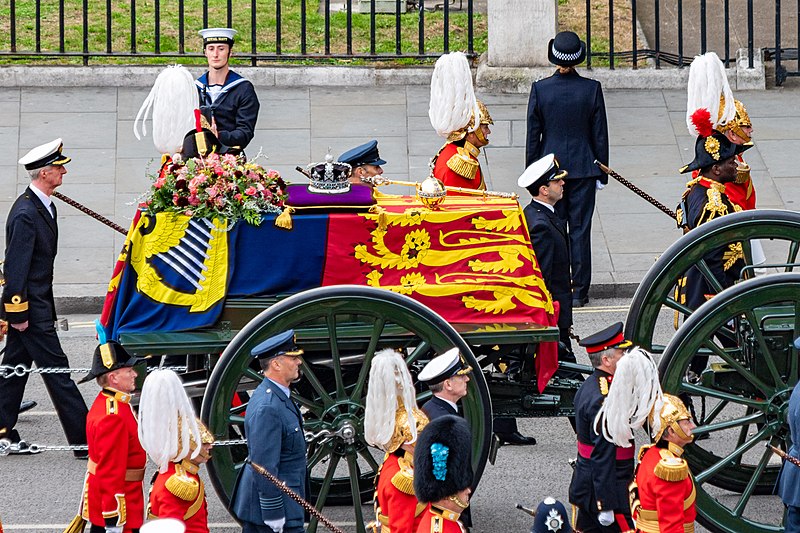
The British Treasury said this week that the overall cost of the state funeral and other events related to the country’s longest-reigning monarch Queen Elizabeth was over $200 million. The amount was mainly used for security and to ensure the smooth flow of events at the time.
The Treasury’s Chief Secretary John Glen said in a written statement to parliament on Thursday that British government agencies spent an overall $204 million on Queen Elizabeth’s state funeral and other related events. The Home Office made up the biggest portion of the spending total of over $91.4 million.
“The government’s priorities were that these events ran smoothly and with the appropriate level of dignity, while at all times ensuring the safety and security of the public,” said Glen in the statement.
The United Kingdom held a 10-day mourning period following Queen Elizabeth’s death on September 8. The longest-serving monarch’s coffin was at Edinburgh Cathedral before being brought to London, where around 250,000 people lined up for hours to be able to pay their respects at Westminster Hall during her lying-in-state. The period ended with the queen’s funeral on September 19.
King Charles III, who succeeded the queen, toured the United Kingdom’s four nations with then-prime minister Liz Truss. The London Metropolitan Police at the time said the funeral was the biggest policing event in its history, as many dignitaries from all over the world traveled to pay their respects.
On Friday, the British government announced a $1.26 billion investment into the UK’s semiconductor industry as part of a long-awaited strategy to boost the domestic industry and supply chains. The plan will focus on the UK’s role in designing semiconductors, according to the British Department for Science, Innovation, and Technology.
“Our new strategy focuses our efforts on where our strengths lie, in areas like research and design, so we can build our competitive edge on the global stage,” said British Prime Minister Rishi Sunak.
The UK will be investing over $240 million from 2023 to 2025, which will eventually grow up to over $1 billion in the coming decade.
Photo: Department for Digital, Culture, Media, and Sport/Wikimedia Commons(CC by 2.0)














_-_22.jpg)