


 Trump’s Inflation Claims Clash With Voters’ Cost-of-Living Reality
  Trump Threatens to Block Gordie Howe Bridge, Escalating U.S.-Canada Trade Tensions
  NATO Command Reshuffle Signals Shift Toward Greater European Military Leadership
  Taiwan Says Moving 40% of Semiconductor Production to the U.S. Is Impossible
  Australian Leaders Call for Calm After Sydney Protests Turn Violent
  Japan’s Prime Minister Sanae Takaichi Secures Historic Election Win, Shaking Markets and Regional Politics
  Bangladesh Secures Reduced 19% U.S. Tariff in Landmark Trade Agreement
  Trump Backs Nexstar–Tegna Merger Amid Shifting U.S. Media Landscape
  US Pushes Ukraine-Russia Peace Talks Before Summer Amid Escalating Attacks
  Sydney Braces for Pro-Palestine Protests During Israeli President Isaac Herzog’s Visit
  Trump Administration Appeals Court Order to Release Hudson Tunnel Project Funding
  Israel Approves West Bank Measures Expanding Settler Land Access
  Ghislaine Maxwell to Invoke Fifth Amendment at House Oversight Committee Deposition
  Trump Congratulates Japan’s First Female Prime Minister Sanae Takaichi After Historic Election Victory
  Jack Lang Resigns as Head of Arab World Institute Amid Epstein Controversy
  Trump Administration Plans Chip Tariff Exemptions for Big Tech Amid AI Data Center Push
  Bosnian Serb Presidential Rerun Confirms Victory for Dodik Ally Amid Allegations of Irregularities


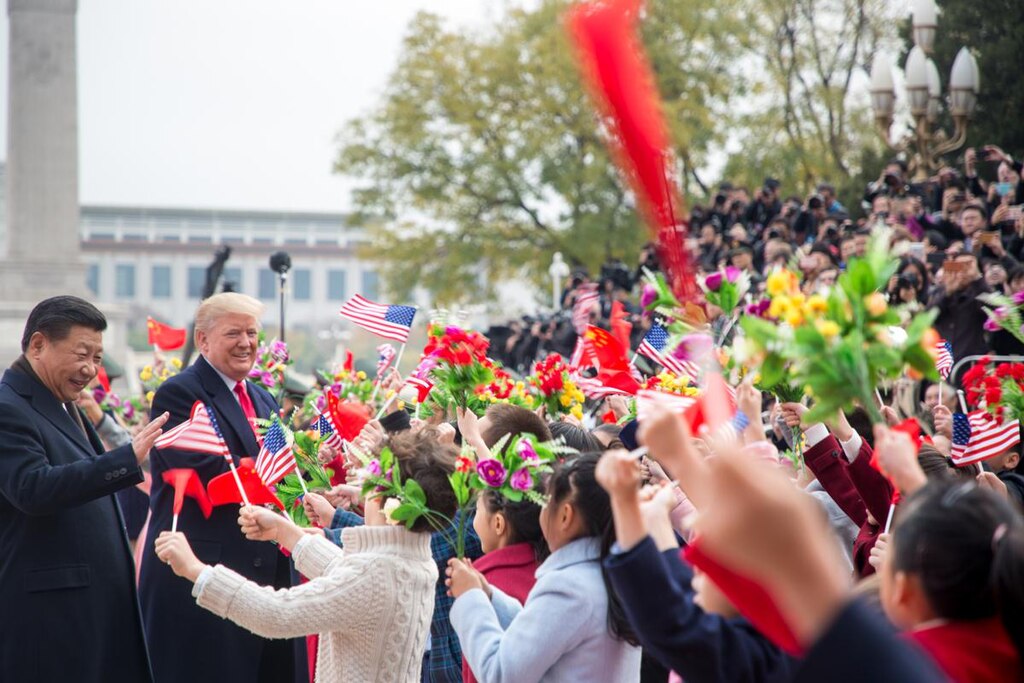
U.S. President Donald Trump is expected to travel to Beijing during the first week of April for a meeting with Chinese President Xi Jinping, according to a report by Politico citing three people familiar with the plans. The visit, while not yet officially confirmed by the White House or China’s Foreign Ministry, signals a potentially significant moment in U.S.-China relations amid ongoing geopolitical and economic tensions.
The planned Trump Beijing visit comes at a time when relations between Washington and Beijing remain complex, shaped by trade disputes, technology restrictions, security concerns, and global economic uncertainty. A face-to-face meeting between Trump and Xi could provide an opportunity for both leaders to reset dialogue, manage disagreements, and explore areas of cooperation between the world’s two largest economies.
Sources cited by Politico noted that preparations are still underway and that details could change. However, the timing suggests both sides see value in direct engagement early in the year. Previous meetings between Trump and Xi have often focused on trade balances, tariffs, supply chain resilience, and broader strategic competition. Analysts expect these issues to feature prominently again, alongside discussions on Taiwan, global security, and economic stability.
For President Trump, the Beijing trip would mark a major diplomatic move, underscoring his administration’s approach to dealing with China through leader-level negotiations. For China, hosting the U.S. president offers a chance to influence the tone of bilateral relations and project stability to global markets.
Markets and policymakers worldwide are likely to watch the Trump-Xi meeting closely, as any signals of easing tensions or renewed cooperation could have far-reaching implications for global trade and investment. While expectations remain cautious, the visit itself highlights the continued importance of dialogue between Washington and Beijing, even during periods of rivalry.
If confirmed, the April meeting could shape the next phase of U.S.-China relations, setting the agenda for future negotiations and influencing geopolitical dynamics well beyond 2026.













