


 Alibaba Shares Slide as Jefferies Slashes Price Target Over AI Spending and Business Losses
  FedEx Pilots and Union Reach Tentative Agreement on 40% Pay Increase
  Bendigo and Adelaide Bank Posts Strong Q3 Earnings, Announces AI-Driven Job Cuts
  Chalco Stock Surges as Q1 2025 Profit Forecast Jumps Up to 58%
  Samsung Electronics Posts Eightfold Profit Surge Driven by AI Chip Demand
  UAE's Largest Natural Gas Facility Suspended After Attack-Triggered Fire
  Pony.ai, Uber, and Verne Launch Europe's First Commercial Robotaxi Service in Zagreb
  Bank of America Identifies Top Asia-Pacific Semiconductor Stocks Poised for AI-Driven Growth
  Deere & Company Agrees to $99 Million Settlement Over Right-to-Repair Dispute
  Pershing Square Bids €30.40 Per Share to Acquire Universal Music Group in $9.4B Deal
  China's AI Stocks Surge as Zhipu and MiniMax Hit Record Highs
  Paramount Skydance Secures $24B from Gulf Sovereign Wealth Funds for Warner Bros. Discovery Takeover
  Goldman Sachs, ANZ Cut Oil Forecasts Amid U.S.-Iran Ceasefire Hopes
  Private Credit Under Pressure: Is a Slow-Motion Crisis Unfolding?
  Britain Courts Anthropic Amid US Defense Department Dispute
  BHP's Incoming CEO Visits China Amid Pricing Dispute with CMRG



Amid concerns about the deadly coronavirus pandemic, a rapidly growing number of colleges and universities are closing their classroom doors, forcing faculty to teach students online instead of in person.
The risks posed by COVID-19, the disease caused by the new coronavirus, are both dramatic and abstract. Without a vaccine, scientists can’t say how long it will last or what its full impact will be in any regard – including on higher education. There was almost no time to forge a plan to cope with either the logistical or financial consequences before they began to unfold.
We are scholars of philanthropy who have examined the responsibilities of people in charge of overseeing colleges and universities.
At this point, we are growing increasingly concerned about the hundreds of colleges and universities that were already on financially shaky ground before COVID-19 began to spread. We fear that some may never recover whenever things finally get back to normal.
Closures and mergers ahead
A school facing closure or merger with another campus within a few years now may be even more likely to close and to close sooner.
As schools rush to respond to the spread of COVID-19, these concerns are bubbling up at some colleges and universities that had not previously acknowledged that they were running into trouble. Naming institutions in this circumstance would jeopardize them even more.
Institutions large and small, ranging from The Ohio State University, with nearly 70,000 students, to Antioch University’s Seattle campus, with fewer than 700, are replacing in-person classes with an online learning format. They are holding meetings with software that otherwise would have just required a table and chairs, restricting travel and nixing study abroad programs.
Meanwhile, they are deciding whether and how to quarantine students and communicating constantly with parents about all of these logistical nightmares.
Administrators are already worrying about how the crisis will affect enrollment during the 2020-2021 school year as they both curtail international student recruitment and support the foreign students who are already here – and isolated – in the U.S.
All of this has major repercussions. Schools are recalculating student financial aid, hosting athletic events in empty arenas and stadiums, and taking other steps to foster what health authorities call “social distancing.” The economic blows could be especially brutal for schools that were already struggling before they had to cope with sudden, unplanned and still undefined expenses and lost revenue. And with very limited exceptions, we don’t expect that insurance will foot a lot of these bills.
What donors can do
Donors can do their part for colleges and universities in crisis. If dispatched quickly, philanthropy could also help reduce the financial toll that the new coronavirus is taking on campuses everywhere, especially for vulnerable students who rely on financial aid, part-time work, childcare and reliable schedules.
Consider what happened to Sweet Briar, a women’s college near the small town of Amherst, Virginia. In 2015, the college’s president and trustees were convinced that the institution could not overcome its enrollment and financial management difficulties, despite its US$65 million endowment. The mayor of Amherst urged the school’s leaders to reconsider in a letter that emphasized the damage that closure would cause the local community.
Many of its graduates sued to prevent the closing, as did members of the faculty and the local county government. The alumnae then went on to raise enough money to rescue the school.
Happily, the college has now raised a total of $63.9 million. By many accounts, it’s on the road to what could prove a complete recovery.
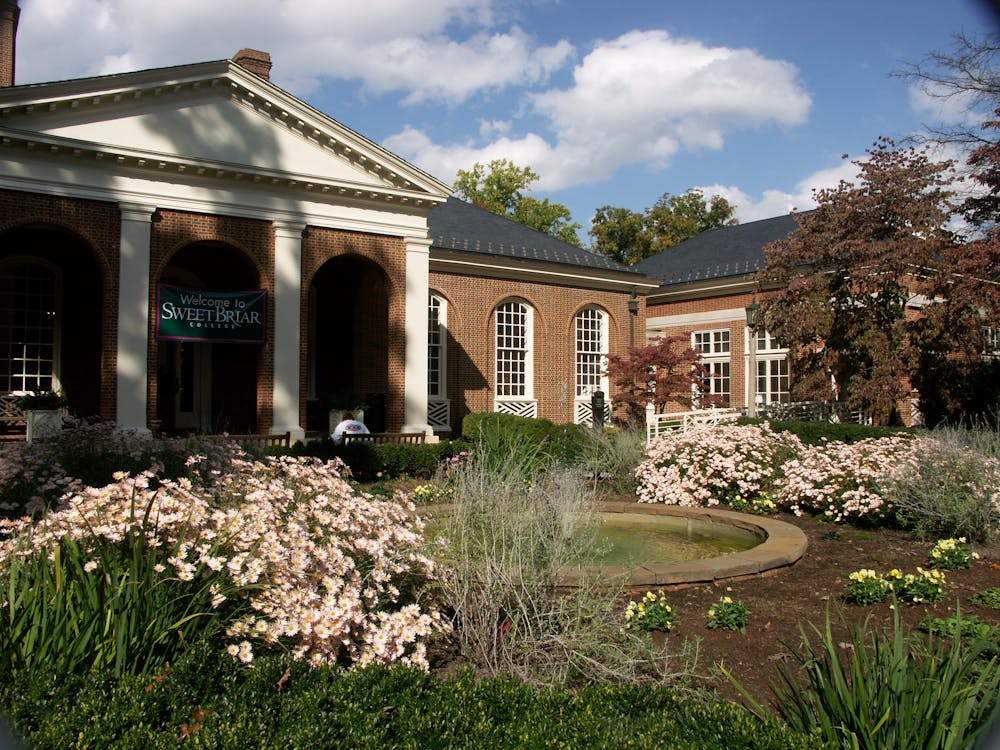
Sweet Briar is bouncing back from financial woes. Annette Teng, CC BY-SA
Therefore, in our view, alumni, foundations and governmental agencies with the ability to do so should consider providing emergency cash infusions to aid colleges, and particularly students who need financial help due to quarantines, canceled trips, interruptions of work and many more unforeseen contingencies. Foreign students especially may need temporary support. But colleges and universities may also need help to meet payroll for staff and others in danger of reduced hours or layoffs and to provide basic services such as food or counseling.
To be sure, large-scale philanthropy typically does not get dispatched quickly, nor do schools usually launch major fundraising campaigns overnight. And philanthropy alone can’t resolve institutions’ deeper issues.
And donors don’t have to wait to be asked to help. Alumni, parents, local corporations and community foundations can make a difference by working together, as the foundations in Seattle are doing, and as alumnae and community supporters of Sweet Briar did.
Portions of this article originally appeared in a previous article published on Feb. 3, 2020.







