


 Canada Grants C$7 Million to Greenland Molybdenum Mine to Strengthen Critical Minerals Supply
  Maria Corina Machado Vows Return to Venezuela After Earthquakes Despite Obstacles
  US, Iran Agree to Halt Attacks Ahead of Doha Talks on Strait of Hormuz
  Trump Urges Gasoline Retailers to Cut Prices to $2.50 Per Gallon, Warns of Legal Action
  Trump Suspends Some Morocco Fertilizer Tariffs to Ease U.S. Supply Shortage
  Trump Signs Memorandum Backing Americans’ Right to Repair Their Own Vehicles
  Trump Announces September Overhaul of Washington’s East Potomac Golf Links
  Serbia Protests Continue as Thousands Rally Despite Vucic’s Resignation Plan
  Javier Milei Cabinet Chief Manuel Adorni Resigns Amid Spending Scandal Investigation
  Iran Launches Drone Attack on Bahrain After U.S. Strikes, Strait of Hormuz Tensions Escalate
  China Expands Export Controls, Adds 20 Japanese Companies to Restricted List
  Mexico, U.S. Launch Sterile Fly Facility to Combat New World Screwworm Outbreak
  Australia Plans Higher Fines for Social Media Firms Failing to Block Underage Users
  Israeli Airstrike Kills Three in Central Gaza Despite Ceasefire
  Trump Threatens 100% Tariffs on Countries Imposing Digital Services Taxes on U.S. Tech Firms


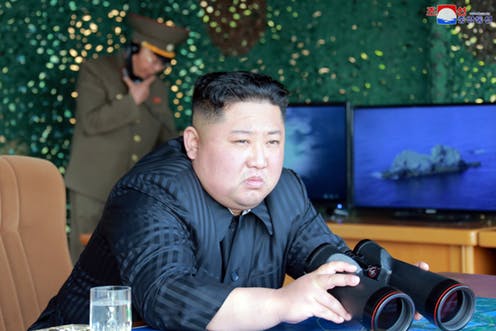
North Korea has conducted a series of weapons tests this week, showcasing cutting-edge military technology including cluster-bomb warheads, electromagnetic weapons, and carbon-fibre bombs, according to state media outlet KCNA. The tests, overseen by General Kim Jong Sik, signal Pyongyang's growing ambition to develop asymmetric warfare capabilities suited for modern conflict.
Among the weapons demonstrated was the Hwasongpho-11 Ka, a surface-to-surface tactical ballistic missile equipped with a cluster-bomb warhead capable of destroying targets across an area of up to seven hectares. North Korea's Academy of Defence Science also tested a mobile short-range anti-aircraft missile system, with launches confirmed over several days by South Korea's Joint Chiefs of Staff.
Analysts warn the electromagnetic weapon system could potentially disable electronic circuits in enemy assets, posing a significant threat to South Korea's F-35A stealth fighters and Aegis-equipped warships. Meanwhile, carbon-fibre bombs — previously developed only by advanced militaries like the United States and China — can disable power grids and critical infrastructure by scattering conductive fibre strands over targets, making them a formidable addition to North Korea's arsenal.
Security experts note that Pyongyang appears to be drawing lessons from the conflicts in Ukraine and the Middle East, prioritizing mass-producible, cost-effective weapons alongside high-tech electronic warfare tools. This dual approach reflects a broader strategy aimed at overwhelming South Korea's defence systems through asymmetric means.
The tests come ahead of a scheduled visit by Chinese Foreign Minister Wang Yi to Pyongyang and amid speculation over a potential summit between U.S. President Donald Trump and North Korean leader Kim Jong Un. Analysts view the timing as a deliberate show of force, intended to strengthen North Korea's negotiating position while signaling its expanding conventional and electronic warfare capabilities to both adversaries and allies.







