


 Trump Signs Executive Order Threatening 25% Tariffs on Countries Trading With Iran
  Global PC Makers Eye Chinese Memory Chip Suppliers Amid Ongoing Supply Crunch
  Elon Musk’s Empire: SpaceX, Tesla, and xAI Merger Talks Spark Investor Debate
  Asian Stocks Slip as Tech Rout Deepens, Japan Steadies Ahead of Election
  Anthropic Eyes $350 Billion Valuation as AI Funding and Share Sale Accelerate
  Sony Q3 Profit Jumps on Gaming and Image Sensors, Full-Year Outlook Raised
  Jensen Huang Urges Taiwan Suppliers to Boost AI Chip Production Amid Surging Demand
  India–U.S. Interim Trade Pact Cuts Auto Tariffs but Leaves Tesla Out
  Tencent Shares Slide After WeChat Restricts YuanBao AI Promotional Links
  Trump Lifts 25% Tariff on Indian Goods in Strategic U.S.–India Trade and Energy Deal
  SpaceX Prioritizes Moon Mission Before Mars as Starship Development Accelerates
  SpaceX Pushes for Early Stock Index Inclusion Ahead of Potential Record-Breaking IPO
  Instagram Outage Disrupts Thousands of U.S. Users
  Japanese Pharmaceutical Stocks Slide as TrumpRx.gov Launch Sparks Market Concerns
  South Korea’s Weak Won Struggles as Retail Investors Pour Money Into U.S. Stocks
  TSMC Eyes 3nm Chip Production in Japan with $17 Billion Kumamoto Investment
  Palantir Stock Jumps After Strong Q4 Earnings Beat and Upbeat 2026 Revenue Forecast


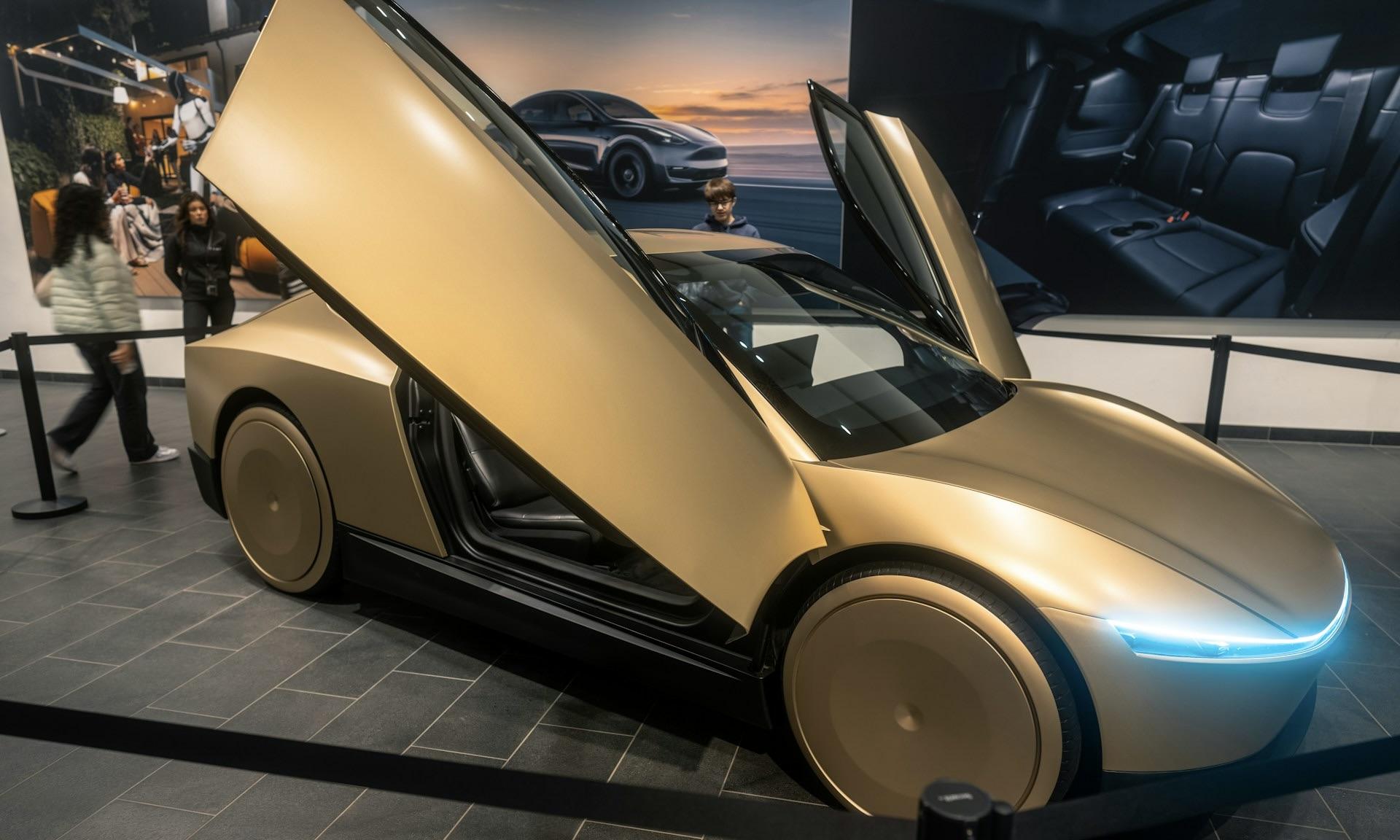
Tesla is accelerating its plans for self-driving robotaxis, sparking questions about where the groundbreaking technology will debut. With pilot programs in motion and regulatory hurdles being addressed, the company aims to reshape ride-hailing by 2025.
Tesla Eyes Self-Driving Robotaxi Launch in Texas
Bloomberg reported earlier this month that Tesla is in talks with Austin, Texas officials over the possible start of early pilot programs for its self-driving robotaxis as early as next year. This news follows CEO Elon Musk's previous goal of launching commercial robotaxis in 2025.
Public record requests revealed emails that showed an employee of Tesla discussing the possibility of deploying such fleets as early as May; the business is also contemplating trial programs in other towns in Texas.
“Tesla is still working to strategically find a city within Texas to deploy… The city of Austin is obviously on our roadmap, but has not yet been decided where we will deploy first as we have many options available,” an employee wrote in an email in November.
Cybercab and First Responder Training Highlight Tesla’s Safety Focus
According to the report, Tesla contacted the city of Austin in the days leading up to its "We, Robot" event on October 10, where the Cybercab was unveiled. An employee from the company hoped to address safety concerns and educate first responders on the use of autonomous vehicles.
At an event earlier this month at its Austin Gigafactory, Tesla trained first responders on its autonomous car technology. However, an employee there stated that the system is not yet ready for public roadways and promised to inform officials of any updates.
In October, during the company's third-quarter results call, Elon Musk mentioned that workers in the San Francisco Bay Area were already conducting internal tests of ride-hailing services. According to the CEO, Tesla employees can use the company's development app to order trips and be taken anywhere in the Bay.
Plans for Full Self-Driving Approval in Texas and California
Teslarati points out that it makes sense for Tesla to launch its commercial robotaxi services in major cities in Texas and California.
This is because, as Musk has stated, the company plans to launch its ride-hailing services and "Unsupervised" Full Self-Driving (FSD) approval in both of these states in 2025, subject to regulatory approval. Additionally, Musk mentioned that while it is not mandatory, the present internal ride-hailing tests in the Bay Area initially include safety drivers.
According to a report from Deutsche Bank earlier this month, Tesla's Head of Investor Relations, Travis Axelrod, stated that the company intends to use teleoperation as a redundancy and safety mechanism during the initial rollout of autonomous ride-hailing initiatives. Wherever the firm initially launches its commercial ride-hailing operations, this will certainly be a factor.
Tesla’s Ride-Hailing App Hints at Advanced Features
Also, earlier this year, in its Q1 Shareholder Deck, Tesla hinted at a ride-hailing app. The app would have a summon button to order a ride-hailing, an expected wait time, climate controls for the journey, routing instructions, and even media options to choose from.
With the Supervised Full Self-Driving (FSD) program, which any owner can access with a subscription or a one-time fee, even Tesla's non-Model Y vehicles can participate in ride-hailing operations. This was demonstrated via the mobile app's Model Y avatar.
A huge display, the absence of a steering wheel and pedals, and other details about the Cybercab were revealed to us in October. During Tesla's "We, Robot" event in Southern California on October 10, you can see our first journey in the Cybercab below.
Given its Fremont plant, Palo Alto engineering headquarters, and the fact that its competitor Waymo offers paid driverless ride-hailing in San Francisco and Los Angeles, it is reasonable to assume that both Texas and California would be the initial deployment sites for Tesla's ride-hailing services.
While the Cybercab isn't scheduled to hit production with Tesla until 2026, the company's other cars might be utilized for commercial self-driving operations down the road. However, it will also have competition from other companies looking to implement similar services.













