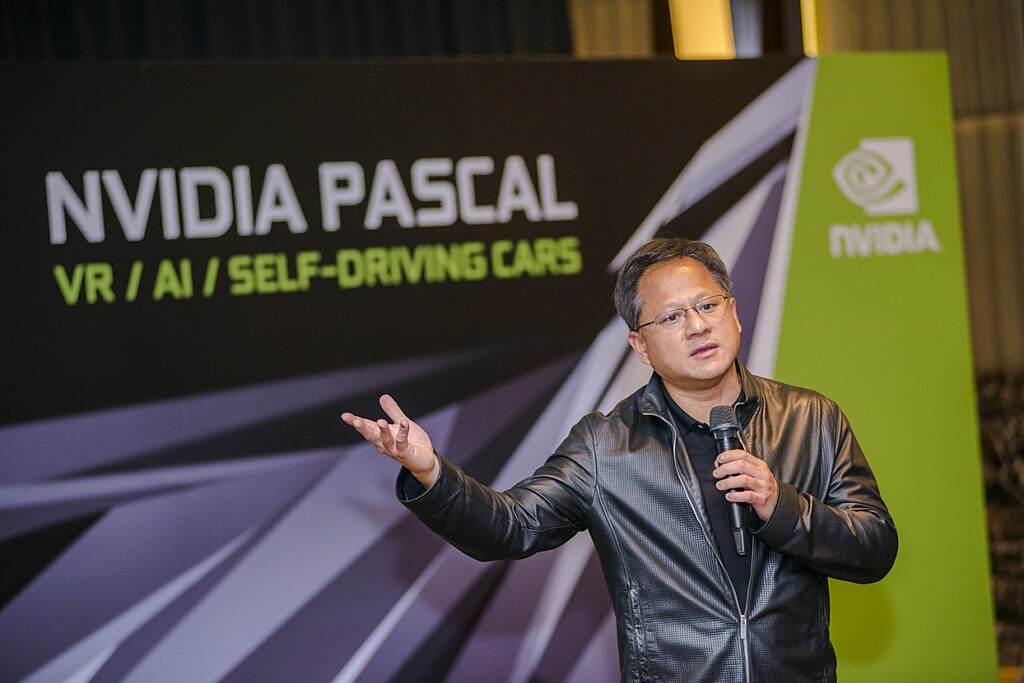
Nvidia CEO Jensen Huang praised and gently pushed Taiwan’s leading technology suppliers to ramp up production, highlighting the intense global demand for artificial intelligence hardware during a high-profile visit to the island of his birth. Speaking to reporters outside a Taipei restaurant after hosting what he called a “trillion-dollar dinner,” Huang said 2026 would be another strong year for the AI industry and its supply chain.
The dinner brought together executives from some of Taiwan’s most valuable technology companies, including Taiwan Semiconductor Manufacturing Co (TSMC) and Foxconn. Huang joked that TSMC would need to “work very hard” this year, as Nvidia requires a significant increase in advanced wafers used for AI chips. He emphasized that demand for Nvidia’s AI processors remains extremely strong, driven by data centers, cloud computing, and generative AI applications worldwide.
Huang praised TSMC’s execution and long-term vision, predicting that the chipmaker could expand its production capacity by more than 100% over the next decade. TSMC recently signaled aggressive investment plans, stating that capital expenditures could rise as much as 37% this year to $56 billion, with even larger increases expected in 2028 and 2029 due to sustained AI demand.
Beyond logic chips, Huang also expressed concern about the tight supply of memory chips, a critical component for AI workloads. He noted that the entire semiconductor supply chain is under pressure as demand continues to outpace production capacity.
During his visit, Huang was repeatedly surrounded by enthusiastic fans, reflecting his celebrity status in Taiwan, where local media affectionately refer to him as “the people’s dad.” He took time to greet supporters and sign autographs while attending the dinner with around two dozen executives, including Foxconn Chairman Young Liu, Nvidia’s largest server manufacturing partner.
Huang, who co-founded Nvidia in 1993 and emigrated to the United States as a child, said Taiwan remains essential to Nvidia’s success. He described the island as having “magic,” citing its deep engineering talent, strong corporate culture, and unmatched semiconductor expertise. Nvidia, now valued at over $5 trillion, sits at the center of the global AI revolution, and Huang made clear that Taiwan’s suppliers will continue to play a critical role in powering its growth.