


 TikTok Nears $400 Million Settlement With Trump Administration Over Child Privacy Lawsuit
  BMW Keeps 2026 Outlook Despite 25% Profit Drop Amid Tariff Pressure
  Arm Stock Drops Despite Strong AI Chip Demand and Earnings Beat
  Broadcom Eyes $35 Billion AI Chip Financing Deal With Apollo and Blackstone
  Hua Hong Semiconductor Stock Surges to Multi-Year High Amid AI Boom
  The American mass exodus to Canada amid Trump 2.0 has yet to materialize
  OCBC Q1 Profit Rises 5% on Strong Wealth Management and Non-Interest Income
  Armani Group Eyes Strategic Stake Sale to Luxury Giants
  Shell Q1 Profit Surges to Two-Year High as Dividend Rises Despite War-Driven Debt Pressure
  Orsted Q1 EBITDA Beats Expectations Despite U.S. Impairments
  UOB Q1 Profit Meets Expectations as Loan Growth Offsets Lower Interest Rates
  AWS Data Center Overheating Disrupts Cloud Services in Northern Virginia
  Time to buy local: war fuel price shocks reveal the folly of a long food supply chain
  Google promotes ‘teacher approved’ apps for kids. Here’s what parents should know
  Britain has almost 1 million young people not in work or education – here’s what evidence shows can change that
  Stuck in a creativity slump at work? Here are some surprising ways to get your spark back
  Why financial hardship is more likely if you’re disabled or sick


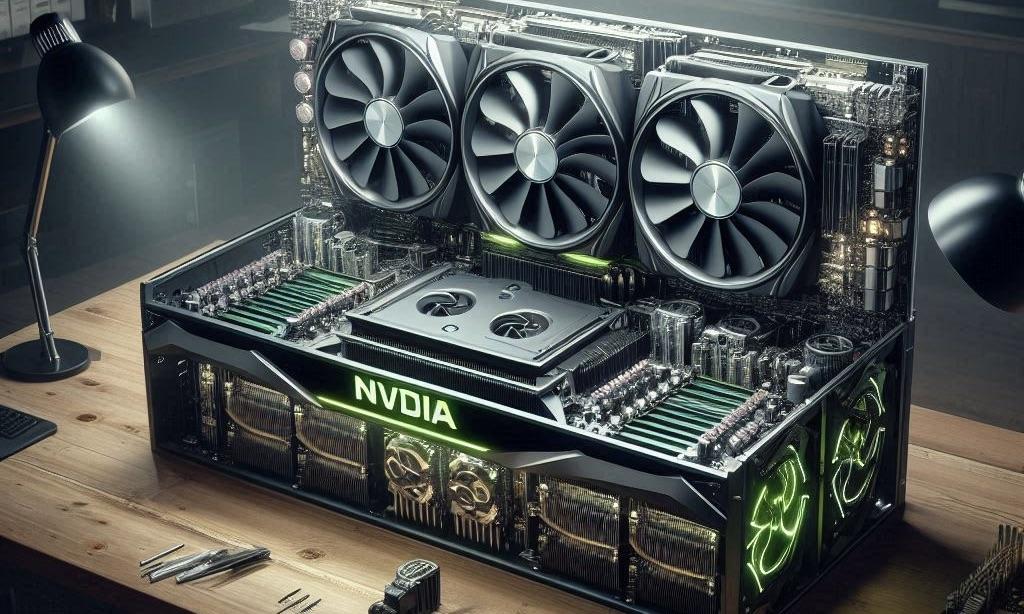
Teclab has engineered a custom NVIDIA GeForce RTX 4090 SUPER, featuring AD102 "Ada" silicon and 25.8 Gbps GDDR6X memory, delivering a 39% performance boost over the stock RTX 4090. This unique project showcases the team’s expertise in GPU customization and innovation.
Teclab Creates Custom RTX 4090 SUPER, Showcasing Potential of NVIDIA's AD102 Silicon and G6X Memory
Although the NVIDIA GeForce RTX 4090 SUPER may not officially exist, Teclab has crafted a custom replica using NVIDIA's AD102 "Ada" silicon and faster G6X memory.
Last month, Teclab demonstrated how they transformed a GALAX GeForce RTX 3090 Ti HOF into a new graphics card, dubbed the "GeForce RTX 4090 SUPER," by incorporating the fastest GDDR6X memory and binned Ada silicon. The performance of this custom card is impressive, prompting a closer look at the Teclab team’s meticulous construction process.
While an official "SUPER" version of the NVIDIA GeForce RTX 4090 has not been released and likely won't be given the impending arrival of the RTX 50 series, Teclab’s project sheds light on what could have been. Prototype radiators and PCBs suggest a more powerful variant with an upgraded AD102 GPU.
Teclab's journey began with the RTX 3090 Ti, launched just before the RTX 40 series. The 3090 Ti's PCB layout was notably similar to the RTX 4090, but there were fundamental differences, such as the power supply and memory strapping. Teclab chose the RTX 3090 Ti HOF OC LAB variant for its superior cooling capabilities, eliminating the need for specialized cooling systems like LN2.
Teclab Enhances RTX 4090 SUPER with AD102 GPU, 24 Gbps GDDR6X Memory, and Advanced Cooling System
The transformation involved replacing the original GA102 GPU with the AD102 GPU, upgrading to 24 Gbps GDDR6X memory, and modifying the voltage controller to supply 1.2V to the GPU. Teclab hand-selected each GDDR6X IC to ensure the highest quality memory dies were used, utilizing Micron’s 24 Gbps GDDR6X (ZF) modules.
The custom card was cooled using the same water block as the GALAX GeForce RTX 3090 Ti HOF OC Lab, with enhancements like high-quality thermal interface material for the GPU and thermal sealant for each memory die. According to Wccftech, the cooling system featured a water pump operating at 234 L/h and two 360mm radiators arranged in a push/pull configuration, maintaining GPU temperatures at approximately 54-55°C under heavy overclocking.
Teclab tested the custom NVIDIA GeForce RTX 4090 SUPER using the Unigine Superposition 8K benchmark. It overclocked the GPU to 3105 MHz and the G6X memory to 12,900 MHz, achieving a 25.8 Gbps memory speed. This resulted in a 39% performance increase over a stock RTX 4090 with overclocking and a 16.5% improvement without LOD adjustments.
Teclab has hinted at more custom projects and additional testing of the card, including LN2 benchmarks, in the future.







