


 Amkor Stock Surges 17% After $1.5 Billion Nvidia AI Packaging Partnership
  SAP Beats Q2 Revenue Estimates as Cloud Backlog and Business AI Demand Drive Growth.
  Nvidia Eyes $250B Guarantee for OpenAI’s Massive Ohio AI Data Center Project
  Serica Energy to Acquire Pharos Energy for £145.7M, Sending PHARP Shares Soaring
  Paramount-Warner Bros. Merger Delayed Until 2027 Amid Antitrust Lawsuit
  Rubio Rejects AI ‘Kill Switch’ Claims as U.S. Defends American Technology Abroad
  AMD Unveils Helios AI Servers to Challenge Nvidia as OpenAI Adopts New Platform
  Volkswagen Cuts 2026 Revenue Outlook as China Weakness, Trade Risks Weigh
  Coca-Cola Raises Diet Coke Prices in India as Iran Conflict Disrupts Can Supply
  Trump Administration Monitors OpenAI Incident as Lawmakers Push AI Kill Switch Bill
  Zabka Shares Drop 10% as Seven & i Abandons Investment Plans
  Tech Stock Positioning Nears Neutral as Investor Rotation Enters Final Phase, Deutsche Bank Says
  Shein Reports $99 Million Loss Ahead of Hong Kong IPO as U.S. Tariffs Hit Sales
  CATL Shares Jump as $5.6 Billion Buyback Signals Confidence in Long-Term Growth
  Domino’s Weighs Appeal After Australian Court Rules Workers Were Misled on Pay
  Scandinavian Tobacco Group Sells BREAK and Moro Brands to Japan Tobacco for €176 Million
  Elon Musk Fuels SpaceX-Tesla Merger Speculation After Earnings Call


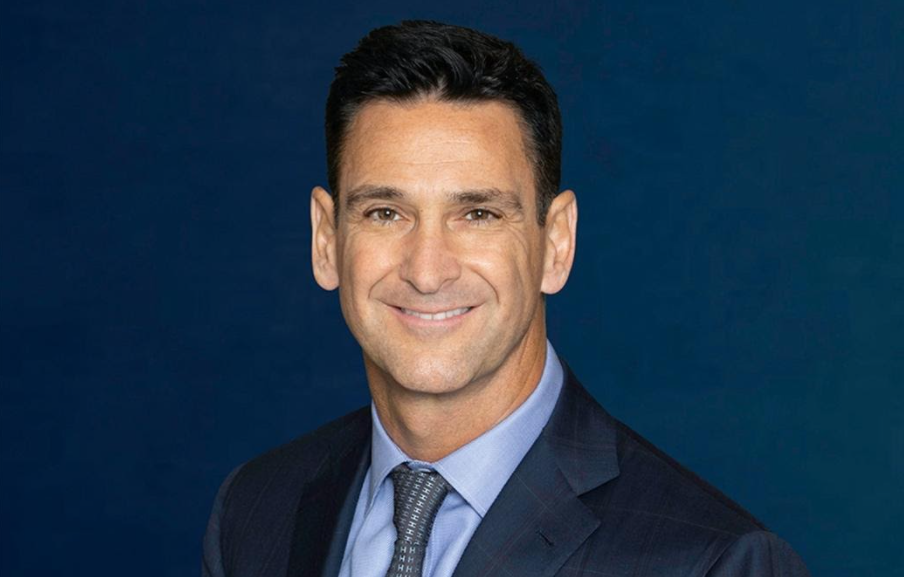
The first three quarters of 2021 have been busy for Jeff Aronin’s Paragon Biosciences, a life science innovator that creates and develops portfolio bioscience companies that are seeking solutions to some of the world’s greatest challenges. These companies include Castle Creek Biosciences, CiRC Biosciences, Emalex Biosciences, Evozyne, Harmony Biosciences, Qlarity Imaging, and Skyline Biosciences. Paragon has cultivated technological advancement in three major areas, cell and gene therapy, adaptive biology, and advanced biotechnology.
Paragon and its partners have invested more than $1.3 billion dollars to support their portfolio companies since 2017. In fiscal year 2021, Paragon has shown great growth with $450 million raised since January and a projected funding of $500 million by the end of the year.
Multiple developments are transpiring for Harmony Biosciences, beginning with a new strategic financing collaboration with Blackstone Inc., resulting in up to $330 million in financing and growth capital. Paragon Health Capital, a wholly owned subsidiary of Paragon Biosciences, assisted as a financial advisor to Harmony.
Harmony expanded its asset portfolio with the acquisition of a potential first-in-class molecule with a novel mechanism of action from ConSynance Therapeutics, Inc., a clinical stage biopharma company that focuses on rare, central nervous system (CNS) diseases.
Furthermore, to directly expand of its therapeutic pipeline, Harmony has commenced a Phase 2 clinical trial to investigate the safety and therapeutic effect of an investigational drug with the potential to treat excessive daytime sleepiness (EDS) and other non-motor symptoms, such as fatigue and cognitive impairment, that manifest in type I myotonic dystrophy (DM1). DM1 is a genetic disorder characterized by progressive muscle weakness that also affects other organ systems, such as the heart, eyes, endocrine system, and CNS.
The company is also conducting a Phase 2 trial evaluating the safety and efficacy of a treatment for excessive daytime sleepiness (EDS) and other key symptoms in patients with Prader-Willi Syndrome (PWS). PWS is a genetic orphan/rare neurological disorder with symptoms, including EDS, an abnormally increased appetite for and consumption of food, low muscle tone, short stature, behavioral problems and cognitive impairment. Approximately 15,000 to 20,000 people in the U.S. live with PWS, and over half of them experience EDS.
According to its first and second quarter financial summaries, Harmony remains fiscally strong with profits and positive net income in both quarters. Net product revenue growth has outpaced 2020 numbers.
Evozyne has continued to make impressive strides this year. The company has strategically partnered with Takeda and other bioscience companies to develop innovative solutions using optimized proteins. To support its growing business, Evozyne is drawing on leading university and institutional talent nationwide to fill its employee ranks. Starting with just a few employees in January 2021, Evozyne’s employee count is projected to reach a total of 75 by year’s end.
Evozyne takes complex scientific problems and makes them simple through a unique approach to biology. Nature provides rules and patterns that can be observed through billions of years of evolution. Evozyne uses those rules of nature to input data into models, then create proteins with optimal performance and specifications. These proteins have the potential to solve some of society’s most intractable problems, like finding therapeutic solutions to disease processes (using gene editing enzymes and optimized protein therapeutics, such as antibody biologics, amongst many other techniques), addressing world hunger and promoting optimal nutrition, producing novel bio-based and biodegradable materials, creating alternative, environmentally friendly energy sources, and helping with environmental clean-up.
To advance development of disease-modifying treatments for osteogenesis imperfecta (OI) and classical Ehlers-Danlos syndrome (EDS), both incurable, debilitating connective tissue diseases, Castle Creek Biosciences has entered into a research collaboration with Mayo Clinic to investigate gene therapy candidates at the discovery and preclinical stages. Leading the research effort is David R. Deyle, M.D., a board-certified medical geneticist at Mayo Clinic who is a leader in the field of connective tissue disorders.
Following completion of the discovery through pre-clinical development phases at Mayo Clinic, Castle Creek anticipates moving into clinical development of selected gene therapy candidates at its in-house, commercial-scale current good manufacturing practices (cGMP) manufacturing facility located in Exton, Pa.
Jeff Aronin, founder and chairman of Castle Creek, commended its President and CEO, Matthew Gantz “and his leadership team for their strategic insight and guidance that have long-term potential to fuel discovery and advancement of innovative gene therapy candidates and enhance the depth of Castle Creek's pipeline." He further remarked on Castle Creek’s ability to leverage its assets “to establish strategic collaborations with world-class research organizations for studying early-stage novel treatments to address critical, unmet medical challenges of patients suffering from rare genetic conditions."
This year has been an eventful one for Emalex Biosciences. The company completed enrollment in September for its Phase 2b clinical trial evaluating the safety and efficacy of an investigational drug in treating children living with Tourette’s syndrome. Named the D1AMOND Study, the trial enrolled 153 subjects from around the world.
The investigational drug is a first-in-class selective dopamine D1/D5 receptor antagonist. All dopamine receptor antagonists currently used to treat Tourette’s target the D2 receptor. After receiving a positive interim futility analysis by an Independent Data Monitoring Committee following enrollment of its first 75 participants, the D1AMOND study was given the green light to move forward to completion.
A second Phase 2 clinical trial by Emalex is underway to investigate the safety and therapeutic effect of a therapy to treat childhood-onset fluency disorder, or stuttering, in adult patients. The trial is specifically assessing adults who continue to have fluency issues after being diagnosed with stuttering during childhood. Named the Speak Freely Study, it has surpassed 75% enrollment and looks to close the study by year end.
Both stuttering in adults and Tourette’s syndrome in pediatrics are disorders with inadequate or unsatisfactory treatment choices. Stuttering is a condition without any FDA-approved treatment options that affects more than 70 million individuals around the globe.
In support of Emalex’s accomplishments, Jeff Aronin, founder, chairman, and CEO of Paragon Biosciences issued the following statement: “It is incredibly rewarding to be able to support therapeutic endeavors that may result in an effective treatment for Tourette’s in pediatric patients and stuttering in adult patients, which have limited or no treatment options, respectively.”
A $35 million raise led by Paragon Biosciences in March helps to support these trials until completion. Other investors included Fidelity Management & Research Company LLC and Valor Equity Partners.
Paragon’s newest portfolio company, CiRC Biosciences, hit the ground running only a month into its inaugural year, achieving orphan drug designation from the FDA for chemically induced photoreceptor-like cells (CiPCs) to treat retinitis pigmentosa (RP) in March. CiPCs represent a novel cell-based therapy platform derived from treatment of fibroblast cells, the predominant cell type found in connective tissue, with a mixture of small molecules that induce them to transdifferentiate into other cell types, a transformation process that takes under two weeks. A preclinical study using a mouse model found that CiPCs were able to partially reestablish the pupillary reflex and restore sight. The journal Nature published findings from this research study in 2020.
At present, CiRC is focused on pre-clinical development of cell-based therapies to treat both advanced RP and geographic atrophy age-related macular degeneration. A rare genetic disease, affecting about 1 in 4000 individuals, RP often appears in childhood or early adulthood initially affecting night vision and vision during lighting fluctuations. As more and more retinal cells die off, it later progresses to peripheral vision loss and often legal blindness in its final stages.
Geographic atrophy occurs as a final stage of dry age-related macular degeneration (AMD), which impairs central vision. AMD is the principal cause of severe, permanent loss of sight in the elderly.
The innovative work of CiRC’s co-founder and acting chief scientific officer, Sai Chavala, M.D., in the field of ophthalmology has not gone unnoticed. He was given the 2021 Ludwig von Sallmann Clinician-Scientist Award from the Association for Research in Vision and Ophthalmology (ARVO) Foundation for Eye Research in June.
Upon receiving the award, Chavala issued the following statement: “I am honored to receive this recognition by the ARVO Foundation for Eye Research and excited CiRC Biosciences will continue to develop the technology for advanced retinitis pigmentosa and geographic atrophy age-related macular degeneration.”







