


 FDA Lifts REMS Requirement for CAR-T Cell Cancer Therapies
  Neuralink Expands Brain Implant Trials with 12 Global Patients
  SpaceX’s Starship Completes 11th Test Flight, Paving Way for Moon and Mars Missions
  OpenAI's Desktop Superapp: Unifying ChatGPT, Codex, and Browser Tools for Enterprise AI
  AWS Bahrain Region Disrupted by Drone Activity Amid Middle East Conflict
  NVIDIA Resumes China AI Chip Production Amid $1 Trillion Revenue Forecast
  Elliott Investment Management Takes Multibillion-Dollar Stake in Synopsys
  Meta Ties Executive Pay to Aggressive Stock Price Targets in Major Retention Push
  NASA Resumes Cygnus XL Cargo Docking with Space Station After Software Fix
  Xiaomi's AI Model "Hunter Alpha" Mistaken for DeepSeek's Next Release
  Cogent Biosciences Soars 120% on Breakthrough Phase 3 Results for Bezuclastinib in GIST Treatment
  Nintendo Switch 2 Production Cut as Holiday Sales Miss Targets
  SK Hynix Eyes Up to $14 Billion U.S. IPO to Fund AI Chip Expansion
  Cyberattack on Stryker Triggers U.S. Government Warning Over Microsoft Intune Security
  SpaceX Starship Explodes in Texas During Test, Citing Nitrogen Tank Failure


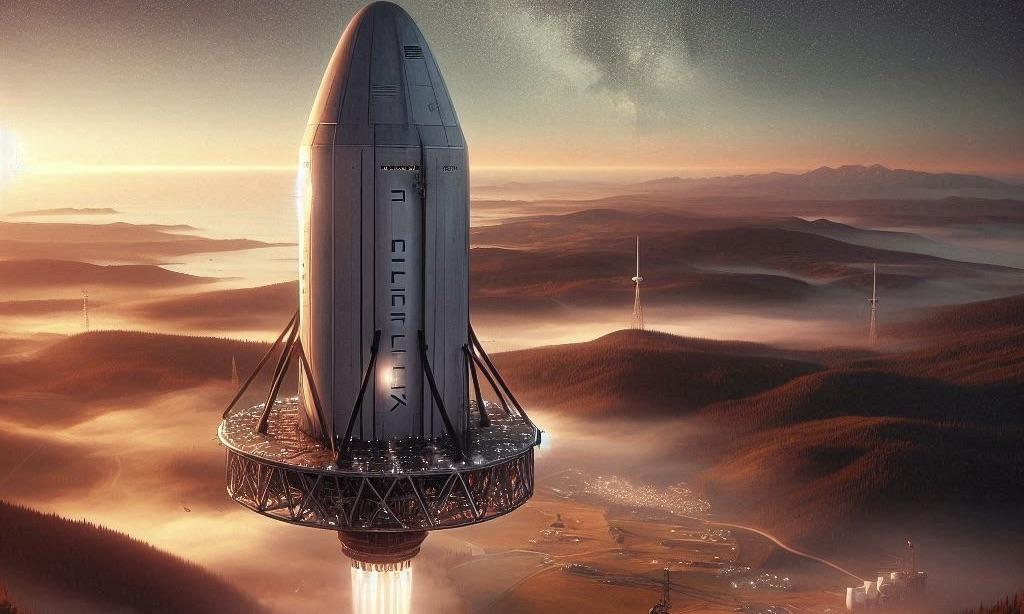
SpaceX is testing its launch tower arms in preparation for a risky attempt to capture the Super Heavy booster during Starship Flight 5. As the company awaits FAA approval, the success of this maneuver could mark a significant milestone in reusable rocket technology.
SpaceX Tests Tower Arms for First-Ever Super Heavy Booster Capture Ahead of Starship Flight 5
SpaceX is currently conducting tests on its launch pad and tower arms to attempt to capture the 232-foot-tall Super Heavy rocket booster after Flight 5. At the same time, it awaits the approval of the Federal Aviation Administration (FAA) for its flight profile for the fifth Starship test. The risky tower capture will be attempted for the first time during the upcoming Starship test. SpaceX's most recent Starship update, released earlier this month, indicated that the company would continue to refine this procedure during the period the FAA takes to evaluate its Starship Flight 5 test application.
In June, SpaceX initiated testing the launch tower's arms for a booster capture by transporting a portion of a rocket booster to the pad. During these tests, the cylinder's sides were repeatedly struck by the tower arms, also called chopsticks, as teams attempted to replicate a successful capture. According to local media footage, one of the tower limbs was replaced following this test, and testing slowed as SpaceX redirected its attention to the second stage, Starship.
SpaceX has resumed testing the tower arms for the risky catch attempt, awaiting the FAA's authorization for Starship Flight 5. It transported the booster piece to the pad earlier this week, and a test was conducted with the arms. Subsequently, it was removed from the tower and returned to the production and assembly facilities on August 17.
SpaceX Tests Critical Tower Arm Movements as Starship Flight 5 Approaches Key Milestones
As evidenced by footage from local media, the tower arms were tested at least six times during the most recent session. Several replicated the test while they were elevated above the booster piece, and other tests involved the arms circling the cylinder as closely as possible without causing any damage.
The rocket's second stage has experienced numerous static flames as it approaches the fifth Starship test, which is expected at the end of this month or early September. Despite having flown the complete stack four times, SpaceX has yet to exhibit an in-orbit engine ignition with the second stage. According to Wccftech, this critical test could also occur during Starship Flight 5. If both the engine ignition and the tower catch are successful, SpaceX will have completed numerous milestones in its rocket development.
During the most recent tower capture tests, SpaceX also evaluated the vertical motion of the arms, which were allowed to move up and down. At the same time, the booster part was positioned between them. During specific test trials that involved the arms closing around the rocket piece, both arms moved simultaneously, while in others, only one arm approached the cylinder.
The successful execution of a gentle splashdown in the water by the Super Heavy booster and the second stage ship during Starship Flight 4 is a promising development. This implies that SpaceX can return the second stage to the launch site after Flight 6 if the spacecraft replicates this behavior during Flight 5. The second stage, the world's first rocket intended to be completely reusable, holds the potential to revolutionize space travel. This is a significant component of SpaceX's effort to significantly reduce the cost of launch and increase the speed of consecutive launches, bringing us one step closer to the dream of colonizing Mars.













