


 Antonio José Seguro Poised for Landslide Win in Portugal Presidential Runoff
  Trump Administration Appeals Court Order to Release Hudson Tunnel Project Funding
  Bangladesh Election 2026: A Turning Point After Years of Political Suppression
  Israel Approves West Bank Measures Expanding Settler Land Access
  Trump Lifts 25% Tariff on Indian Goods in Strategic U.S.–India Trade and Energy Deal
  Trump Slams Super Bowl Halftime Show Featuring Bad Bunny
  Anutin’s Bhumjaithai Party Wins Thai Election, Signals Shift Toward Political Stability
  Japan’s Prime Minister Sanae Takaichi Secures Historic Election Win, Shaking Markets and Regional Politics
  Ohio Man Indicted for Alleged Threat Against Vice President JD Vance, Faces Additional Federal Charges
  China Overturns Death Sentence of Canadian Robert Schellenberg, Signaling Thaw in Canada-China Relations
  Bosnian Serb Presidential Rerun Confirms Victory for Dodik Ally Amid Allegations of Irregularities
  China Warns US Arms Sales to Taiwan Could Disrupt Trump’s Planned Visit
  Trump Backs Nexstar–Tegna Merger Amid Shifting U.S. Media Landscape
  Jack Lang Resigns as Head of Arab World Institute Amid Epstein Controversy
  Trump Signs Executive Order Threatening 25% Tariffs on Countries Trading With Iran
  Japan Election 2026: Sanae Takaichi Poised for Landslide Win Despite Record Snowfall


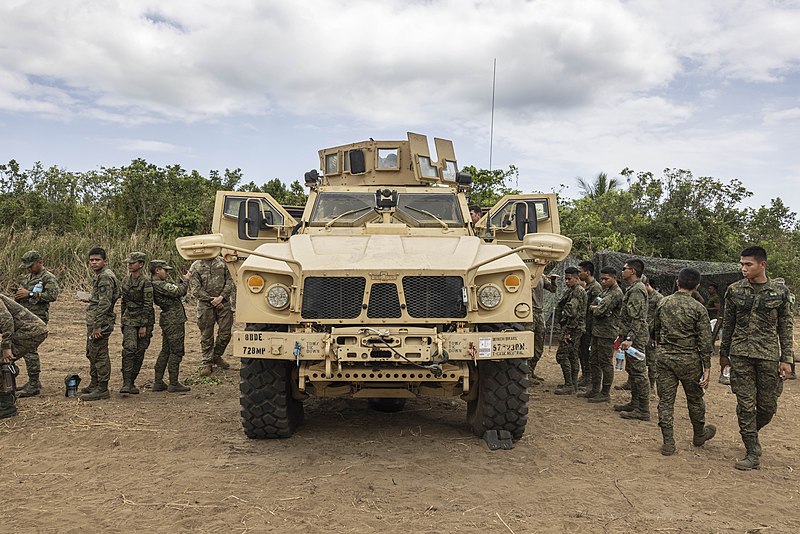
The United States and the Philippines started their joint military drills in the disputed South China Sea. The latest drills are also the largest scale exercises for the two countries, which will end later this month.
The US and the Philippines started their large-scale joint military drills referred to as “Balikatan,” meaning “shoulder to shoulder” in Tagalog, this week, taking place in the disputed South China Sea. The drills will include live-fire exercises on a sunken ship in the contested waters. Over 17,000 soldiers will be taking part in this year’s exercises, with 12,500 US troops, 5,400 Philippine troops, as well as representatives from other countries. The drills are expected to end on April 28.
“The Balikatan Exercises enhances both the AFP and the United States Armed Forces’ tactics, techniques, and procedures across a wide range of military operations,” said AFP spokesperson Col. Medel Aguilar in a statement released by the US Embassy last week. “It increases our ability to work together effectively and efficiently in response to various crisis situations.”
The latest Balikatan drills come at a time of tensions in the waters, as China has sought to assert its control over the majority of the South China Sea and drawing the ire of nations who have overlapping claims. China has also recently ended three days of military drills close to the island nation of Taiwan, which Beijing also claims as its territory.
Manila has since been under pressure from China in recent years over the disputed waters despite an international tribunal ruling in the Philippines’ favor in 2016 against China’s so-called historic claim over the sea.
The Philippines also granted the US access to four more military bases under a 2014 defense agreement.
On Tuesday, the top defense and diplomatic officials of both countries agreed to complete a road map for the delivery of US defense assistance to the Philippines in the next five to 10 years. Pentagon chief Lloyd Austin said they discussed the delivery of “priority defense platforms.”
Philippine foreign minister Enrique Manalo said during the joint news conference that they “redoubled” their commitment to modernizing the alliance of the two countries.













