


 Anta Sports Expands Global Footprint With Strategic Puma Stake
  Missouri Judge Dismisses Lawsuit Challenging Starbucks’ Diversity and Inclusion Policies
  TrumpRx Website Launches to Offer Discounted Prescription Drugs for Cash-Paying Americans
  Yen Slides as Japan Election Boosts Fiscal Stimulus Expectations
  U.S.-India Trade Framework Signals Major Shift in Tariffs, Energy, and Supply Chains
  Samsung Electronics Shares Jump on HBM4 Mass Production Report
  Toyota’s Surprise CEO Change Signals Strategic Shift Amid Global Auto Turmoil
  Gold and Silver Prices Climb in Asian Trade as Markets Eye Key U.S. Economic Data
  Lee Seung-heon Signals Caution on Rate Hikes, Supports Higher Property Taxes to Cool Korea’s Housing Market
  Nikkei 225 Hits Record High Above 56,000 After Japan Election Boosts Market Confidence
  Indian Refiners Scale Back Russian Oil Imports as U.S.-India Trade Deal Advances
  Global PC Makers Eye Chinese Memory Chip Suppliers Amid Ongoing Supply Crunch
  Japan Economy Poised for Q4 2025 Growth as Investment and Consumption Hold Firm
  Hims & Hers Halts Compounded Semaglutide Pill After FDA Warning
  Australian Pension Funds Boost Currency Hedging as Aussie Dollar Strengthens
  SpaceX Prioritizes Moon Mission Before Mars as Starship Development Accelerates
  Innovent Biologics Shares Rally on New Eli Lilly Oncology and Immunology Deal


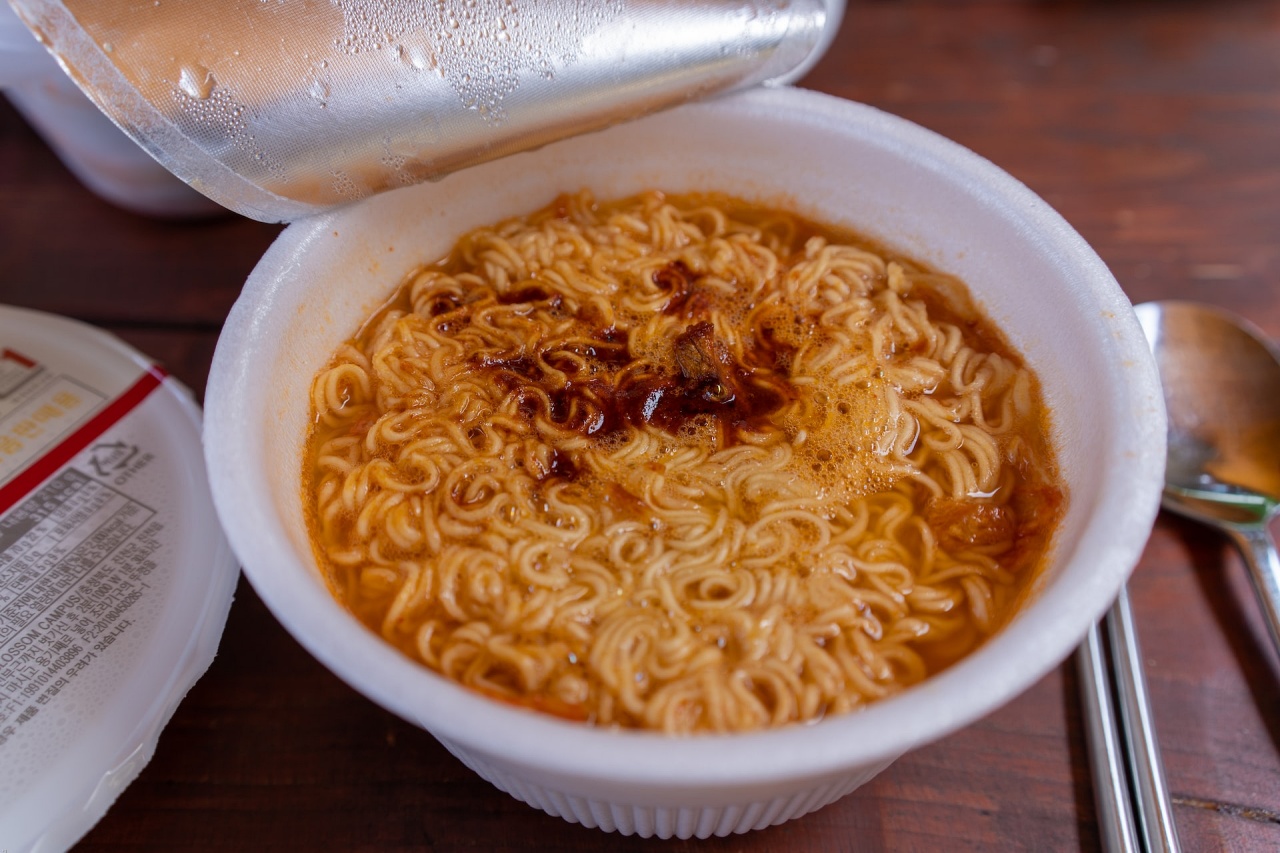
Nongshim’s Shin Ramyun is one of the leading instant noodle brands in South Korea, and the company has also started exporting its products overseas. Taiwan is one of Nongshim’s customers, with thousands of Shin Ramyun being sold in the country.
However, in the recent batch of exports, Taiwan was said to have destroyed at least 1,000 boxes of Nongshim’s Shin Ramyun instant noodles. These were said to have been seized at the country’s border as they were found to contain pesticide residues.
To be more exact, Focus Taiwan reported that a total of 1,128 kilograms of Nongshim Shin Ramyun cup noodles with black tofu and kimchi were confiscated after samples that were tested on Dec. 9, 2022, showed the products’ seasoning sachets containing 0.075 mg/kg of ethylene oxide (EO). The products were locally imported by Shing Her International.
The said substance is considered a carcinogen and has been categorized by the Taiwanese Food and Drug Administration (FDA) agency as a banned pesticide. The discovery of the hazardous substance resulted in the failure of the Nongshim Shin Ramyun to pass the customs inspection in Taiwan.
The Korea Herald reported that the ethylene oxide found in the soup packets of each cup noodle is mostly used for disinfection purposes in pesticides. It is also classified as a group 1 carcinogen which is said to be the highest risk category under the World Health Organization’s standards.
Then again, Nongshim released a statement to refute the reports that its Shin Ramyun were found to have carcinogens. The company said that the component detected in its instant noodle product was 2-chloroethanol or 2-CE and not the harmful EO. Nongshim explained that the TFDA converted 2-CE levels to EO based on its state health rules, thus the results.
"We believe 2-CE was found by temporary and unintentional cross-contamination during the manufacturing process, or during the cultivation stage for the raw material production process," an official at Nongshim company said. "Nongshim uses different raw materials for exports and products sold in Korea and there is no problem with domestic products, with the analysis showing that no such ingredient was detected for domestic products."













