


 Nvidia Eyes Perplexity Investment at $30 Billion Valuation
  Pinterest Stock Falls as CFO Julia Brau Donnelly Resigns
  New Zealand Moves to Ban Social Media for Children Under 16
  PayPal Shares Sink as $50 Billion Takeover Bid Collapses
  BofA Names ASML Top Semiconductor Equipment Pick on Growth, Valuation
  U.S. Probes Apex Logistics Over Nvidia AI Chip Shipments to China
  OpenAI Data Center Chief Chris Malone Exits Ahead of Planned 2027 Listing
  New Zealand Labour Backs Social Media Ban for Under-16s
  Google Expands Gemini Enterprise With AI Tools for Legal Sector
  SK Hynix Shares Fall as Workers Reject Wage Deal
  Faraday Future Delivers First Robots in Middle East, Plans September Launches
  Nvidia Options Price in $280 Billion Earnings Swing
  Countries Tighten Social Media Bans for Children
  Nvidia Reportedly Eyes $13 Billion Hugging Face Acquisition
  SpaceX Mobile Network Could Cost Up to $130 Billion, Bernstein Says
  HP Stock Drops 9% Despite Q3 Earnings Beat and Raised 2026 Outlook
  Unitree Shares Plunge 45% After Blockbuster IPO, Raising China Tech Bubble Fears


 Add as a preferred source on Google
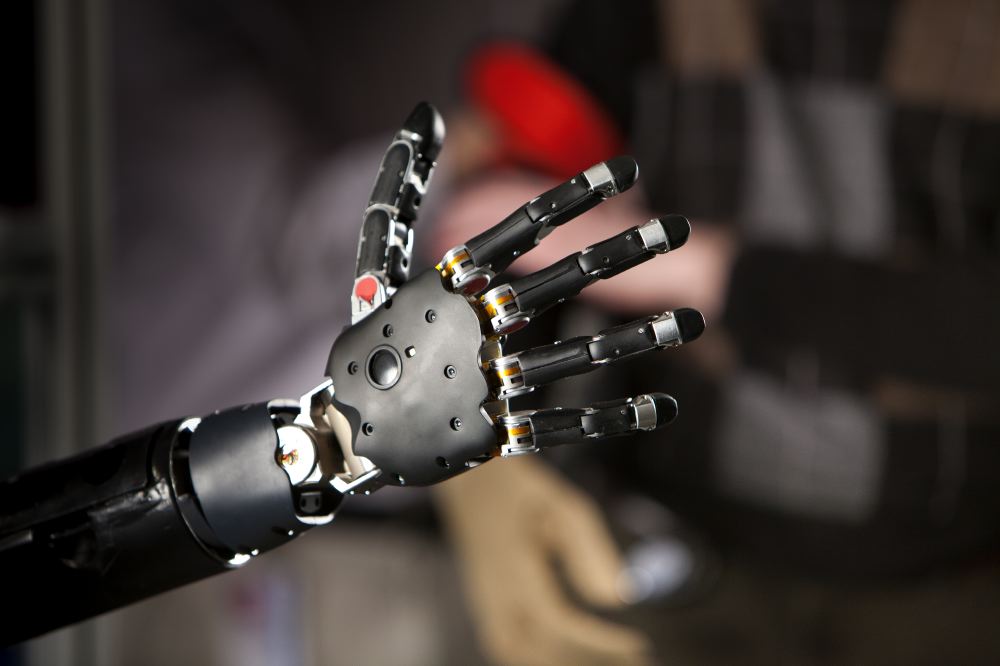
A Georgia Tech College of Design professor named Gil Weinberg has made headlines recently for creating a prosthetic arm where all five individual fingers can move independently of each other. The mechanical digits are so dexterous, in fact, that they allow the person using them to actually play the piano. This could lead to some explosive developments in the robotics prosthesis sector.
The advanced prosthetics were developed for Jason Barnes who suffered a major electric shock back in 2012, resulting in doctors having to remove parts of his arm from the elbow down, Futurism reports. As a musician, Barnes was understandably devastated by this loss but Weinberg gave him hope. Two years after the incident, Barnes was given a prosthetic arm that actually allowed him to play the drums.
At the time, however, what the patient really wanted was to be able to play the piano again. So the engineers got to work and now, Barnes got his wish. He is now equipped with a prosthetic arm with fingers nimble enough to be moved individually.
With regards to how the scientists even managed to do this, Weinberg explained in a post on the Georgia Tech publication that it was due to ultrasound. The key is to basically intercept the intent from the patient and then interpret that to produce the corresponding movement.
“Our prosthetic arm is powered by ultrasound signals,” Weinberg said. “By using this new technology, the arm can detect which fingers an amputee wants to move, even if they don’t have fingers.”
For his part, Barnes is simply ecstatic that he is now much closer to regaining his former level of movement. The technology isn’t perfect, but it is the ray of hope that amputees can hold on to.
“It’s completely mind-blowing,” Barnes said. “This new arm allows me to do whatever grip I want, on the fly, without changing modes or pressing a button. I never thought we’d be able to do this.”







