


 BlackRock’s Rick Rieder Favors Bonds Over Stocks as Treasury Yields Surge
  Fed’s Williams Signals One More Rate Hike Before Year-End
  Central Banks Could Buy 20,000 Tonnes of Gold: BofA
  RBA Set for September Rate Hike as Inflation Stays High
  Japanese Yen Retreats as Dollar Rises Ahead of Fed, BOJ Rate Decisions
  Fed’s Hammack Says Bond Yield Surge Is Not Driven by Inflation Fears
  Trump Demands Powell Resign Over Fed Renovation Cost Overruns
  BOJ Signals Faster Rate Hikes as Inflation Risks Grow
  Yen in Focus as BOJ, Fed Rate Hikes Reshape Currency Markets
  RBA Hikes Interest Rate to 4.60% as Inflation Risks Rise


 Add as a preferred source on Google
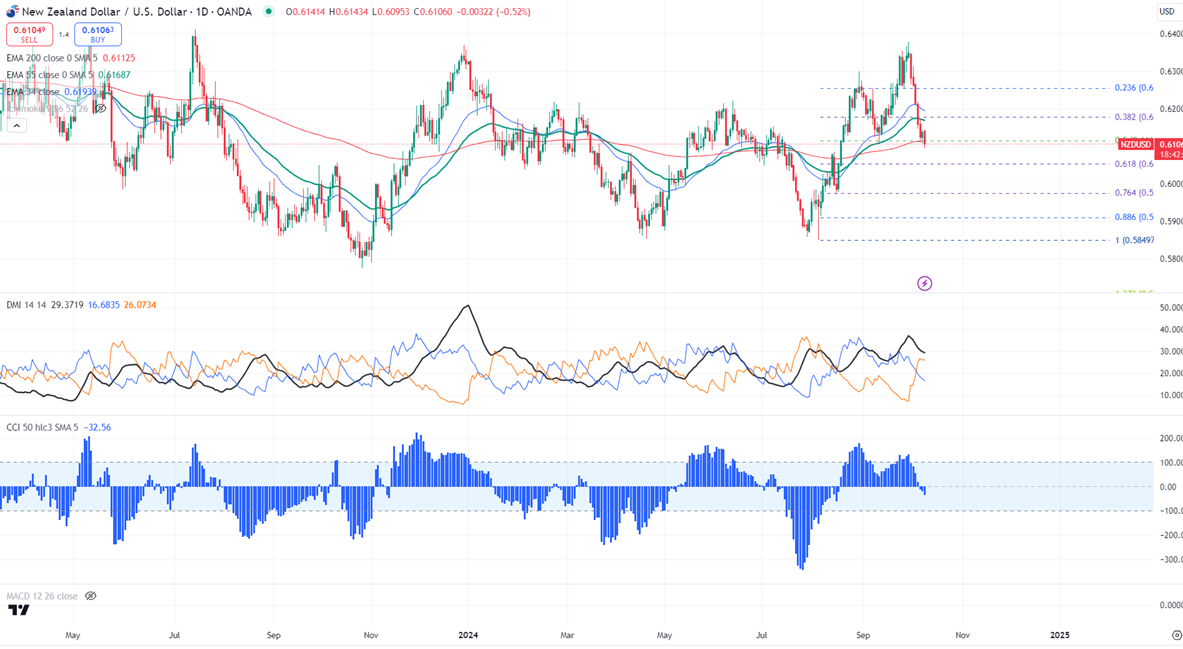
As expected, the Reserve Bank of New Zealand (RBNZ) lowered interest rates by 50 bpbs to 4.75%. The RBNZ said that it is appropriate to cut the rate by 50 bpbs to achieve and maintain low and stable inflation. The inflation is maintained with its target range 1-3% and converging on the 2 percent midpoint.
Business investment and consumer spending have been weak, and employment conditions continue to soften
Global economic growth remains below its long-run trend and is expected to remain so for the year ahead. Economic growth in the United States and China is expected to slow.
Members agreed that increasing excess capacity leads to lower inflationary pressure in the New Zealand economy. Economic growth is partly weak because of low productivity growth, but mostly due to weak consumer spending and business investment.
Major resistance- 0.6205
Near-term resistance - 0.6150
Minor support- 0.6050,0.6000
Trend reversal level- 0.6620







